Transport Media Market Size & Share Analysis - Emerging Trends, Growth Opportunities, Competitive Landscape, and Forecasts (2025 - 2032)
This Report Provides In-Depth Analysis of the Transport Media Market Report Prepared by P&S Intelligence, Segmented by Product Type (Viral, Universal, Molecular), Application (Diagnosis, Preclinical Testing), Indication (Viral Diseases, Non-Viral Diseases), End User (Diagnostic Laboratories, Hospitals and Clinics, Microbiology Laboratories, Homecare Settings), and Geographical Outlook for the Period of 2019 to 2032
Explore the market potential with our data-driven report
Transport Media Market Future Outlook
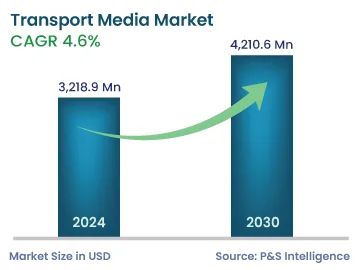
The transport media market size was USD 3,218.9 million in 2024, and it will grow by 4.6% during 2025–2032, to reach USD 4,559.6 million by 2032.
The increasing prevalence of infectious diseases, such as tuberculosis, influenza, and emerging viral threats, coupled with the growing demand for accurate diagnostic testing, is driving significant growth in this essential healthcare sector. The rising global burden of infectious diseases presents a critical driver for market expansion. According to the World Health Organization, an estimated 10.8 million people fell ill with TB worldwide in 2023, including 6.0 million men, 3.6 million women and 1.3 million children. This substantial disease burden necessitates reliable specimen collection and transport systems to ensure accurate diagnostic results and effective disease management.
Transport media serve as specialized buffer solutions designed to preserve the viability of microorganisms during specimen transport from collection sites to diagnostic laboratories. The COVID-19 pandemic dramatically highlighted the critical importance of these products, as healthcare systems worldwide required massive quantities of viral transport media to support unprecedented testing volumes. The market continues to benefit from increased awareness of proper specimen collection and transportation protocols, driving sustained demand across various healthcare settings.
The growing geriatric population globally further amplifies market opportunities, as elderly individuals face a higher susceptibility to infectious diseases. Global efforts to combat TB have saved an estimated 79 million lives since the year 2000, demonstrating the vital role of diagnostic testing and proper specimen handling in public health outcomes. This success underscores the continued importance of transport media in enabling effective disease surveillance and treatment programs worldwide.
Transport Media Market Trends & Drivers
Technological Advancements for Enhancing Product Effectiveness Are Key Trend
Innovation in transport media formulations and packaging represents a significant market trend driving adoption rates.
Life sciences companies are developing enhanced formulations that provide superior specimen preservation, longer stability periods, and compatibility with multiple diagnostic platforms.
These technological improvements enable healthcare facilities to streamline their specimen collection processes while ensuring optimal diagnostic accuracy.
The integration of molecular diagnostic techniques has created demand for specialized transport media optimized for nucleic acid preservation.
Modern transport media formulations now incorporate advanced stabilizers and preservatives that maintain viral RNA and bacterial DNA integrity during extended transport periods.
This capability is particularly crucial for reference laboratories and centralized testing facilities that receive specimens from geographically dispersed collection sites.
Transport medium producers are developing products specifically designed for automated specimen processing systems, enabling high-throughput laboratories to efficiently handle large specimen volumes.
This compatibility reduces manual handling requirements, minimizes contamination risks, and improves overall laboratory workflow efficiency, particularly important for diagnostic laboratories processing thousands of specimens daily.
Increasing Prevalence of Infectious Diseases Is Biggest Driver
The escalating global incidence of infectious diseases represents the primary growth driver for the transport media market.
A total of 1.25 million people died from tuberculosis (TB) in 2023, including 161,000 people with HIV.
Worldwide, TB has returned to being one of the world's deadliest infectious agents, following the three years during which it was overtaken by coronavirus disease.
This resurgence of tuberculosis as the leading infectious disease killer highlights the ongoing need for robust diagnostic infrastructure, including reliable transport media systems.
The World Health Organization's Global Tuberculosis Report 2024 underscores the ongoing challenges and progress in the global fight against tuberculosis.
Despite a slowdown in the annual increase in TB cases and a decline in TB-related deaths, the disease remains a significant public health threat, with 10.8 million new cases reported in 2023.
The persistent high burden of infectious diseases, particularly in low- and middle-income countries, continues to drive demand for transport media solutions that enable accurate specimen collection and transport to diagnostic facilities.
The emergence and re-emergence of viral pathogens, including influenza variants, monkeypox, and other respiratory viruses, creates sustained demand for viral transport media specifically.
Furthermore, as per the WHO, seasonal influenza continues to cause between 290,000 and 650,000 deaths globally each year.
HIV/AIDS causes around 1.3 million deaths each year and malaria 400,000 to 600,000.
This demonstrates the massive and persistent burden of viral diseases that sustains demand for diagnostic and transport media solutions.
Healthcare systems have recognized the critical importance of maintaining adequate stockpiles of transport media to respond rapidly to infectious disease outbreaks.
This preparedness mindset, developed during the COVID-19 pandemic, now drives consistent procurement and utilization of transport media across healthcare networks globally.
Transport Media Market Segmentation Analysis
Product Type Analysis
The viral category held the largest market share, of 35%, in 2024, driven by the continued emphasis on respiratory pathogen surveillance and diagnostic testing. This dominance reflects the ongoing need for effective viral specimen collection and transport, particularly for influenza monitoring, COVID-19 testing, and emerging viral threat preparedness. The category's leadership position is reinforced by the fact that viral infections often require rapid diagnosis and treatment, making reliable transport media essential for accurate test results.
The sudden outbreak of infectious diseases, most recently monkeypox and COVID-19, propels the demand for diagnosis and testing among the infected individuals. In December 2024, the WHO issued new testing guidance, urging member states to sustain and optimize COVID-19 testing frameworks. The recommendations highlight the use of NAATs and Ag-RDTs, integration with influenza and RSV testing, and the enhancement of genomic surveillance systems to detect emerging variants.
The molecular category will have the highest CAGR, of 4.9%, driven by the escalating demand for advanced molecular diagnostics, including polymerase chain reaction (PCR) and nucleic acid testing applications. The increasing adoption of precision medicine approaches and genomics research has created substantial demand for transport media specifically designed to preserve nucleic acids, DNA, and RNA during specimen transport. The molecular transport media segment benefits from technological advancements in molecular biology and the growing focus on personalized medicine, which requires highly specialized specimen preservation capabilities.
The product types analyzed in this report are:
Viral (Largest Category)
Universal
Molecular (Fastest-Growing Category)
Application Analysis
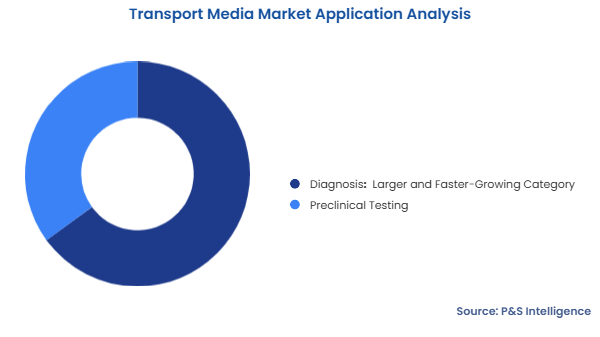
The diagnosis category held the larger market share, of 65%, in 2024, and it will have the higher CAGR, of 4.8%. This dominance is driven by the massive global volume of diagnostic tests conducted for infectious diseases across healthcare systems. The diagnostic segment's growth is supported by increasing disease screening programs, routine surveillance activities, and point-of-care testing initiatives that require reliable specimen transport solutions. Globally, during the COVID‑19 pandemic, between 5 and 7 billion diagnostic tests were conducted, including 2–3 billion RT‑PCR and 3–4 billion rapid antigen tests.
The applications analyzed in this report are:
Diagnosis (Larger and Faster-Growing Category)
Preclinical Testing
Indication Analysis
The viral diseases category held the larger market share, of 75%, in 2024, and it will have the higher CAGR, of 4.9%. This is mainly due to the rising burden of viral diseases, such as influenza, herpes, monkeypox, coronavirus, Varicella zoster, and respiratory syncytial virus. Among them, the coronavirus and influenza virus are the most-contagious respiratory infections and pose a major global health concern. The ongoing respiratory virus monitoring programs, seasonal influenza testing, and preparedness for emerging viral threats, further support this category. The substantial burden of viral diseases globally, combined with their potential for rapid transmission, maintains consistent demand for viral specimen transport solutions.
The COVID-19 pandemic has resulted in an unprecedented worldwide demand for laboratory testing. Hence, due to the increasing number of people with viral infections, diagnostic laboratories are witnessing a constant increase in the number of samples to be tested. This is likely to help the category generate significant revenue during the forecast years. Furthermore, governments are increasing the awareness of the flu through various campaigns. These awareness campaigns highlight the importance of the prevention and early diagnosis of the disease, which directly increases the number of tests.
The indications analyzed in this report are:
Viral Diseases (Largest and Fastest-Growing Category)
Non-Viral Diseases
End User Analysis
The diagnostic laboratories category held the largest market share, of 45%, in 2024, due to the growing demand for diagnosis and testing for COVID-19. The mutations in the genome of the virus result in changes in the viral structure, making standard vaccination ineffective. As a result, diagnostic laboratories are under pressure to not just identify the pathogen but also its specific disease-causing strain. In addition to the increasing awareness of diagnostic testing, the support of governments to improve the healthcare system drives the market.
According to the World Health Organization, the elderly population is expected to rise from 1 billion in 2020 to 1.7 billion in 2030, accounting for 1 in 6 people in the world 60 years of age or older. Infectious diseases are more prevalent in the geriatric population; therefore, these people are in greater need of healthcare services, which escalates the volume of diagnostic tests.
The hospitals and clinics category will have the highest CAGR, of 5.0%. This growth is driven by the expansion of point-of-care testing capabilities and decentralized diagnostic services. Healthcare facilities increasingly perform on-site specimen collection with transport to external laboratories, creating sustained demand for transport media products.
The end users analyzed in this report are:
Diagnostic Laboratories (Largest Category)
Hospitals and Clinics (Fastest-Growing Category)
Microbiology Laboratories
Homecare Settings
Drive strategic growth with comprehensive market analysis
Transport Media Market Regional Outlook
North America Transport Media Market Size
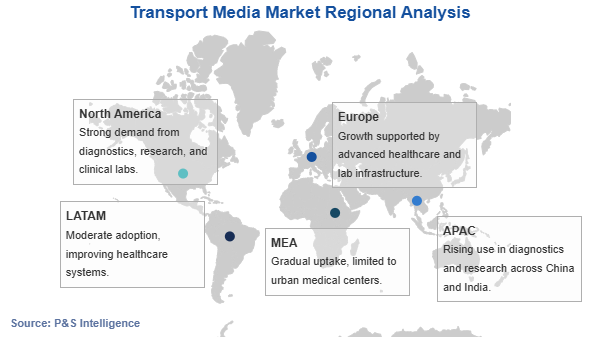
North America held the largest market share, of 35%, in 2024. This is attributed to the region's advanced healthcare infrastructure, high diagnostic testing volumes, and strong regulatory framework supporting quality specimen collection practices. The presence of major transport media manufacturers and research institutions further strengthens the region's market position.
U.S. Transport Media Market Size
The U.S. represents the larger country market within North America, driven by its extensive infectious disease surveillance programs and high healthcare spending. The U.S. is one of the leading countries in terms of the presence of key market players. In addition, because of the enormous government funding for R&D, the demand for transport media is rising. The country's robust diagnostic testing infrastructure, combined with preparedness initiatives following the COVID-19 pandemic, maintains strong demand for transport media across healthcare settings. The region's emphasis on disease preparedness and rapid diagnostic capabilities ensures sustained market growth opportunities. In 2023, the U.S. reported 9,633 TB cases, marking a 15.6% increase over 2022, which saw 8,332 cases, and exceeding pre-COVID-19 levels from 2019 with 8,895 cases. This demonstrates the ongoing focus on preparedness and strong diagnostic systems that drive the need for reliable transport media.
Asia-Pacific Transport Media Market Size
Asia-Pacific will have the highest CAGR, of 5.2%, because the incidence of infectious diseases is constantly rising, which leads to an increase in the demand for diagnosis and testing. Highly significant among the infections rising in prevalence is influenza. With the increasing awareness of its early detection by ensuring the safe transportation of specimens, the market is advancing.
Moreover, the region's rapid economic development, expanding healthcare infrastructure, and increasing healthcare expenditure create substantial growth opportunities for transport media suppliers. The large population base and rising disease burden in developing countries within the region drive significant demand for diagnostic testing capabilities. The region's efforts to strengthen healthcare systems and improve disease surveillance capabilities create favorable conditions for transport media market expansion.
India Transport Media Market Size
India represents the fastest-growing country market within the region, supported by expanding diagnostic testing capabilities and increased focus on infectious disease management. India’s Integrated Disease Surveillance Programme enables strong, district-level surveillance across more than 90% of the country’s districts, supporting early detection and rapid response to outbreaks. Moreover, TrueNat point-of-care molecular testing is now integrated with the National TB Programme, which has increased rapid diagnostic testing volume even in the underserved areas.
China Transport Media Market Size
China represents the largest country market within Asia-Pacific, driven by the government investments in healthcare infrastructure and disease prevention programs. The country's massive population and ongoing healthcare system modernization create substantial demand for transport media products. China’s most prevalent infections include hepatitis B, affecting over 70 million people, and tuberculosis, with around 780,000 new cases annually. Influenza causes seasonal spikes, while HIV/AIDS affects approximately 1.05 million. Hand, foot, and mouth disease is also widespread among children, with over 2 million cases reported yearly.
The geographical breakdown of the market is as follows:
North America (Largest Regional Market)
U.S. (Larger and Faster-Growing Country)
Canada
Europe
Germany (Largest and Fastest-Growing Country)
U.K.
France
Italy
Spain
Rest of Europe
Asia-Pacific (Fastest-Growing Regional Market)
China (Largest Country)
India (Fastest-Growing Country)
Japan
South Korea
Australia
Rest of APAC
Latin America
Brazil (Largest and Fastest-Growing Country)
Mexico
Rest of LATAM
Middle East and Africa
Saudi Arabia (Largest and Fastest-Growing Country)
South Africa
U.A.E.
Rest of MEA
Transport Media Market Share
The market is fragmented due to the presence of numerous established players and emerging companies operating across regional and global markets. Leading market players maintain their competitive positions through comprehensive product portfolios, global distribution networks, and strong relationships with healthcare institutions. Additionally, the competitive landscape is characterized by ongoing product launches, capacity expansions, and strategic collaborations aimed at addressing evolving customer needs and regulatory requirements.
Key Transport Media Companies:
Thermo Fisher Scientific Inc.
Puritan Medical Products
Becton, Dickinson and Company (BD)
COPAN Diagnostics Inc.
Laboratory Corporation of America Holdings
HiMedia Laboratories
Trinity Biotech plc
EKF Diagnostics
Teknova
Hardy Diagnostics, Inc.
Titan Biotech Limited
Lonza Group AG
Transport Media Market News
In July 2024, EKF Diagnostics Holdings plc launched its upgraded Biosen C-Line benchtop glucose and lactate analyzer with improved connectivity and usability features.
In August 2023, Longhorn Vaccines and Diagnostics LLC announced new data validating their PrimeStore Molecular Transport Medium, designed to enhance the transport and stabilization of samples for diagnostic testing, including tuberculosis testing for children in remote areas.
Want a report tailored exactly to your business need?
Leading companies across industries trust us to deliver data-driven insights and innovative solutions for their most critical decisions. From data-driven strategies to actionable insights, we empower the decision-makers who shape industries and define the future. From Fortune 500 companies to innovative startups, we are proud to partner with organisations that drive progress in their industries.
Client Testimonials
Working with P&S Intelligence and their team was an absolute pleasure – their awareness of timelines and commitment to value greatly contributed to our project's success. Eagerly anticipating future collaborations.
McKinsey & Company
India
Unmatched Standards
Our insights into the minutest levels of the markets, including the latest trends and competitive landscape, give you all the answers you need to take your business to new heights
Complete Data Security
We take a cautious approach to protecting your personal and confidential information. Trust is the strongest bond that connects us and our clients, and trust we build by complying with all international and domestic data protection and privacy laws