Veterinary Regenerative Medicine Market Size & Share Analysis - Key Trends, Future Opportunities, Growth Strategies, and Forecasts (2026 - 2032)
This Report Provides In-Depth Analysis of the Veterinary Regenerative Medicine Market Report Prepared by P&S Intelligence, Segmented by Animal Type (Canine, Feline, Equine, Bovine), Product Type (Cell Therapy, Tissue Engineering Products, Biological Therapies, Gene Therapy), Therapeutic Area (Orthopedics & Musculoskeletal Disorders, Wound Healing/Trauma Care, Dermatology, Ophthalmology, Dentistry, Internal organ regeneration), End Use (Veterinary hospitals & clinics, Veterinary research institutes/academic institutions, Biotech & pharmaceutical companies, Veterinary rehabilitation/specialty animal care centres), and Geographical Outlook for the Period of 2019 to 2032
Explore the market potential with our data-driven report
Veterinary Regenerative Medicine Market Analysis
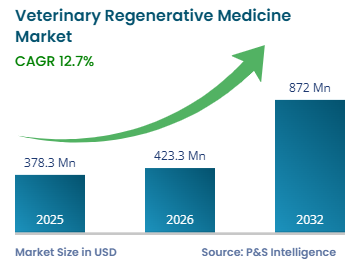
The veterinary regenerative medicine market size will be an estimated USD 378.3 million for 2025, and it will grow by 12.7% during 2026–2032, to reach USD 872.0 million by 2032.
The market expansion is primarily driven by the surging prevalence of chronic musculoskeletal disorders in companion animals, increasing pet ownership globally, and growing demand for advanced therapeutic alternatives to conventional treatments.
Growing pet healthcare expenditure further supports market expansion. As per the World Animal Foundation, in 2024, U.S. spending reached USD 152 billion and is projected to reach USD 157 billion in 2025, reflecting a sustained commitment to pet health, despite economic pressures. This spending trajectory creates favorable conditions for the adoption of innovative therapies like stem cell treatments and platelet-rich plasma procedures.
Additionally, the rising global pet population also fuels market growth, with over 470 million dogs and 370 million cats worldwide in 2025. Technological advancements, including stem cell therapies, platelet-rich plasma, and tissue engineering, are improving treatment outcomes for orthopedic, dermatological, and ophthalmic conditions in companion animals.
Moreover, government and regulatory support further encourage innovation and adoption. The U.S. FDA, the European Medicines Agency (EMA), and Australia’s APVMA have issued guidance for safe manufacture, clinical evaluation, and conditional approvals of advanced veterinary therapies, reducing barriers to commercialization. Furthermore, increasing awareness of animal welfare globally drives adoption of therapies aimed at improving quality of life rather than only managing symptoms.
Veterinary Regenerative Medicine Market Emerging Trends
Advancements in Regulatory Frameworks Are Key Trends
Evolving regulatory pathways established by the FDA Center for Veterinary Medicine are facilitating faster development and commercialization of regenerative therapies.
Gallant's ready-to-use stem cell therapy for refractory feline chronic gingivostomatitis is on track to receiving FDA conditional approval in early 2026.
This regulatory milestone represents a significant advancement for the field, establishing precedent for future product approvals.
The FDA has implemented supportive measures to encourage innovation in veterinary regenerative medicine.
In June 2024, the FDA approved clinical trials at Cornell University Hospital for Animals to explore the use of stem cells to treat musculoskeletal and neurological abnormalities in dogs and horses.
These trials operate under strict FDA oversight, ensuring safety and efficacy standards while generating data necessary for eventual product approval.
Under Regulation (EU) 2019/6, the EMA has defined a framework for biological and ‘novel therapy’ veterinary medicinal products, which is expected to support development of advanced therapies such as tissue-engineered, cell‑ and gene-based treatments.
Agencies in South Korea, Canada, Japan, and Australia are issuing guidance on safe manufacturing, quality standards, and clinical evaluation of cell- and tissue-based veterinary therapies, providing a more predictable pathway to commercialization while ensuring safety and efficacy.
FDA guidance on good manufacturing practices, combined with conditional approval pathways and clinical trial support, reduces uncertainty for developers, establishes clear quality standards, and accelerates the commercialization of veterinary regenerative therapies.
Increasing Prevalence of Musculoskeletal Disorders Is Biggest Driver
The rising incidence of orthopedic and musculoskeletal conditions in companion animals represents the primary driver propelling veterinary regenerative medicine adoption.
A study indicates that in dogs and cats combined, osteoarthritis represents at least 80% of the lameness and joint disease cases in companion animals.
The elbow joint shows particularly high rates of osteoarthritis development, with 57.4% prevalence in dogs older than 8 years, followed by the shoulder at 39.2%, the stifle at 36.4%, and the hip at 35.9%.
These degenerative conditions severely impact animal mobility, quality of life, and overall wellbeing, creating urgent demand for treatment modalities that address underlying pathology rather than merely managing symptoms through pain medication.
Traditional treatment approaches focus predominantly on symptom management through non-steroidal anti-inflammatory drugs, which provide temporary relief but fail to halt disease progression or promote tissue repair.
This therapeutic gap positions regenerative medicine as an attractive alternative, offering potential for actual tissue regeneration, inflammation reduction, and functional restoration through mechanisms like stem cell differentiation and growth factor signaling.
Veterinary Regenerative Medicine Market Segmentation Analysis
Animal Type Analysis
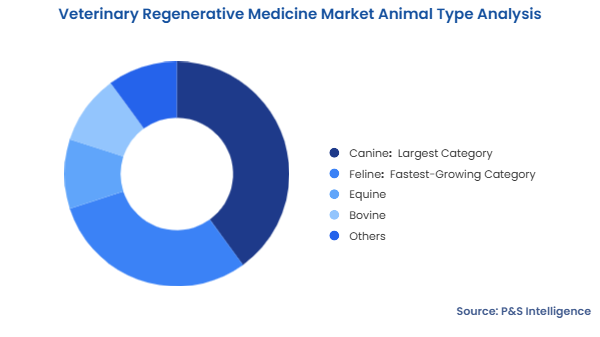
The canine category holds the largest market share, of 40%, in 2025, driven by the high prevalence of orthopedic disorders in dogs and the extensive use of regenerative therapies for conditions like hip dysplasia, cruciate ligament injuries, and elbow dysplasia. Dogs experience frequent soft tissue injuries and degenerative joint disease, particularly in working breeds and active animals, creating substantial therapeutic demand. The longer history of stem cell and PRP therapy development in canines has established clinical protocols and veterinarian familiarity that support continued dominance.
The feline category will have the highest CAGR, of 12.9%, as emerging therapies specifically address unmet needs in cat populations. Studies suggest that feline chronic gingivostomatitis affects up to 26% of domestic cats, and in at least 10% of cases, the disease can become life-threatening. The development of targeted regenerative treatments for conditions like chronic gingivostomatitis and chronic kidney disease, combined with growing recognition of osteoarthritis prevalence in aging cats, drives accelerated adoption. Regulatory progress toward approval of feline-specific therapies further accelerates segment growth.
The animal types analyzed in this report are:
Canine (Largest Category)
Feline (Fastest-Growing Category)
Equine
Bovine
Others
Product Type Analysis
The cell therapy category holds the largest market share, of 50%, in 2025, due to its versatile applications across multiple conditions and well-established clinical evidence. Both autologous stem cell therapies, where cells are harvested from the patient and reinfused, and allogeneic therapies using cells from healthy donors, contribute to segment leadership. Autologous approaches have been commercially available since 2006, establishing market presence and clinical track record, while emerging allogeneic ready-to-use products promise to overcome logistical barriers and expand accessibility.
The biological therapies category will have the highest CAGR, of 13.0%, especially PRP, driven by lower regulatory hurdles compared to cell-based therapies and easier point-of-care preparation. The development of standardized, ready-to-use PRP formulations addresses previous concerns about preparation consistency and makes the therapy accessible to more veterinary practices.
The product types analyzed in this report are:
Cell Therapy (Largest Category)
Stem cell therapy
Autologous
Allogenic
Somatic cell therapy
Autologous
Allogenic
Tissue Engineering Products
Biological Therapies (Fastest-Growing Category)
Platelet-rich plasma
Growth Factor
Others
Gene Therapy
Others
Therapeutic Area Analysis
The orthopedics & musculoskeletal disorders category holds the largest market share, in 2025, due to the high prevalence of joint disease and strong clinical evidence supporting the efficacy of regenerative therapies in these conditions. Osteoarthritis, cruciate ligament injuries, hip and elbow dysplasia, and tendon damage respond favorably to stem cell and PRP treatments, with documented improvements in pain, mobility, and tissue healing.
The wound healing/trauma care category will have the highest CAGR during the forecast period, as regenerative approaches show promise for accelerating healing in acute injuries, surgical wounds, and chronic non-healing wounds. Growth factors and platelet-rich plasma facilitate tissue repair through multiple mechanisms including angiogenesis promotion, inflammation modulation, and cellular proliferation stimulation. Expanding applications in post-surgical recovery and management of complex wounds drive segment acceleration.
The therapeutic areas analyzed in this report are:
Wound Healing/Trauma Care (Fastest-Growing Category)
Dermatology
Ophthalmology
Dentistry
Internal Organ Regeneration
Others
End User Analysis
The veterinary hospitals & clinics category holds the largest market share, of 60%, in 2025, as these facilities serve as the primary delivery points for regenerative therapies. The concentration of advanced diagnostic equipment, trained veterinary specialists, and necessary infrastructure for cell processing and administration at hospitals and specialty clinics supports their market leadership.
The veterinary research institutes/academic institutions category will have the highest CAGR, of 13.1%, driven by expanding clinical trial activity and research into next-generation therapies. These institutions play critical roles in generating safety and efficacy data required for regulatory approval while advancing scientific understanding of regenerative mechanisms. The FDA's support for clinical field studies and the establishment of veterinary innovation programs accelerate research activity at academic centers.
The end users analyzed in this report are:
Veterinary Hospitals & Clinics (Largest Category)
Veterinary Research Institutes/Academic Institutions (Fastest-Growing Category)
Biotech & Pharmaceutical Companies
Veterinary Rehabilitation/Specialty Animal Care Centers
Drive strategic growth with comprehensive market analysis
Veterinary Regenerative Medicine Market Geographical Analysis
North America Veterinary Regenerative Medicine Market Size
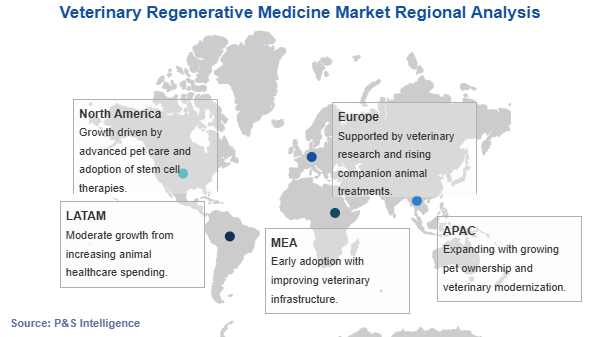
North America holds the largest market share, of 40%, in 2025, driven by high pet ownership rates, substantial veterinary healthcare spending, and the presence of leading regenerative medicine companies. The region benefits from advanced veterinary infrastructure, high awareness among pet owners regarding innovative treatments, and favorable regulatory frameworks that support product development and commercialization.
U.S. Veterinary Regenerative Medicine Market Size
The U.S. has the largest market share in the North American market, with pet ownership penetration in the U.S. reaching exceptionally high levels. As per the World Animal Foundation, dogs are present in 68 million U.S. households at approximately 51% penetration in 2025, while cats are in 49 million households at around 37%. This extensive pet population creates a substantial market opportunity for veterinary therapies. Veterinary care spending reflects a strong commitment to pet health, with dog owners spending an average of USD 580 annually on veterinary care and cat owners spending USD 433 in 2024, says the American Veterinary Medical Association.
The concentration of innovative companies accelerates market development in North America. Major players including Zoetis, VetStem, Gallant, and Animal Cell Therapies, maintain headquarters in the U.S., where they conduct research, development, and commercialization activities. Additionally, the increasing prevalence of osteoarthritis and musculoskeletal disorders in pets creates substantial unmet medical needs that regenerative medicine aims to address.
In the United States, about 14 million adult dogs are affected with osteoarthritis, as per the Morris Animal Foundation. The condition extends beyond senior animals, as 39.8% of young dogs aged 8 months to 4 years old showed radiographic signs of osteoarthritis in at least one joint, highlighting the widespread nature of degenerative joint disease across all age groups. For felines, 90% of cats over 12 years old exhibit X-ray evidence of osteoarthritis, underscoring the significant disease burden in aging cat populations.
Asia-Pacific Veterinary Regenerative Medicine Market Size
Asia-Pacific will have the highest CAGR, of 12.8%, fueled by rapidly expanding pet populations in urban areas, rising disposable incomes, and increasing awareness of advanced veterinary care options. China, Japan, South Korea, and India show particularly strong growth trajectories as pet ownership transitions from functional to companionship-oriented relationships.
China Veterinary Regenerative Medicine Market Size
China represents a major growth opportunity within the region due to the rising pet ownership in China. The country's rising middle class demonstrates a willingness to invest in pet healthcare, while urbanization concentrates pet populations in areas with access to specialized veterinary services. Although regulatory frameworks for regenerative therapies remain under development in many Asian markets, improving standards and growing clinical acceptance support market expansion.
The countries of the market are as follows:
North America (Largest Regional Market)
U.S. (Larger Country)
Canada (Faster-Growing Country)
Europe
Germany (Largest Country)
U.K. (Fastest-Growing Country)
France
Italy
Spain
Rest of Europe
Asia-Pacific (Fastest-Growing Regional Market)
China (Largest Country)
India
Japan (Fastest-Growing Country)
South Korea
Australia
Rest of APAC
Latin America
Brazil (Largest Country)
Mexico (Fastest-Growing Country)
Rest of LATAM
Middle East and Africa
Saudi Arabia (Largest Country)
South Africa
U.A.E. (Fastest-Growing Country)
Rest of MEA
Veterinary Regenerative Medicine Market Share
The market is fragmented with numerous specialized biotechnology companies, established animal health corporations, and academic research institutions all participating in product development and commercialization. Market fragmentation reflects the diversity of therapeutic approaches, including autologous versus allogeneic cell therapies, different cell sources, and varied application areas. No single company dominates across all product categories and therapeutic areas, creating opportunities for specialized players to establish niche positions. Recent developments demonstrate active competition, with Gallant advancing toward potential FDA approval for the first ready-to-use stem cell therapy, while established players like VetStem expand product portfolios to include standardized PRP formulations alongside stem cell services.
Key Veterinary Regenerative Medicine Companies:
VetStem, Inc.
Animal Cell Therapies, Inc.
Boehringer Ingelheim International GmbH
Zoetis Inc.
Dechra Pharmaceuticals PLC
Enso Discoveries
Vetherapy
Integra LifeSciences
Vetbiologics
Ardent Animal Health
Gallant Pet, Inc.
Medivet Biologics LLC
Veterinary Regenerative Medicine Market News
In September 2025, Gallant Pet Inc. achieved the FDA Technical Section Complete status for its ready-to-use stem cell therapy targeting refractory feline chronic gingivostomatitis, supporting its conditional approval, which is expected by early 2026.
In July 2025, Gallant Pet Inc. closed a USD 18-million Series B funding round led by Digitalis Ventures, to further develop its platform of ready-to-use stem cell therapies for companion animals, including upcoming products for canine and feline osteoarthritis.
In June 2024, the FDA approved clinical trials at Cornell University Hospital for Animals to evaluate stem cell therapies for musculoskeletal and neurological conditions in dogs and horses, under a long-term study assessing efficacy and safety.
In August 2023, VetStem Inc. introduced PrecisePRP, an advanced off-the-shelf platelet-rich plasma therapy specifically designed for veterinary use in dogs and horses to manage osteoarthritis via intra-articular administration.
Want a report tailored exactly to your business need?
Leading companies across industries trust us to deliver data-driven insights and innovative solutions for their most critical decisions. From data-driven strategies to actionable insights, we empower the decision-makers who shape industries and define the future. From Fortune 500 companies to innovative startups, we are proud to partner with organisations that drive progress in their industries.
Client Testimonials
Working with P&S Intelligence and their team was an absolute pleasure – their awareness of timelines and commitment to value greatly contributed to our project's success. Eagerly anticipating future collaborations.
McKinsey & Company
India
Unmatched Standards
Our insights into the minutest levels of the markets, including the latest trends and competitive landscape, give you all the answers you need to take your business to new heights
Complete Data Security
We take a cautious approach to protecting your personal and confidential information. Trust is the strongest bond that connects us and our clients, and trust we build by complying with all international and domestic data protection and privacy laws