Saudi Arabia Anti-Aging Treatment Market Size & Opportunities Analysis - Growth Strategies, Competitiveness, and Forecasts (2026 - 2032)
This Report Provides In-Depth Analysis of the Saudi Arabia Anti-Aging Treatment Market Report Prepared by P&S Intelligence, Segmented by Product Type (Anti-Wrinkle, Hair Color, Ultraviolet (UV) Absorption, Anti-Stretch Mark), Treatment (Hair Restoration, Anti-Pigmentation, Adult Acne Therapy, Breast Augmentation, Liposuction, Chemical Peel), Demography (Generation Z, Generation Y, Generation X, Baby Boomers), End User (Dermatology Clinics, Medical Spas & Aesthetic Centers, Hospitals, At-Home Use), Gender (Male, Female), and Geographical Outlook for the Period of 2021 to 2032
Saudi Arabia Anti-Aging Treatment Market Revenue Scope
Key Highlights
Study Period
2021 - 2032
Market Size in 2025
USD 250.0 Million
Market Size in 2026
USD 271.8 Million
Market Size by 2032
USD 471.0 Million
Projected CAGR
9.5%
Largest Province
Al-Riyadh
Fastest-Growing Province
Makkah
Market Structure
Semi-Consolidated
Market Size
Explore the market potential with our data-driven report
Saudi Arabia Anti-Aging Treatment Market Outlook
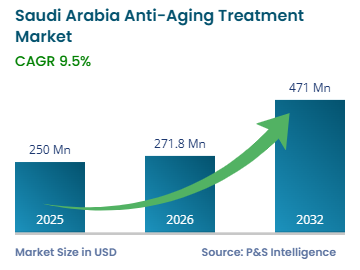
The Saudi Arabian anti-aging treatment market size will be an estimated USD 250.0 million for 2025, and it will grow by 9.5% during 2026–2032, to reach USD 471.0 million by 2032.
The market expansion is driven by Saudi Arabia's rapid demographic transformation, with the elderly population expected to grow from 1.96 million in 2018 to 4.63 million by 2030. This growth trajectory reflects increasing consumer awareness about aesthetic treatments, rising disposable income, and supportive government initiatives under Vision 2030.
The market advance is further supported by the increasing urbanization and the expansion of dermatology clinics, medical spas, and aesthetic centers across major cities such as Riyadh and Jeddah. Growing accessibility to professional anti-aging treatments, wider availability of advanced technologies, and rising acceptance of preventive aesthetic care among both men and women are strengthening overall market penetration.
Saudi Arabia Anti-Aging Treatment Market Emerging Trends & Growth Drivers
Vision 2030 Healthcare Transformation Is Biggest Trend
Vision 2030 healthcare transformation is a key trend accelerating investment and expansion of anti-aging treatment services in Saudi Arabia.
Saudi Arabia's Vision 2030 has allocated USD 65 billion toward healthcare modernization, establishing the Kingdom as a regional medical tourism hub.
This strategic initiative includes the privatization of 290 hospitals and 2,300 health facilities, expanding access to aesthetic treatments through public-private partnerships.
According to the Ministry of Health, life expectancy has improved from 64 years in 1970 to 75 years in 2015, creating a larger population interested in age management solutions.
According to the Saudi Food and Drug Authority, regulatory frameworks have been streamlined to accelerate approval processes for innovative aesthetic treatments and devices.
The government's National Health Insurance expansion provides coverage for certain aesthetic procedures, reducing cost barriers for consumers.
Healthcare infrastructure investments include the establishment of specialized aesthetic centers and streamlining of import pathway for certified medical devices.
Private sector participation has increased substantially, with international aesthetic companies establishing local partnerships to navigate regulatory requirements.
Rising Disposable Income and Demographic Shifts Are Main Drivers
Saudi Arabia’s anti-aging treatment market is growing as the rising disposable incomes and gradual demographic aging drive the adoption of preventive and professional aesthetic treatments, particularly in major urban centers.
The economic growth has enabled consumers to invest in premium anti-aging treatments and products, particularly in metropolitan areas like Riyadh and Jeddah.
According to the General Authority for Statistics (GASTAT) and UN demographic projections, the population aged 40–59 years is expected to expand steadily through 2030, supported by declining fertility rates and rising life expectancy.
Meanwhile, the population aged 60 years and above is projected to grow at a significantly faster pace, increasing its share of the total population.
This is happening alongside Saudi Arabia’s transition from a predominantly young demographic structure toward a more mature age profile by 2030.
Based on UN demographic projections compiled by international demographic databases, the median age of Saudi Arabia’s total population was approximately 29.6 years in 2025.
Generation Y and Generation X cohorts demonstrate strong purchasing power and willingness to invest in appearance maintenance.
Cultural acceptance of aesthetic treatments has improved significantly, with 68% of Saudi consumers willing to pay premium prices for organic and natural anti-aging products, up from 52% in 2020.
Saudi Arabia Anti-Aging Treatment Market Segmentation Analysis
Product Type Analysis
The anti-wrinkle category holds the largest market share, of 40%, in 2025, driven by universal consumer concerns about facial aging and the availability of both topical and injectable solutions. This segment benefits from continuous product innovation, including peptide-rich formulations and advanced delivery systems. Consumer preference for non-invasive solutions has accelerated the adoption of anti-wrinkle creams, serums, and professional treatments.
The hair color category will have the highest CAGR, of 9.7%, reflecting increasing concerns about premature graying due to stress and environmental factors. Rising pollution levels and professional demands have accelerated the appearance of grey hair, particularly among urban populations. The segment benefits from cultural acceptance of hair color use and the availability of halal-certified products meeting Islamic guidelines.
The product types analyzed in this report are:
Anti-Wrinkle (Largest Category)
Hair Color (Fastest-Growing Category)
Ultraviolet (UV) Absorption
Anti-Stretch Mark
Others
Treatment Type Analysis
The hair restoration category holds the largest market share, of 25%, in 2025, driven by the high prevalence of male pattern baldness and increasing acceptance of hair transplant procedures. Advanced techniques like FUE (Follicular Unit Extraction) and DHI (Direct Hair Implantation) have improved treatment outcomes and reduced recovery times. The segment benefits from celebrity endorsements and growing male grooming awareness.
The anti-pigmentation category will have the highest CAGR, reflecting increasing demand for skin tone correction and age spot removal. The harsh Saudi climate intensifies pigmentation concerns, creating strong demand for laser treatments, chemical peels, and specialized topical solutions. Consumer awareness about sun damage prevention has expanded beyond basic sunscreen use to comprehensive pigmentation management.
The treatment types analyzed in this report are:
Hair Restoration (Largest Category)
Anti-Pigmentation (Fastest-Growing Category)
Adult Acne Therapy
Breast Augmentation
Liposuction
Chemical Peel
Others
Demographics Analysis
The generation X category holds the largest market share, of 40%, in 2025, representing the core demographic aged 44-59 years with peak earning capacity and heightened awareness of aging concerns. Professional responsibilities and social expectations drive demand for appearance maintenance, particularly among executives and business leaders in Riyadh and Jeddah.
The generation Y category will have the highest CAGR, of 9.6%, reflecting early adoption of preventive anti-aging measures among millennials aged 28-43 years. This generation emphasizes 'prejuvenation' approaches, investing in treatments before visible aging signs appear.
The demographics analyzed in this report are:
Generation X (Largest Category)
Generation Y (Fastest-Growing Category)
Generation Z
Baby Boomers
End User Analysis
The dermatology clinics category holds the largest market share, of 45%, in 2025, driven by consumer preference for professional consultation and supervised treatments using clinical-grade products. These facilities provide access to advanced procedures, including laser treatments, chemical peels, and injectable therapies, that cannot be replicated in retail environments. The segment benefits from trust in dermatologist expertise and ability to customize treatment protocols based on individual skin assessments.
The at-home category will have the highest CAGR, of 9.8%, accelerated by COVID-19 pandemic lifestyle changes and increasing availability of consumer-grade devices. At-home treatments include LED masks, microcurrent devices, and professional-grade skincare products sold through e-commerce platforms. The segment growth is supported by telemedicine consultations and virtual skin assessments that enable personalized home treatment regimens. Rising consumer confidence in self-administered treatments and cost-effectiveness compared to clinic visits drive adoption.
The end users analyzed in this report are:
Dermatology Clinics (Largest Category)
At-Home (Fastest-Growing Category)
Medical Spas & Aesthetic Centers
Hospitals
Gender Analysis
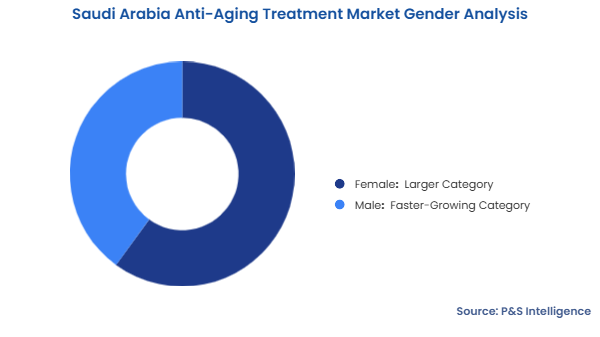
The female category holds the larger market share, of 60%, in 2025, reflecting traditional beauty and skincare focus among Saudi women. According to Chalhoub Group research published in May 2024, female shoppers drive most beauty categories with average spending 55% higher than men. Women demonstrate strong preference for comprehensive skincare routines, anti-aging treatments, and premium products from brands like Estée Lauder and La Roche-Posay. Cultural emphasis on appearance maintenance and social expectations contribute to sustained demand across all age groups.
The male category will have the higher CAGR, of 10.0%, driven by changing grooming perceptions and increasing acceptance of male skincare routines. Men's participation in anti-aging treatments has expanded beyond basic grooming to include specialized procedures like hair restoration, chemical peels, and anti-wrinkle treatments. Brands like L'Oréal Men Expert and NIVEA Men have gained significant traction, with men spending a significant amount on skincare products. Professional appearance requirements and social media influence accelerate male adoption of anti-aging solutions.
The genders analyzed in this report are:
Female (Larger Category)
Male (Faster-Growing Category)
Drive strategic growth with comprehensive market analysis
Saudi Arabia Anti-Aging Treatment Market Geographical Analysis
Al-Riyadh Anti-Aging Treatment Market Size
Al-Riyadh holds the largest market share, of 35%, in 2025, driven by high-income demographics, urbanization, and concentration of premium aesthetic clinics. The capital's status as a business and government center attracts affluent professionals who prioritize appearance maintenance for career advancement. Riyadh’s population is projected to grow substantially by 2030, with credible estimates placing it in the 8.5–9.6 million range, reflecting rapid urbanization and supporting continued market expansion.
The province benefits from advanced healthcare infrastructure, including specialized aesthetic centers like The Clinics, Enfield Royal Saudia, and international clinic partnerships. High disposable income levels enable consumers to access premium treatments, including advanced laser therapies, surgical procedures, and imported skincare products. Government investment in NEOM and other mega-projects has increased demand for executive grooming services.
Makkah Anti-Aging Treatment Market Size
Makkah will have the highest CAGR, driven by Jeddah's emergence as a commercial and cultural hub. The province's Red Sea coastline attracts international businesses and tourism, creating demand for aesthetic services among both residents and visitors. According to the Saudi Commission for Tourism and National Heritage, religious tourism brings millions of visitors annually, supporting medical tourism expansion.
Jeddah's strategic location as the gateway to Mecca positions it as a regional aesthetic services center. The city's diverse international population creates demand for various treatment types and cultural preferences. Recent establishment of facilities like MAYAM Aesthetics demonstrates growing investment in premium aesthetic services. L'Oréal's USD 100 million manufacturing facility in Jeddah further supports local market development.
The provinces of the market are as follows:
Al-Riyadh (Largest Province)
Eastern Province
Makkah (Fastest-Growing Province)
Madinah
Qassim
Asir
Tabuk
Ha'il
Northern Borders
Jazan
Najran
Al-Baha
Al-Jouf
Saudi Arabia Anti-Aging Treatment Market Share
The market is semi-consolidated with multinational companies commanding significant market share through diversified product portfolios spanning mass-market to premium segments. The competitive landscape features established global brands competing alongside emerging digital-native companies and local providers emphasizing cultural authenticity and halal-certified products. The shift from import-dependent models to in-country production reduces lead times, mitigates tariff exposure, and demonstrates long-term commitment to regulatory authorities and consumers.
Omnichannel integration has become essential, as evidenced by partnerships between global brands and local e-commerce platforms. Competitive advantages include extensive distribution networks, clinical training infrastructure, and comprehensive aesthetic practice solution portfolios. Companies leverage economies of scale, physician certification programs, and evidence-based efficacy studies to maintain market positions while addressing diverse customer segments, including dermatologists, aesthetic clinics, and medical spa operators.
Key Saudi Arabia Anti-Aging Treatment Companies:
L'Or
Est
Beiersdorf Middle East FZCO
Allergan Aesthetics (AbbVie)
Galderma Middle East
Cynosure (Hologic Inc.)
Lumenis Ltd.
Alma Lasers Ltd.
Solta Medical Inc.
Johnson & Johnson Services, Inc.
Merz Aesthetics
Candela Medical
Saudi Arabia Anti-Aging Treatment Market News
In March 2025, Cytrellis Biosystems Inc. received approval from the Saudi Food and Drug Authority to commercialize its ellacor with Micro-Coring technology, strengthening its international footprint while introducing advanced non-surgical skin rejuvenation solutions to the local market.
In February 2025, Magrabi Hospitals & Centers Company launched MAYAM Aesthetics in Jeddah, offering specialized dermatology and aesthetic services supported by advanced technologies and personalized treatment approaches.
In February 2025, YA-MAN Ltd. launched products in Saudi Arabia, supported by an Arabic e-commerce platform and partnerships with local aesthetic clinics, marking its first expansion into the Middle East.
In January 2025, Cynosure Lutronic Inc. entered into a strategic distribution agreement with Amico Aesthetics, appointing the company as its exclusive distributor across the Middle East, including Saudi Arabia, to expand access to advanced aesthetic technologies and professional training.
Want a report tailored exactly to your business need?
Leading companies across industries trust us to deliver data-driven insights and innovative solutions for their most critical decisions. From data-driven strategies to actionable insights, we empower the decision-makers who shape industries and define the future. From Fortune 500 companies to innovative startups, we are proud to partner with organisations that drive progress in their industries.
Client Testimonials
Working with P&S Intelligence and their team was an absolute pleasure – their awareness of timelines and commitment to value greatly contributed to our project's success. Eagerly anticipating future collaborations.
McKinsey & Company
India
Unmatched Standards
Our insights into the minutest levels of the markets, including the latest trends and competitive landscape, give you all the answers you need to take your business to new heights
Complete Data Security
We take a cautious approach to protecting your personal and confidential information. Trust is the strongest bond that connects us and our clients, and trust we build by complying with all international and domestic data protection and privacy laws