Hereditary Cancer Testing Market Size & Share Analysis - Emerging Trends, Growth Opportunities, Competitive Landscape, and Forecasts (2026 - 2032)
This Report Provides In-Depth Analysis of the Hereditary Cancer Testing Market Report Prepared by P&S Intelligence, Segmented by Cancer Type (Breast Cancer, Colorectal Cancer, Ovarian Cancer, Prostate Cancer, Lung Cancer, Gastric/Stomach Cancer, Melanoma, Pancreatic Cancer, Cervical Cancer, Uterine Cancer), Technology (Molecular Testing, Cytogenetic Testing, Biochemical Testing), Sample (Blood, Saliva, Urine), End User (Hospitals, Diagnostic Centers, Research Institutions), Age Group (Below 30 years, 30-50 years, Above 50 years), Patient Gender (Female, Male), and Geographical Outlook for the Period of 2019 to 2032
Explore the market potential with our data-driven report
Hereditary Cancer Testing Market Future Outlook
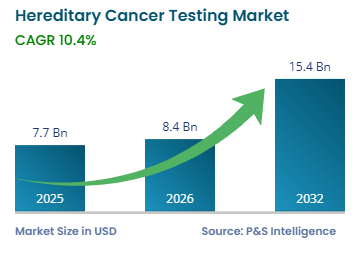
The hereditary cancer testing market size will be an estimated USD 7.7 billion for 2025, and it will grow by 10.4% during 2026–2032, to reach USD 15.4 billion by 2032.
The major factors responsible for the growth of the market include increasing awareness about genetic risk factors, advancements in next-generation sequencing technologies, rising cancer incidence globally, and growing adoption of personalized medicine approaches.
The surging prevalence of hereditary cancer syndromes is a key factor for the rising adoption of genetic testing services. According to the National Cancer Institute, inherited harmful changes in BRCA1 or BRCA2 genes affect 0.2% to 0.3% of the general population, with women carrying these mutations having more than a 60% chance of developing breast cancer during their lifetime compared to 13% in the general population. Moreover, government initiatives supporting cancer screening also contribute indirectly to increased awareness of genetic risk factors. In February 2024, the National Institutes of Health launched the Cancer Screening Research Network to evaluate emerging cancer screening technologies, supporting early detection strategies.
Furthermore, technological advancements in next-generation sequencing have revolutionized hereditary cancer testing by enabling comprehensive multigene panel analysis at reduced costs and improved turnaround times. The integration of NGS technology allows simultaneous analysis of multiple cancer-related genes, providing more accurate risk assessments compared to traditional single-gene testing methods.
Hereditary Cancer Testing Market Trends & Drivers
Advancements in Next-Generation Sequencing Are Key Trends
The rapid adoption of next-generation sequencing technology represents a key trend reshaping the hereditary cancer testing landscape.
NGS has fundamentally transformed genetic testing by enabling comprehensive analysis of multiple genes simultaneously, offering superior accuracy and efficiency compared to traditional Sanger sequencing methods.
The integration of NGS-based multigene panels has become increasingly standard in clinical practice for hereditary cancer risk assessment.
These panels can analyze 20 to 80 genes associated with various cancer types, providing clinicians and patients with comprehensive genetic information to guide preventive and therapeutic decisions.
The technology has particularly revolutionized BRCA1 and BRCA2 testing, where multigene panels now routinely identify mutations in additional genes, such as PALB2, ATM, CHEK2, and TP53, expanding the scope of hereditary cancer detection beyond traditional single-gene approaches.
Moreover, the declining costs of NGS technology have improved accessibility to hereditary cancer testing services.
Lower NGS costs and improved insurance coverage have accelerated the adoption of hereditary cancer testing, especially among high-risk individuals.
Rising Global Cancer Burden Is Biggest Driver
The increasing global incidence of cancer represents a major driver for yjr hereditary cancer testing market growth.
According to the World Health Organization, there were 20 million new cancer cases and 9.7 million deaths worldwide in 2022, with projections indicating the cancer burden will increase by 77% to reach 35 million cases by 2050.
This alarming rise in cancer incidence, driven by aging populations, lifestyle changes, and environmental factors, has intensified the focus on early detection and prevention strategies.
The World Cancer Research Fund estimated 2,296,840 breast cancer cases among women globally in 2022, while the WHO recorded 670,000 deaths for the same year.
Female breast cancer was the most-commonly diagnosed cancer and leading cause of cancer death in women worldwide.
The high prevalence of these cancers, particularly breast and ovarian cancers with known hereditary components, has driven increased demand for genetic testing services to identify at-risk individuals before disease onset.
Furthermore, the recognition that 5% to 10% of all cancers result from inherited genetic mutations has highlighted the importance of hereditary cancer testing in cancer prevention strategies.
This preventive approach has proven particularly effective for BRCA gene mutation carriers, where prophylactic surgeries and targeted screening have demonstrated significant reductions in cancer mortality rates.
Hereditary Cancer Testing Market Segmentation Analysis
Cancer Type Analysis
The breast cancer category holds the largest market share in 2025. This dominance reflects the high prevalence of hereditary breast cancer syndromes, particularly those associated with BRCA1 and BRCA2 mutations, which represent the most well-established and clinically actionable hereditary cancer risk factors. The leading position of breast cancer testing is supported by robust clinical guidelines recommending genetic testing for individuals with family histories of breast cancer, early-onset disease, or specific ethnic backgrounds such as Ashkenazi Jewish ancestry.
The colorectal cancer category will have the highest CAGR during the forecast period. This accelerated growth stems from increasing recognition of hereditary colorectal cancer syndromes, particularly Lynch syndrome, which accounts for approximately 3% to 5% of all colorectal cancer cases. The expanding implementation of universal tumor screening protocols, which test all colorectal cancers for mismatch repair deficiency regardless of family history, has significantly increased the identification of hereditary cases requiring germline confirmation testing. Additionally, these cancer tests are growing rapidly due to increased recognition of hereditary syndromes like Lynch syndrome and the adoption of universal screening and targeted prevention strategies. As per the WHO, colorectal cancer was the second-deadliest in 2022, taking 904,019 lives in 2022.
The cancer types analyzed in this report are:
Breast (Largest Category)
Colorectal (Fastest-Growing Category)
Ovarian
Prostate
Lung
Gastric/Stomach
Melanoma
Pancreatic
Cervical
Uterine
Others
Technology Analysis
The molecular testing category holds the largest market share, of 55%, in 2025. This leading position reflects the technological superiority and widespread clinical adoption of molecular techniques, particularly next-generation sequencing, for comprehensive genetic analysis. Molecular testing methodologies enable precise identification of pathogenic variants across multiple genes simultaneously, providing clinicians with actionable genetic information to guide patient management decisions. Moreover, next-generation sequencing has emerged as the gold standard technology within molecular testing, enabling high-throughput analysis of entire gene panels at unprecedented speed and accuracy.
The cytogenic testing category will have the highest CAGR, of 10.6%, driven by increasing recognition of chromosomal abnormalities and large structural variants in hereditary cancer predisposition. The integration of multiple testing technologies into comprehensive hereditary cancer assessment strategies has enhanced diagnostic accuracy and clinical utility. Laboratories increasingly employ tiered testing algorithms combining molecular and cytogenetic approaches to maximize variant detection rates while optimizing cost-effectiveness.
The technologies analyzed in this report are:
Molecular Testing (Largest Category)
Next-Generation Sequencing (NGS)
Polymerase Chain Reaction (PCR)
Other Molecular Methods
Cytogenetic Testing (Fastest-Growing Category)
Biochemical Testing
Others
Sample Analysis
Blood is the most commonly used sample type for hereditary cancer testing, with XX% share in 2025. It provides high-quality DNA from white blood cells, is easy to collect, and is compatible with single-gene and multi-gene panel tests, making it the preferred choice for routine germline mutation analysis.
Saliva samples are experiencing the fastest growth, driven by the increasing adoption of direct-to-consumer testing and patient preference for non-invasive collection methods. Saliva collection eliminates the need for phlebotomy, reducing patient discomfort and enabling self-collection in non-clinical settings. Saliva testing is gaining popularity for its non-invasive collection and suitability for broader population screening.
The samples analyzed in this report are:
Blood (Largest Category)
Saliva (Fastest-Growing Category)
Urine
Others
End User Analysis
The hospitals category holds the largest market share, of 55%, in 2025, reflecting the central role of hospital-based oncology departments in hereditary cancer testing service delivery. The availability of multidisciplinary care teams, including medical oncologists, genetic counselors, and specialized nurses, enables hospitals to provide high-quality genetic testing services with appropriate pre-test counseling and post-test management. Hospitals provide comprehensive cancer care encompassing diagnosis, treatment, and genetic counseling services, creating integrated care pathways that facilitate genetic testing implementation.
The diagnostics centers category will have the highest CAGR during the forecast period. This rapid growth reflects the expanding role of specialized genetic testing laboratories in hereditary cancer testing service delivery. Dedicated diagnostic centers offer focused expertise in genetic testing, advanced laboratory technologies, and efficient high-throughput testing workflows that enable cost-effective service delivery. These centers often partner with smaller healthcare facilities and private practices that lack in-house genetic testing capabilities, expanding access to testing services across diverse healthcare settings.
The end users analyzed in this report are:
Hospitals (Largest Category)
Diagnostic Centers (Fastest-Growing Category)
Research Institutions
Others
Age Group Analysis
The above 50 years category holds the largest market share, of 50%, in 2025, driven by the higher cancer incidence rates in older populations and increased clinical suspicion for hereditary cancer syndromes when cancer is diagnosed at advanced ages with strong family histories. Healthcare providers routinely recommend genetic testing for older adults diagnosed with specific cancer types, particularly when family history patterns suggest hereditary predisposition or when testing results would influence treatment decisions.
The 30–50 years category will have the highest CAGR, of 10.9%, driven by increasing awareness among younger adults about hereditary cancer risks and growing recognition of the value of early genetic testing before cancer development. Younger individuals with family histories of cancer increasingly seek predictive genetic testing to inform life decisions, including family planning, career choices, and preventive medical interventions.
The age groups analyzed in this report are:
Above 50 Years (Largest Category)
30–50 Years (Fastest-Growing Category)
Below 30 Years
Patient Gender Analysis
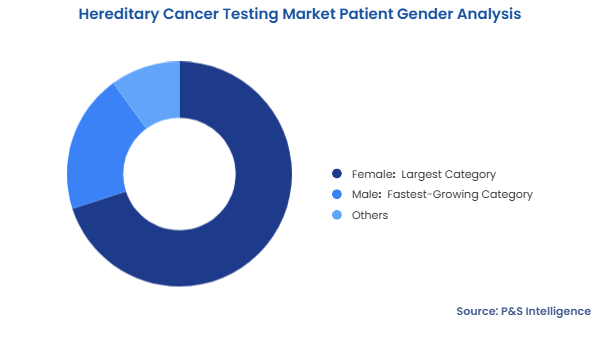
The female category holds the largest market share, of 70%, in 2025. This dominance reflects the higher prevalence of hereditary breast and ovarian cancer syndromes, which primarily affect women, as well as greater awareness and utilization of genetic testing services among female populations. The well-established clinical guidelines for BRCA testing in women with personal or family histories of breast or ovarian cancer have driven widespread testing adoption in this demographic.
The male category will have the highest CAGR, with increasing recognition of hereditary cancer risks in men. Men carrying BRCA2 mutations face substantially elevated risks for prostate cancer and male breast cancer, while other hereditary syndromes, such as Lynch syndrome, affect both sexes equally. Growing awareness among healthcare providers and patients about hereditary cancer risks in men, combined with expanding clinical guidelines recommending testing for males with specific family history patterns, is driving increased testing utilization in the male population.
The patient genders analyzed in this report are:
Female (Largest Category)
Male (Fastest-Growing Category)
Others
Drive strategic growth with comprehensive market analysis
Hereditary Cancer Testing Market Regional Outlook
North America Hereditary Cancer Testing Market Size
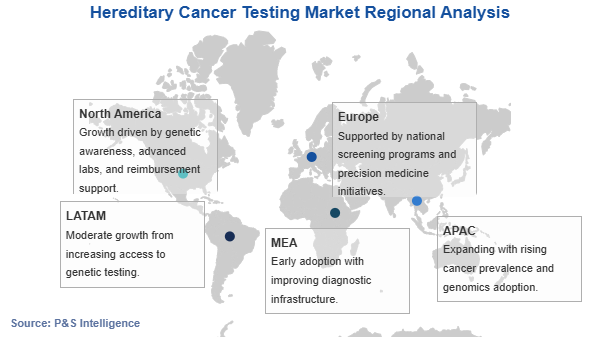
North America holds the largest market share, of 45%, in 2025. This dominance is primarily attributable to advanced healthcare infrastructure, comprehensive insurance coverage for genetic testing, high awareness levels about hereditary cancer risks, and presence of leading genetic testing companies. The region benefits from well-established clinical guidelines supporting widespread genetic testing adoption and robust regulatory frameworks ensuring test quality and accuracy.
U.S. Hereditary Cancer Testing Market Size
The U.S. accounts for the majority of the North American market revenue, driven by high cancer incidence rates and sophisticated healthcare delivery systems that integrate genetic testing into standard oncology care. The Centers for Medicare & Medicaid Services expanded coverage for next-generation sequencing tests in cancer patients, significantly improving access to hereditary cancer testing for Medicare beneficiaries. Additionally, numerous state and federal initiatives promoting precision medicine and cancer prevention have supported market expansion.
Canada Hereditary Cancer Testing Market Size
Canada represents a smaller but growing market, with provincial health systems increasingly incorporating hereditary cancer testing into publicly funded healthcare programs. The country has established specialized hereditary cancer clinics and genetic counseling services that provide comprehensive risk assessment and management for high-risk individuals. Canadian healthcare authorities have recognized the cost-effectiveness of predictive genetic testing for preventing cancers in high-risk populations, supporting broader testing implementation.
Asia-Pacific Hereditary Cancer Testing Market Size
Asia-Pacific will have the highest CAGR, of 10.5%, driven by increasing cancer incidence, growing awareness about genetic testing, improving healthcare infrastructure, and rising disposable incomes, enabling access to advanced diagnostic services. Several Asia Pacific countries have implemented national cancer control programs incorporating genetic testing components, accelerating market development.
China Hereditary Cancer Testing Market Size
China represents a largest market within Asia-Pacific, driven by its massive population base and rapidly increasing cancer burden. According to the WHO Global Cancer Observatory, Asia accounted for nearly half of global cancer cases in 2022. The Chinese government has prioritized cancer prevention and early detection, implementing national screening programs and expanding insurance coverage for genetic testing services. Major Chinese healthcare institutions have established genetic testing laboratories and trained a genetic counseling workforce to support hereditary cancer testing services.
India Hereditary Cancer Testing Market Size
India is experiencing robust growth in hereditary cancer testing adoption, driven by increasing cancer awareness, expanding private healthcare sector, and growing middle class with the ability to afford genetic testing services. Indian healthcare providers are increasingly offering genetic testing for common hereditary cancer syndromes, particularly breast and colorectal cancers. However, challenges including limited insurance coverage, shortage of trained genetic counselors, and cultural barriers to genetic testing continue to constrain market development in certain population segments.
Japan Hereditary Cancer Testing Market Size
Japan has emerged as a sophisticated market for hereditary cancer testing, with advanced molecular diagnostic capabilities and high-quality healthcare delivery systems. Japanese healthcare authorities have incorporated genetic testing into national cancer control strategies, with insurance coverage available for testing individuals meeting specific clinical criteria. The country's aging population and high breast and colorectal cancer incidence rates drive continued market growth.
The regions and countries analyzed are as follows:
North America (Largest Regional Market)
U.S. (Larger and Faster-Growing Country)
Canada
Europe
Germany (Largest Country)
U.K.
France (Fastest-Growing Country)
Italy
Spain
Rest of Europe
Asia-Pacific (Fastest-Growing Regional Market)
China (Largest Country)
India (Fastest-Growing Country)
Japan
South Korea
Australia
Rest of APAC
Latin America
Brazil (Largest Country)
Mexico (Fastest-Growing Country)
Rest of LATAM
Middle East and Africa
Saudi Arabia (Largest Country)
South Africa (Fastest-Growing Country)
U.A.E.
Rest of MEA
Hereditary Cancer Testing Market Share
The market is semi-consolidated with several major players holding significant market shares alongside numerous smaller specialized testing laboratories. This market structure reflects the complex nature of hereditary cancer testing services, which require substantial expertise in molecular genetics, bioinformatics, and genetic counseling. Recent strategic activities in the market demonstrate the dynamic competitive environment. The market also features numerous regional and local genetic testing laboratories providing hereditary cancer testing services in specific geographic markets. These smaller players often focus on niche segments, such as specific ethnic populations with founder mutations or particular cancer types, competing through specialized expertise and personalized service delivery.
Key Hereditary Cancer Testing Companies:
Myriad Genetics
Invitae Corporation
Bio-Rad Laboratories
CSL Ltd
Qiagen NV
Danaher Corporation
Thermo Fisher Scientific
Abbott Laboratories
Eurofins Scientific
F. Hoffmann?La Roche Ltd
Illumina, Inc.
Natera, Inc.
Hereditary Cancer Testing Market News
In February 2025, Foundation Medicine launched FoundationOne Germline and FoundationOne Germline More tests, partnering with Fulgent Genetics in the U.S., using next-generation sequencing technology to identify genetic mutations in hereditary cancer for individuals with family histories.
In September 2024, Ambry Genetics announced enhanced hereditary genetic testing panels incorporating additional genes and indications, enabling more comprehensive genetic assessments for individuals with suspected hereditary cancer syndromes.
In October 2024, Myriad Genetics entered into a partnership with Flatiron Health to integrate MyRisk Hereditary Cancer Test results directly into Flatiron's cloud-based Electronic Medical Record platform, OncoEMR, streamlining physician access to genetic testing results and facilitating more efficient clinical decision-making in oncology practices.
In February 2024, Exact Sciences introduced the Riskguard hereditary cancer test in the U.S., offering a personalized assessment of genetic and familial risks for 10 prevalent cancers.
Want a report tailored exactly to your business need?
Leading companies across industries trust us to deliver data-driven insights and innovative solutions for their most critical decisions. From data-driven strategies to actionable insights, we empower the decision-makers who shape industries and define the future. From Fortune 500 companies to innovative startups, we are proud to partner with organisations that drive progress in their industries.
Client Testimonials
Working with P&S Intelligence and their team was an absolute pleasure – their awareness of timelines and commitment to value greatly contributed to our project's success. Eagerly anticipating future collaborations.
McKinsey & Company
India
Unmatched Standards
Our insights into the minutest levels of the markets, including the latest trends and competitive landscape, give you all the answers you need to take your business to new heights
Complete Data Security
We take a cautious approach to protecting your personal and confidential information. Trust is the strongest bond that connects us and our clients, and trust we build by complying with all international and domestic data protection and privacy laws