Veterinary Eye Care Market Size & Share Analysis - Emerging Trends, Growth Opportunities, Competitive Landscape, and Forecasts (2026 - 2032)
This Report Provides In-Depth Analysis of the Veterinary Eye Care Market Report Prepared by P&S Intelligence, Segmented by Product Type (Devices & Instruments, Medications), Animal Type (Canine, Feline, Equine, Bovine), Indication (Uveitis, Cataract, Glaucoma, Conjunctivitis, Corneal Disorders, Retinal Disorders, Eyelid Abnormalities, Other Indications), Distribution Channel (Veterinary Distributors, E-commerce / Online Stores, Retail Pharmacies), End User (Veterinary Hospitals & Clinics, Pet Owners, Research Institutions), and Geographical Outlook for the Period of 2019 to 2032
Explore the market potential with our data-driven report
Veterinary Eye Care Market Future Outlook
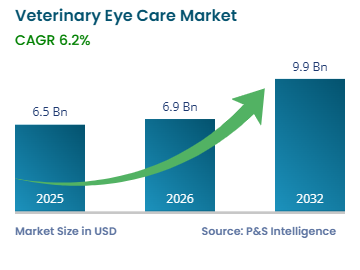
The veterinary eye care market size will be an estimated USD 6.5 billion for 2025, and it will grow by 6.2% during 2026–2032, to reach USD 9.9 billion by 2032.
The market growth is primarily driven by the rising prevalence of ocular disorders in companion animals, increasing pet ownership and humanization trends, and advancements in veterinary ophthalmic technologies.
The surging global pet population is a key factor driving demand for specialized veterinary eye care services and products. Dogs are present in approximately one in three homes globally, while cats reside in about a quarter of homes worldwide. According to Health for Animals, more than 50% of households worldwide own at least one pet, with the global pet population reaching approximately 1 billion animals. The humanization of pets has significantly influenced spending behavior among pet owners, who increasingly prioritize advanced healthcare services, including specialized ophthalmology treatments.
As per the American Animal Hospital Association, approximately 20% of dogs and 30% of cats experience some form of eye disease annually, translating to millions of pets requiring specialized eye care. This growing disease burden, coupled with rising pet healthcare expenditure, is fueling robust growth across the veterinary eye care industry.
Additionally, technological advancements in veterinary ophthalmology, including optical coherence tomography, advanced imaging systems, and minimally invasive surgical techniques, are expanding treatment options and improving clinical outcomes.
Veterinary Eye Care Market Trends & Drivers
Rising Pet Ownership and Humanization Are Key Trends
The increasing global pet population and the ongoing shift toward pet humanization are key trends for the veterinary eye care market.
Pet owners today view their animals as integral family members, leading to higher spending on specialized healthcare services, including ophthalmology.
According to the American Pet Products Association (APPA), U.S. citizens spent USD 152 billion in 2024 on their pets and are projected to spend USD 157 billion in 2025.
This substantial increase in pet healthcare expenditure reflects the willingness of owners to invest in advanced diagnostic and treatment services.
The global dog population is estimated at around 470 million pet dogs, while there are approximately 370 million pet cats kept as companion animals worldwide.
This large and growing pet population creates a vast market for veterinary services, particularly for breed-specific eye conditions that require specialized ophthalmologic care.
Breeds such as pugs, bulldogs, Cocker Spaniels, and Boston terriers are genetically predisposed to various ocular disorders, further amplifying demand for veterinary eye care products and services.
Furthermore, millennials represent 30% of pet-owning households, making them the largest single generation in this demographic for 2025, with Gen Z comprising 20% of pet-owning households and showing a 43.5% increase from 2023.
Younger generations are particularly committed to pet healthcare, with 50% of Gen Z describing their pets as actual children and spending significantly more on pet care than older generations.
Increasing Prevalence of Ocular Disorders in Animals Is Biggest Driver
The rising incidence of eye diseases in companion animals represents a significant growth driver for the veterinary eye care market.
As per the National Library of Medicine, ocular diseases were noted in 9.07% of examined dogs in a May 2025 report, with conjunctivitis accounting for 27.9% and eyelid abnormalities representing 24% of cases.
These common conditions require ongoing treatment and management, driving consistent demand for therapeutic medications and diagnostic services.
Cataracts represent one of the most-prevalent ocular conditions in dogs, with approximately 75–80% of diabetic dogs developing cataracts within the first year of diagnosis, according to Cornell University College of Veterinary Medicine.
The condition progresses rapidly and frequently leads to severe lens-induced uveitis, which can cause secondary glaucoma.
Moreover, age-related eye disorders are prevalent, with 50% of dogs above 9 years developing cataracts or lenticular sclerosis, with the incidence rising to nearly 100% in dogs above 13 years, as per VCA Animal Hospitals' report.
In cats, conjunctivitis, corneal ulcers, uveitis, and glaucoma are becoming increasingly common.
Infections such as feline herpesvirus, toxoplasmosis, and systemic conditions can impact ocular health, necessitating specialized diagnostic and treatment approaches.
Rising awareness of the importance of early diagnosis and treatment of eye disorders is leading to more veterinary consultations and greater demand for ophthalmic products and services.
These factors, combined with the expanding elderly pet population globally, are propelling substantial growth in the veterinary eye care market.
Veterinary Eye Care Market Segmentation Analysis
Product Type Analysis
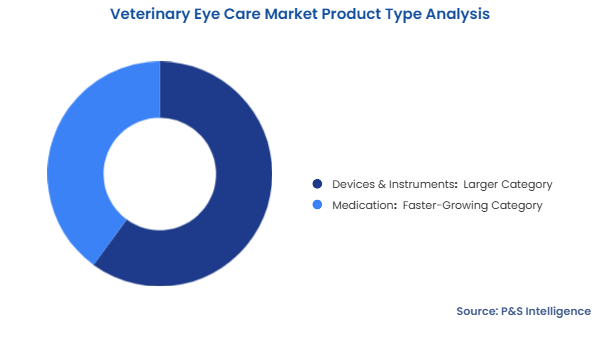
The devices & instruments category holds the larger market share, of 60%, in 2025, due to the increasing adoption of advanced diagnostic and surgical tools in veterinary ophthalmology practices. Technologies such as fundus cameras, slit lamps, tonometers, and optical coherence tomography systems have become essential for precise diagnosis and monitoring of ocular disorders. The availability of minimally invasive surgical instruments, including phacoemulsification systems for cataract surgery and laser equipment for treating glaucoma and corneal conditions, further strengthens this category's market position.
The medication category will have the higher CAGR, of 6.5%, driven by the growing number of chronic eye conditions requiring long-term pharmaceutical management. The increasing prevalence of conjunctivitis, uveitis, and corneal disorders in companion animals creates sustained demand for antibiotics, anti-inflammatory medications, and lubricants. The development of veterinary-specific formulations and sustained-release drug delivery systems is broadening therapeutic options and enhancing treatment adherence.
The product types analyzed in this report are:
Devices & Instruments (Larger Category)
Diagnostic Devices
Surgical Instruments
Others
Medication (Faster-Growing Category)
Antibiotics
NSAIDs
Corticosteroids
Lubricants/Artificial Tears
Analgesics
Others
Animal Type Analysis
The canine category holds the largest market share, of 35%, in 2025, driven by the high prevalence of ocular disorders in dogs and the large global dog population. Dogs are particularly susceptible to numerous eye conditions, including cataracts, glaucoma, corneal ulcers, and retinal diseases, which require specialized diagnosis and treatment. As per APPA 2024-2025 data, about 68 million U.S. households own dogs. Breeds like Cocker Spaniels, Boston Terriers, Poodles, and Bulldogs are prone to ocular disorders, boosting ophthalmic care demand.
The feline category will have the highest CAGR during the forecast period, fueled by rising awareness of cat ocular diseases and increasing cat ownership globally. Cat owners are becoming more knowledgeable about conditions such as conjunctivitis, corneal ulcers, uveitis, and glaucoma, leading to earlier diagnosis and treatment. Advances in feline-specific ophthalmic treatments and diagnostic tools, including tele-ophthalmology services, are improving access to specialized care. The growing trend of cat ownership in urban areas and the humanization of cats as family members are driving increased healthcare spending on feline ophthalmology.
The animal types analyzed in this report are:
Canine (Largest Category)
Feline (Fastest-Growing Category)
Equine
Bovine
Others
Indication Analysis
The uveitis category holds the largest market share in 2025, due to its high prevalence and complex management requirements. According to the American College of Veterinary Ophthalmologists, immune-mediated uveitis is the most common cause in dogs and cats, accounting for nearly 75% of cases. The chronic and recurrent nature of uveitis requires ongoing management, driving repeat veterinary visits and sustained demand for anti-inflammatory medications, corticosteroids, and immunosuppressive therapies.
The cataract category will have the highest CAGR during the forecast period, driven by the aging pet population and the high prevalence of cataract formation in specific dog breeds. The prevalence of cataract formation increased by approximately 255% from 1964 to 2003 in North American veterinary teaching hospitals.
The availability of advanced surgical techniques, including phacoemulsification with intraocular lens implantation, and improving success rates of cataract surgery, are encouraging more pet owners to pursue surgical treatment. The growing awareness about the impact of cataracts on quality of life and the expanding pet insurance coverage for surgical procedures are contributing to the rapid growth of this segment.
The indications analyzed in this report are:
Uveitis (Largest Category)
Cataract (Fastest-Growing Category)
Glaucoma
Conjunctivitis
Corneal Disorders
Retinal Disorders
Eyelid Abnormalities
Other Indications
Distribution Channel Analysis
The veterinary distributors category holds the largest market share, of 40%, in 2025, serving as the primary supply channel bridging manufacturers and veterinary clinics, particularly in remote and rural areas. These distributors maintain comprehensive product portfolios, including diagnostic equipment, surgical instruments, and pharmaceutical products, providing convenient one-stop procurement for veterinary practices.
The e-commerce/online stores category will have the highest CAGR, of 6.4%, driven by changing purchasing behaviors and the convenience of digital platforms. The growing trend of direct-to-consumer sales of over-the-counter eye care products, including lubricants, cleansers, and preventive care items, is accelerating online channel growth. The expansion of teleophthalmology services and remote consultations is further supporting online sales of veterinary eye care products.
The distribution channels analyzed in this report are:
The veterinary hospitals & clinics category holds the largest market share, of 65%, in 2025, owing to their role as the primary point of care for diagnosis, treatment, and surgical interventions in veterinary ophthalmology. These facilities are equipped with specialized diagnostic equipment, surgical theaters, and trained ophthalmologists capable of performing complex procedures, such as cataract surgery, glaucoma management, and corneal transplantation. The concentration of emergency eye care services and the availability of advanced imaging and treatment technologies in veterinary hospitals make them the dominant end-user segment.
The research institutions category will have the highest CAGR, of 6.6%, driven by increasing investment in veterinary ophthalmology research and the development of innovative treatments. These institutions are at the forefront of gene therapy research for inherited ocular diseases, development of novel drug delivery systems, and testing of advanced surgical techniques. The collaboration between research institutions, veterinary schools, and pharmaceutical companies is accelerating the translation of scientific discoveries into clinical applications.
The end users analyzed in this report are:
Veterinary Hospitals & Clinics (Largest Category)
Pet Owners
Research Institutions (Fastest-Growing Category)
Others
Drive strategic growth with comprehensive market analysis
Veterinary Eye Care Market Regional Outlook
North America Veterinary Eye Care Market Size
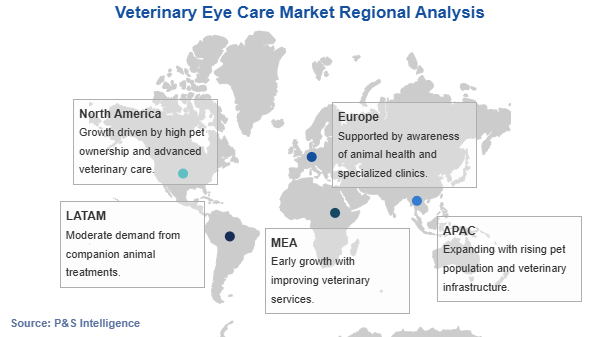
North America holds the largest market share, of 40%, in 2025. This dominance is attributed to the high pet ownership rates globally, advanced veterinary healthcare infrastructure, and strong awareness about animal eye health. The U.S., in particular, leads the regional market with approximately 66% of households owning pets as of 2024, representing about 86.9 million pet-owning households according to the American Veterinary Medical Association (AVMA).
The strong network of veterinary ophthalmologists, advanced diagnostic centers, and rapid adoption of advanced ophthalmic technologies significantly support market expansion. The strong penetration of pet insurance in the region further supports access to expensive ophthalmic treatments, with 6.25 million pets insured in 2023, growing to 7.03 million by the end of 2024, as per NAPHIA data.
Additionally, the presence of leading veterinary pharmaceutical companies, medical device manufacturers, and research institutions in North America drives innovation and product development in veterinary ophthalmology. The region's favorable regulatory environment, including standardized veterinary practice guidelines and consumer protection regulations for pet insurance, creates a conducive ecosystem for market growth.
Asia-Pacific Veterinary Eye Care Market Size
Asia-Pacific will have the highest CAGR, of 6.3%, driven by rapidly increasing pet ownership, rising disposable incomes, and growing awareness about animal healthcare. Japan's pet market is maturing, with the feline population expected to reach 8.6 million by 2028, according to Canada's Agriculture Department data. The adoption of telemedicine and tele-ophthalmology services across Asia-Pacific is enhancing access to specialized eye care, particularly in rural areas with limited veterinary infrastructure. Additionally, expanding middle-class populations with higher disposable incomes and increasing pet humanization trends are expected to drive substantial market growth across the region during the forecast period.
China Veterinary Eye Care Market Size
Pet ownership in this country has experienced dramatic growth, with China's pet population increasing 113% between 2014 and 2019, according to Health for Animals. Demographic changes, including urbanization, smaller household sizes, and declining birth rates, are contributing to increased pet adoption across major Asian markets.
India Veterinary Eye Care Market Size
India's veterinary eye care market is expanding, driven by rising pet ownership, awareness of ocular diseases, and improved access to advanced treatments. According to Dogster (2024), India is home to over 31 million pet dogs, reflecting one of the world’s fastest-growing pet populations driven by increasing urbanization and pet humanization trends, creating substantial demand for veterinary services. The February 2025 launch of an advanced eye care center in Vadodara, Gujarat, highlights progress in cataract, glaucoma, and corneal therapies in the region.
The countries of the market are as follows:
North America (Largest Regional Market)
U.S. (Larger Country)
Canada (Faster-Growing Country)
Europe
Germany (Largest Country)
U.K. (Fastest-Growing Country)
France
Italy
Spain
Rest of Europe
Asia-Pacific (Fastest-Growing Regional Market)
China (Largest Country)
India
Japan (Fastest-Growing Country)
South Korea
Australia
Rest of APAC
Latin America
Brazil (Largest Country)
Mexico (Fastest-Growing Country)
Rest of LATAM
Middle East and Africa
Saudi Arabia (Fastest-Growing Country)
South Africa
U.A.E. (Largest Country)
Rest of MEA
Veterinary Eye Care Market Share
The market is fragmented with numerous international and regional players competing across different product segments and geographies. The market includes large animal health companies offering comprehensive ophthalmic product portfolios, specialized veterinary ophthalmology equipment manufacturers, and pharmaceutical companies focusing on therapeutic medications. Competition is characterized by continuous product innovation, strategic partnerships with veterinary clinics, and expansion into emerging markets. Major players are focusing on developing advanced diagnostic equipment incorporating artificial intelligence for automated disease detection, minimally invasive surgical instruments, and novel drug delivery systems. The expanding market opportunity in emerging regions and the development of innovative treatment modalities present significant growth prospects for both established players and new entrants.
Key Veterinary Eye Care Companies:
Zoetis Inc.
Merck Animal Health
Boehringer Ingelheim Animal Health
Dechra Pharmaceuticals PLC
Elanco Animal Health Inc.
Ceva Sant
Virbac
Vetoquinol S.A.
Bausch + Lomb Corporation
I-MED Animal Health
Reichert, Inc.
Accutome Inc.
AN-VISION GmbH
Dômes Pharma Inc.
IDEXX Laboratories, Inc.
Veterinary Eye Care Market News
In July 2025, Dômes Pharma Inc. partnered with Fear Free LLC under its Preferred Product Program to promote stress-free veterinary eye care, with flagship products Oculenis, Ocunovis Procare, and Fluodrop recognized for enhancing comfort, healing, and compassionate treatment for pets and supporting veterinary professionals.
In February 2025, an advanced veterinary eye care center was launched in Chapad, India, offering comprehensive services, including cataract, glaucoma, corneal, eyelid, and emergency treatments, strengthening regional access to surgical and therapeutic eye care for animals.
In August 2023, Dômes Pharma Inc. acquired U.S.-based SentrX Animal Care Inc., expanding its global ophthalmology portfolio with BioHAnce technology and reinforcing its strategic presence in the North American veterinary market.
In June 2023, Kiora Pharmaceuticals Inc. and Sentrx amended their licensing agreement to strengthen innovation in veterinary ophthalmology. The partnership focuses on KIO-201 technology for corneal wound healing, integrating hyaluronic acid with antibiotics to advance companion animal eye care solutions.
Want a report tailored exactly to your business need?
Leading companies across industries trust us to deliver data-driven insights and innovative solutions for their most critical decisions. From data-driven strategies to actionable insights, we empower the decision-makers who shape industries and define the future. From Fortune 500 companies to innovative startups, we are proud to partner with organisations that drive progress in their industries.
Client Testimonials
Working with P&S Intelligence and their team was an absolute pleasure – their awareness of timelines and commitment to value greatly contributed to our project's success. Eagerly anticipating future collaborations.
McKinsey & Company
India
Unmatched Standards
Our insights into the minutest levels of the markets, including the latest trends and competitive landscape, give you all the answers you need to take your business to new heights
Complete Data Security
We take a cautious approach to protecting your personal and confidential information. Trust is the strongest bond that connects us and our clients, and trust we build by complying with all international and domestic data protection and privacy laws