Key Highlights
| Study Period | 2019 - 2032 |
| Market Size in 2024 | USD 27.8 Billion |
| Market Size in 2025 | USD 30.7 Billion |
| Market Size by 2032 | USD 65.6 Billion |
| Projected CAGR | 11.5% |
| Largest Region | West |
| Fastest Growing Region | South |
| Market Structure | Fragmented |

| Study Period | 2019 - 2032 |
| Market Size in 2024 | USD 27.8 Billion |
| Market Size in 2025 | USD 30.7 Billion |
| Market Size by 2032 | USD 65.6 Billion |
| Projected CAGR | 11.5% |
| Largest Region | West |
| Fastest Growing Region | South |
| Market Structure | Fragmented |
|
Explore the market potential with our data-driven report
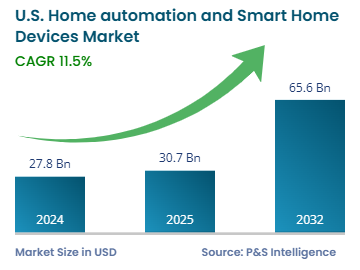
The U.S. home automation and smart home devices market valued USD 27.8 billion in 2024, and is expected to increase at a CAGR of 11.5% from 2025 to 2032, reaching USD 65.6 billion by 2032.
According to a study, around 18% of U.S. households have six or more smart home devices. The market is expanding rapidly on account of the associated conveniences, savings, and lifestyle. An increasing number of consumers are adopting smart devices including thermostats, lighting systems, and appliances to automate their daily tasks and regulate their energy consumption. Besides these, consumer awareness of energy conservation and the necessity to combat power bills have also been drivers for the increased adoption of such systems.
The growing influence of social status is another fundamental driver steering the market growth; consumers are progressively opting to flaunt their lifestyle by incorporating admirable smart technologies within their homes. The use of smartphones along with filament IoT technology has made smart home solutions available; with voice assistants such as Amazon Alexa and Google Assistant controlling devices, user experience has been further escalated.
Also, the smart security systems gaining more popularity, including such devices as smart locks, cameras, and alarms, contributed to the market's growth due to rising safety concerns. The increasing affordability of smart devices and subscription-type service frameworks is likely to accelerate market growth in the future.
The smart security system is the largest category with a share of 30% in 2024. Smart security systems account for the largest portion of the U.S. home automation and smart home devices market. This category includes cameras, locks, alarms, and smart door systems, and is driven by rising concerns about home security and the penetration of smart surveillance devices. Safety is at the top of consumers' minds, paired with the easy-access installation of cheap smart security devices responsible for driving the use of these systems. To make such systems desirable to homeowners, these smart security organizations are also emphasizing the incorporation of AI-based video analytics and remote monitoring services into their functioning.
Products studied in the report:
Zigbee is the fastest-growing category with a CAGR of 11.9% during the forecast period. Zigbee gains traction due to its low power consumption, reliability of long-range communication, and ability to connect many devices into a mesh configuration. Zigbee is enabled predominantly in smart lighting systems, sensors, and security devices. With a rising demand for more energy-efficient solutions by consumers desiring smart-home ecosystems that connect several devices through a single hub, Zigbee will continue to grow.
Connectivity analyzed in the report:
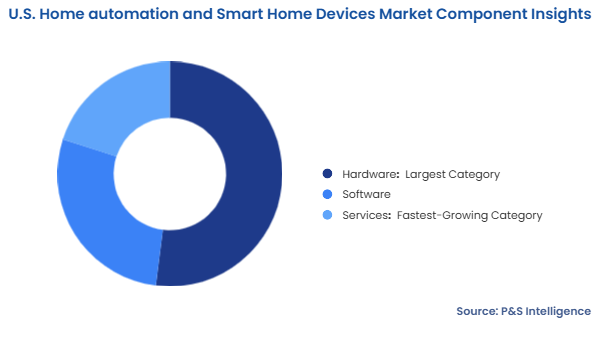
Hardware is the largest category with a share of 55% in 2024. Hardware ranges from physical devices, including smart thermostats and security cameras; to smart lighting systems and appliances. Hardware dominates mainly due to the rising demand for smart security devices, energy-efficient products, and entertainment systems. Increasing adoption of IoT-based devices and technological strides in wireless connectivity contribute to smart home hardware increasing in ubiquity across U.S. households.
Components covered in the report:
Energy management is the fastest-growing category, at a CAGR of 12.9% during the forecast period. This is due to the consumers' trend to abide by sustainability and save costs. The increasing electricity price along with the growing enlightenment among the consumers is motivating them to install energy-efficient smart devices like smart thermostats, smart lighting systems, and smart plugs. These devices will allow the user to monitor and manage their energy consumption in real time, thus saving on their electricity bills.
Moreover, AI algorithms and IoT-based energy management systems allow automated optimization of energy usage and further enhance the attractiveness of energy management solutions. The governmental incentives and tax rebates to facilitate energy-efficient devices are further facilitating the pace of adoption of energy management systems in U.S. households.
Applications discussed in the report are:
Drive strategic growth with comprehensive market analysis
The West region dominates the market with a share of 40% in 2024. This is due to the proliferation of smart home technology in states like California, Washington, and Oregon, higher density of able-to-use consumers, and early adoption of any new technology. Additionally, the influence of the dominance of big tech companies, along with rising environmental awareness and strict energy efficiency programs, has increased the demand for smart home devices in the region. Furthermore, high electricity prices in the West typically lead to ventures into smart devices, promoting economical energy utilization, such as smart thermostats and smart lighting systems.
Regions covered in the report:
Want a report tailored exactly to your business need?
Request CustomizationLeading companies across industries trust us to deliver data-driven insights and innovative solutions for their most critical decisions. From data-driven strategies to actionable insights, we empower the decision-makers who shape industries and define the future. From Fortune 500 companies to innovative startups, we are proud to partner with organisations that drive progress in their industries.

Working with P&S Intelligence and their team was an absolute pleasure – their awareness of timelines and commitment to value greatly contributed to our project's success. Eagerly anticipating future collaborations.
McKinsey & Company
India
Our insights into the minutest levels of the markets, including the latest trends and competitive landscape, give you all the answers you need to take your business to new heights

We take a cautious approach to protecting your personal and confidential information. Trust is the strongest bond that connects us and our clients, and trust we build by complying with all international and domestic data protection and privacy laws


Customize the Report to Align with Your Business Objectives

Request the Free Sample Pages