This Report Provides In-Depth Analysis of the Sustainable Manufacturing Market Report Prepared by P&S Intelligence, Segmented by Offering (Recycled Lithium Ion Battery, Water Reuse and Recycling, Recycled Plastics, Green Hydrogen, Recycled Steel, Recycled Aluminium, Recycled Carbon Fibre, Bioplastics & Biopolymers, Natural Fibre Composites), End User (Aerospace, Automotive, Building and Construction, Chemicals, Electrical and Electronics, Energy, Marine, Packaging, Power), and Geographical Outlook for the Period of 2019 to 2032
Explore the market potential with our data-driven report
Sustainable Manufacturing Market Analysis
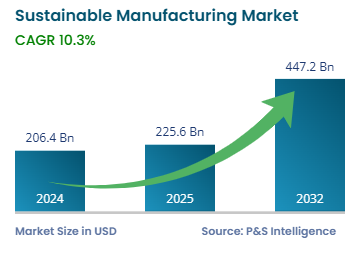
The global sustainable manufacturing market generated an estimated revenue of USD 206.4 billion in 2024, which is expected to witness a CAGR of 10.3% during 2025–2032, to reach USD 447.2 billion by 2032.
This growth can be attributed to the increasing emphasis on environmental responsibility, resource efficiency, and eco-friendly production practices across industries. As organizations face mounting pressure to reduce their carbon footprint, adopt cleaner technologies, and comply with stricter regulations, sustainable manufacturing is becoming a critical aspect of modern production strategies.
According to the International Energy Agency, industries account for approximately 38% of global energy consumption, consuming over 400 Exajoules annually. It is responsible for nearly 21% of global CO2 emissions, emitting around 10 Gigatonnes per year, says the Intergovernmental Panel on Climate Change (IPCC). According to the United Nations Environment Programme, industrial processes release 30% of the global methane emissions and 40% of nitrous oxide emissions. Water usage in industry exceeds 20% of total global consumption, impacting freshwater resources, says the FAO.
These figures underscore urgent demand for sustainable manufacturing practices, including energy efficiency, pollution control, and resource conservation, to reduce environmental impact while supporting economic growth worldwide.
Furthermore, technological advancements in areas such as energy efficiency, waste reduction, and renewable energy integration are driving the market's expansion. Increasing consumer demand for sustainable products and the rising adoption of circular economy principles are also key factors contributing to the market’s positive outlook. With governments and corporations alike focusing on sustainability goals, the global sustainable manufacturing market is poised for significant growth in the coming years.
Sustainable Manufacturing Market Emerging Trends
Government Initiatives and Regulations Is Key Driver
Government initiatives and regulations are a key driver of the global sustainable manufacturing market, significantly influencing the adoption of sustainable practices across industries.
As environmental concerns grow, governments worldwide are implementing stricter regulations aimed at reducing carbon emissions, minimizing waste, and promoting the efficient use of resources.
These regulations often require manufacturers to adopt more eco-friendly production processes, utilize renewable energy, and reduce their environmental footprint.
For instance, policies such as carbon taxes, emissions reduction targets, and waste management guidelines incentivize companies to transition to sustainable practices.
Moreover, governments are increasingly offering subsidies, tax incentives, and grants to support the adoption of green technologies, such as energy-efficient machinery, renewable energy systems, and sustainable materials.
Major government initiatives for sustainable manufacturing include the U.S. Department of Energy’s Advanced Manufacturing Office (AMO), which promotes energy-efficient technologies and processes.
The European Union’s Circular Economy Action Plan aims to reduce waste and encourage resource efficiency across industries.
In India, the Perform, Achieve and Trade (PAT) Scheme incentivizes industries to improve energy efficiency. China’s Made in China 2025 strategy emphasizes green manufacturing and cleaner production.
These initiatives not only promote environmental protection but also help manufacturers reduce operational costs in the long term.
Growing Adoption of Advanced Technologies Is a Key Opportunity
The growing adoption of sustainable and eco-friendly materials in advanced technologies presents a significant market opportunity for the global sustainable manufacturing market.
Advanced technologies, such as electric vehicles, renewable energy systems, and next-generation electronics, are increasingly utilizing sustainable materials like recycled metals, biodegradable composites, and bio-based plastics.
These materials offer manufacturers a way to reduce their carbon footprint, comply with stricter environmental regulations, and cater to the increasing consumer demand for green products.
The shift toward these eco-friendly alternatives also opens up new avenues for manufacturers to differentiate themselves in a competitive market.
By integrating sustainable materials into production processes, companies can enhance their brand reputation, attract environmentally-conscious consumers, and access government incentives.
Furthermore, as technological advancements continue to improve the performance and availability of these materials, their cost-effectiveness is expected to increase, driving wider adoption across industries.
Advanced technologies like IoT, digital twins, and predictive maintenance play a crucial role in sustainable manufacturing by optimizing resource use and minimizing waste.
IoT sensors provide real-time data on energy consumption and equipment health, enabling smarter decision-making.
IoT-enabled factories can reduce energy consumption by up to 20% through real-time monitoring and optimization.
Digital twins simulate production processes to identify inefficiencies and test improvements without physical trials.
Digital twin technology can cut product development time by 30% and reduce material waste by 10% by enabling virtual testing.
Predictive maintenance reduces downtime and extends equipment life by anticipating failures before they occur.
Predictive maintenance can decrease unplanned downtime by 50% and extend equipment life by 20%, reducing waste and energy use, as per IBM.
Additionally, AI and machine learning enhance process automation and quality control, lowering defect rates.
AI-driven process optimization can improve energy efficiency by 15% and reduce defects by up to 40%.
Machine learning algorithms can enhance quality control, lowering scrap rates by 25% and associated resource waste.
Together, these technologies increase operational efficiency, reduce emissions, and support circular economy principles, advancing sustainability goals in manufacturing sectors worldwide.
Complexities Associated with Supply Chain Pose Challenges
One of the key challenges facing the global sustainable manufacturing market is the complexities associated with supply chains.
As companies strive to incorporate sustainable practices, they often encounter difficulties in sourcing eco-friendly materials, ensuring ethical sourcing, and maintaining a transparent and efficient supply chain.
Sustainable materials may be scarce, expensive, or difficult to obtain, particularly in regions where environmental regulations are less stringent or supply chain infrastructure is underdeveloped.
Additionally, managing the logistics of eco-friendly products often requires specialized transportation methods, more stringent quality controls, and the need for suppliers to meet higher sustainability standards.
These complexities are further compounded by the need for real-time data to track sustainability metrics, such as carbon emissions and material waste, across the entire supply chain.
For example, recycled aluminium prices surged 50% in 2023 due to limited availability and increased demand, complicating efforts to maintain eco-friendly production while controlling expenses.
Sustainable Manufacturing Market Segmentation and Category Analysis
Offering Insights
The recycled plastics category is projected to grow at the highest CAGR, of 10.6%, during 2025–2032, after holding the largest market share, of 30%. This growth is driven by several key factors, including increasing environmental awareness, the rising demand for sustainable products, and the push for circular economy models. Recycled plastics offer significant environmental benefits, as they reduce the need for virgin plastic production, lower energy consumption, and help mitigate plastic waste.
This aligns with both consumer preferences for eco-friendly products and stringent government regulations aimed at reducing plastic pollution. Moreover, advancements in recycling technologies have made it more cost-effective and efficient to process and repurpose plastics, boosting the material's appeal for manufacturers. Companies are increasingly incorporating recycled plastics into their products across a wide range of industries, including automotive, packaging, construction, and consumer goods.
During the study, we have analysed the following offerings in the report:
Recycled Lithium Ion Battery
Water Reuse and Recycling
Recycled Plastics (Largest and Fastest-Growing Category)
Green Hydrogen
Recycled Steel
Recycled Aluminium
Recycled Carbon Fibre
Bioplastics & Biopolymers
Natural Fibre Composites
Others
End User Insights
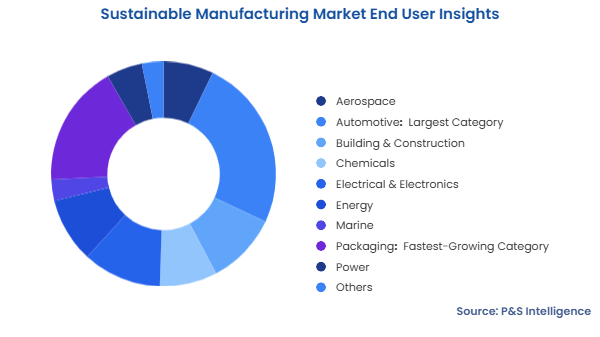
The automotive category accounts for the largest share in 2024. This can be attributed to the automotive industry's growing focus on sustainability, energy efficiency, and reducing its environmental impact. Manufacturers are increasingly adopting eco-friendly materials, such as recycled plastics, lightweight composites, and bio-based components, to reduce vehicle weight, improve fuel efficiency, and lower carbon emissions.
Using plastics and ceramics instead of metals can reduce a vehicle's weight by approximately 10% to 25%, depending on the application. Further, this can lower fuel consumption by about 6–8% per 10% weight reduction. This translates to roughly 6–20% less fuel use per kilometre, depending on the total weight saved.
Furthermore, the shift toward EVs is also driving the demand for sustainable manufacturing practices within the automotive sector. EVs require advanced materials for battery production, lightweight components, and energy-efficient manufacturing processes, all of which emphasize the need for sustainable solutions. In addition, stricter government regulations and emission standards are pushing automakers to prioritize sustainability in their production processes.
Packaging is the fastest-growing category, with a CAGR of 10.9%, during the forecast period. The global demand for sustainable packaging is rising sharply as plastic pollution worsens. Annually, over 380 million tonnes of plastic are produced worldwide, with around 99 million tonnes being single-use plastics, says the UNEP. Plastic pollution contaminates oceans, harming marine life and ecosystems, with 8 million tonnes of plastic entering oceans yearly.
Toxic additives in plastics can leach into soil and water, posing risks to human health, including hormonal disruption and cancer, according to the World Health Organization. Non-renewable fossil fuels contribute to 6% of global oil consumption for plastic production, worsening climate change. These factors drive urgent demand for biodegradable, recyclable, and renewable packaging solutions to reduce environmental impact.
Switching to sustainable plastics—recycled and bio-sourced—could reduce global plastic-related greenhouse gas emissions by up to 50% by 2050, according to the Ellen MacArthur Foundation. This is because sustainable plastics typically require less energy to produce and emit fewer fossil carbon emissions compared to conventional virgin plastics, which currently contribute around 3.8% of global CO2 emissions, as per the IEA.
The following end users are included in the report:
Aerospace
Automotive (Largest Category)
Building & Construction
Chemicals
Electrical & Electronics
Energy
Marine
Packaging (Fastest-Growing Category)
Power
Others
Drive strategic growth with comprehensive market analysis
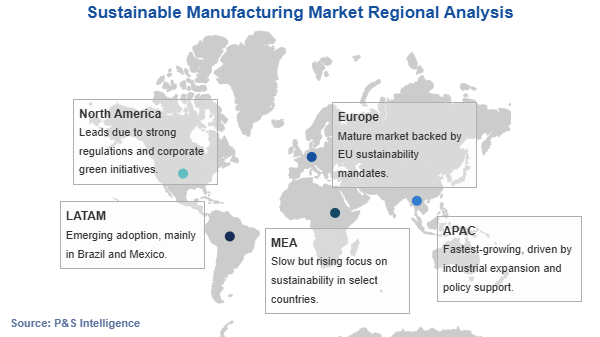
North America holds the largest market share, of 30%, in 2024, attributed to the region's strong commitment to environmental sustainability, advanced technological infrastructure, and progressive regulatory frameworks. The U.S. and Canada are at the forefront of adopting sustainable manufacturing practices, bolstered by robust government policies and incentives that promote eco-friendly production, energy efficiency, and waste reduction. These policies include tax credits, grants, and green initiatives aimed at reducing carbon footprints and encouraging the use of renewable resources in manufacturing processes.
Additionally, North America is home to several leading manufacturers across industries such as automotive, electronics, and consumer goods, all of which are increasingly integrating sustainable materials and technologies into their production lines. The growing demand for electric vehicles, renewable energy systems, and green technologies further propels market growth in the region.
The U.S. emits approximately 5.1 Gigatonnes of CO2 annually, making it the second-largest global emitter, while Canada contributes around 0.7 Gigatonnes per year. Both countries have made significant strides in reducing industrial emissions through policies targeting energy efficiency and cleaner manufacturing. The U.S. industrial sector accounts for roughly 32% of the nation’s total energy consumption, emphasizing the need for sustainable manufacturing. Canada’s commitment to net-zero emissions by 2050 drives investments in green technologies and sustainable materials, supporting the region’s leadership in environmentally friendly manufacturing practices.
APAC is the fastest-growing region, with a CAGR of 11.2%. APAC accounts for over 50% of global industrial CO2 emissions, driven by rapid industrial output growth and heavy reliance on coal-based electricity, which supplies approximately 60% of the region’s industrial power. China’s total CO2 emissions reach over 10 gigatonnes annually, making it the world’s largest emitter. India emits around 2.6 gigatonnes of CO2 per year, ranking as the third-largest global emitter. Industrial electricity consumption in APAC has risen sharply, intensifying the need for sustainable materials to lower emissions and energy use.
Key end-use industries include automotive, electronics, chemicals, and construction, all demanding lightweight, energy-efficient materials to meet regulatory pressures and consumer preferences for sustainability. For instance, the automotive sector seeks bio-based composites to reduce vehicle weight, while electronics manufacturers prioritize recycled plastics for eco-friendly devices, fuelling sustained demand for sustainable manufacturing materials.
Further, regions and countries analysed for this report include:
Brazil (Largest and Fastest-Growing Country Market)
Mexico
Rest of LATAM
Middle East and Africa (MEA)
Saudi Arabia (Largest Country Market)
South Africa
U.A.E. (Fastest-Growing Country Market)
Rest of MEA
Sustainable Manufacturing Market Share Analysis
The market is fragmented, with numerous players spanning across various industries, each adopting different approaches to sustainability. This is primarily due to the diverse range of sectors involved, including automotive, electronics, textiles, construction, and consumer goods, each with distinct sustainability requirements and regulatory frameworks. In addition, companies in different regions may face varying levels of market maturity, access to green technologies, and government support, contributing to a diverse competitive landscape.
While some large corporations, particularly those in developed regions, are leading the charge by integrating sustainability into their operations through investments in renewable energy, energy-efficient technologies, and eco-friendly materials, smaller and medium-sized companies are also emerging as significant players, developing niche sustainable solutions. This diversity of market participants, ranging from multinational corporations to local innovators, creates a highly fragmented structure.
Key Sustainable Manufacturing Companies:
ACCUREC-Recycling GmbH
Amcor plc
Braskem S.A
Dow Inc.
Ecobat LLC
European Metal Recycling Ltd.
Indorama Ventures Public Company Limited
NatureWorks LLC
Novelis Inc.
Toshiba Corporation
UNIFI Inc.
Veolia Environnement SA
Sustainable Manufacturing Market Developments
In July 2025, Sterlite Technologies Limited (STL Tech) entered into a partnership with Hygenco Green Energies Pvt. Ltd. to establish a green hydrogen and green oxygen factory for optical fibre production in Chhatrapati Sambhaji Nagar, Maharashtra. This green hydrogen factory will cater to STL’s glass preform manufacturing facility.
In April 2025, Amcor plc finalized its all-stock merger with Berry Global Group Inc., to strengthen its status as a provider of sustainable consumer and healthcare packaging solutions.
In July 2024, the Manufacturing Technology Centre (MTC) invested in a new hub dedicated to sustainable additive manufacturing. This initiative will conduct R&D to support the design and production of net-zero products with complete end-to-end circularity.
In April 2024, Veolia Environnement S.A. and L'Oréal SA expanded their collaboration, which previously focused on recycled HDPE, to include recycled PP and recycled PET.
In November 2023, EDF selected Veolia Environnement S.A.’s technological solution, in collaboration with REEL, to design, manufacture, and install mobile units for treating contaminated water in the aftermath of a nuclear accident. This new solution will minimize environmental impact via the on-site treatment of the primary circuit water stored in the reactor building tanks.
In April 2023, Capgemini SA initiated a research collaboration with ETH Zurich to develop AI solutions for designing multi-material structures via additive layer manufacturing.
Want a report tailored exactly to your business need?
Leading companies across industries trust us to deliver data-driven insights and innovative solutions for their most critical decisions. From data-driven strategies to actionable insights, we empower the decision-makers who shape industries and define the future. From Fortune 500 companies to innovative startups, we are proud to partner with organisations that drive progress in their industries.
Client Testimonials
Working with P&S Intelligence and their team was an absolute pleasure – their awareness of timelines and commitment to value greatly contributed to our project's success. Eagerly anticipating future collaborations.
McKinsey & Company
India
Unmatched Standards
Our insights into the minutest levels of the markets, including the latest trends and competitive landscape, give you all the answers you need to take your business to new heights
Complete Data Security
We take a cautious approach to protecting your personal and confidential information. Trust is the strongest bond that connects us and our clients, and trust we build by complying with all international and domestic data protection and privacy laws