This Report Provides In-Depth Analysis of the Surgical Planning Software Market Report Prepared by P&S Intelligence, Segmented by Deployment (Cloud-Based, On-Premises), End User (Hospitals, Ambulatory Surgery Centres, Orthopaedic Clinics), Application (Orthopaedic Surgery, Neurosurgery, Dentistry and Orthodontics, Bariatric Surgery, Breast Surgery, Gynaecological Surgery, Hernia Surgery, Ophthalmic Surgery, Thoracic Surgery, Urologic Surgery, Endocrine Surgery, Colon and Rectal Surgery), and Geographical Outlook for the Period of 2021 to 2032
Explore the market potential with our data-driven report
Surgical Planning Software Market Key Insights
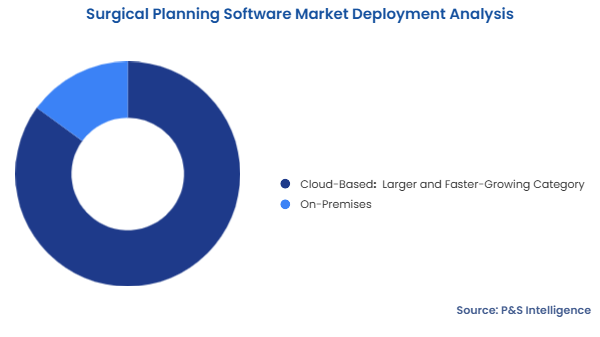
Cloud-based deployment holds the larger share, of 85%, and has the higher CAGR, of 6.6%, as hospitals prefer scalable infrastructure and remote surgical collaboration.
Orthopaedic surgery holds the largest application share of 25%, driven by increasing musculoskeletal disorders and high procedure volumes globally.
Ambulatory Surgery Centres are the fastest-growing category, registering a CAGR of 6.9%, because healthcare systems increasingly shift high-volume, minimally invasive procedures to efficient outpatient settings.
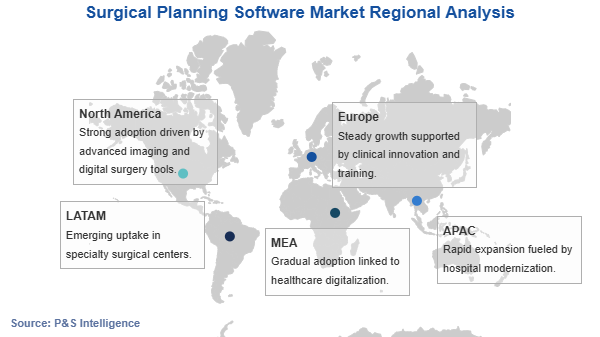
North America holds the largest regional share of 45%, supported by advanced healthcare infrastructure and strong digital surgery adoption.
Asia-Pacific is the fastest-growing region with 7.5% CAGR, driven by expanding healthcare infrastructure and rising surgical demand.
Surgical Planning Software Market Future Outlook
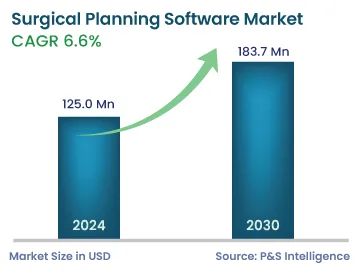
The surgical planning software market size was USD 131.8 million for 2025, and it will grow by 6.4% during 2026-2032, to reach USD 203.0 million by 2032.
The market is expanding because medical facilities increasingly utilise digital solutions to visualise and execute complex operations. According to the United Nations, the global population aged 60 years and older reached approximately 1.2 billion in 2024. This rapidly expanding elderly demographic drives higher demand for complex orthopaedic, cardiovascular, and oncological surgeries. To manage these high-risk procedures, surgeons increasingly adopt advanced software that converts patient scans into three-dimensional anatomical models. These tools allow clinicians to map procedural steps before making incisions, helping reduce surgical errors, shorten operation times, and improve overall patient outcomes.
Usage of 3D Visualisation and AI‑Assisted Surgical Tools Is Major Trend
The surgical industry is rapidly adopting advanced visualisation technologies to improve pre-operative decision-making and procedural accuracy. Surgeons increasingly rely on three-dimensional models and artificial intelligence to better understand complex anatomical structures before surgery. According to the World Health Organization, healthcare providers perform more than 300 million surgical procedures globally each year, highlighting strong demand for technologies that enhance surgical precision. In addition, the organisation estimates that approximately 3.6 billion diagnostic medical examinations, including X-rays and other imaging procedures, are conducted worldwide annually. These imaging datasets provide the anatomical detail required for surgical planning, encouraging hospitals to integrate advanced software that converts medical images into interactive three-dimensional models.
Rising Surgical Volume and Focus on Precision Outcomes Drives Market
Rising surgical volumes and the growing emphasis on minimising complications are key factors driving market growth. According to the International Society of Aesthetic Plastic Surgery, specialists performed approximately 17.4 million aesthetic surgical procedures globally in 2024, illustrating the scale of surgical activity worldwide. At the same time, patient safety remains a major concern, as unsafe medical care causes over 3 million deaths globally each year, according to the World Health Organization. To manage increasing procedural workloads while improving safety standards, hospitals are adopting advanced surgical planning software that allows surgeons to visualise anatomy, simulate procedures, and plan operations more accurately.
Lack of Standardization and Interoperability Hamper Market Growth
A key restraint in the surgical planning software market is the lack of standardization and interoperability across medical imaging and hospital IT systems, which significantly hampers seamless adoption. Surgical planning platforms rely on high-resolution imaging data from CT, MRI, and other diagnostic modalities, but inconsistencies in file formats, imaging protocols, and vendor-specific equipment make it difficult to import, process, and analyse data accurately. Integration with hospital systems such as electronic health records (EHR), picture archiving and communication systems (PACS), and operating room management software is often complex and time-consuming.
These interoperability challenges can lead to delayed surgical planning, workflow disruptions, and potential errors in preoperative simulations or anatomical modelling. Furthermore, the need to customize software for each hospital or imaging device increases implementation costs and requires specialized IT support. As a result, many healthcare providers, particularly smaller hospitals and clinics in emerging markets, may hesitate to adopt advanced surgical planning solutions, limiting the market’s growth potential.
Cloud-based is the larger category, holding a market share of 85%, and it is also the faster-growing category during the forecast period. This is because healthcare organisations increasingly prefer scalable digital infrastructure that reduces large upfront hardware investments. According to the International Telecommunication Union, approximately 5.8 billion people used the internet globally in 2024, reflecting the widespread availability of digital connectivity that enables cloud-based platforms. This extensive global network infrastructure allows hospitals to deploy cloud systems without maintaining complex physical servers. Surgeons and clinical teams can access surgical planning applications across multiple locations, enabling remote collaboration, real-time data sharing, and efficient transfer of high-resolution medical imaging files.
The deployments analysed in this report are:
Cloud-Based (Larger and Faster-Growing Category)
On-Premises
End User Analysis
Hospitals are the largest category, holding a market share of 60%, because they perform the majority of complex and inpatient surgical procedures that require advanced planning and coordination. According to the World Health Organization, complications affect up to 25% of patients undergoing inpatient surgical procedures, highlighting the complexity and risk associated with hospital-based surgeries. Older adults are more likely to require surgical interventions, such as orthopaedic, cardiovascular and oncological procedures. As surgical complexity increases, hospitals rely on advanced surgical planning software integrated with imaging systems and electronic patient records to support accurate pre-operative preparation and coordinated care among multidisciplinary surgical teams.
Ambulatory surgery centres are the fastest-growing category, during the forecast period, because healthcare systems increasingly shift high-volume, minimally invasive procedures to efficient outpatient settings. According to the World Health Organization, approximately 94 million people worldwide required surgical treatment for moderate-to-severe cataracts in 2024. Cataract procedures are commonly performed in outpatient surgical centres due to their shorter recovery times and standardised surgical workflows. As patient volumes increase, ambulatory surgery centres are adopting digital surgical planning and scheduling software to streamline preoperative preparation, reduce turnaround time between procedures, and improve overall operational efficiency.
The end users analysed in this report are:
Hospitals (Largest Category)
Ambulatory Surgery Centres (Fastest-Growing Category)
Orthopaedic Clinics
Application Analysis
Orthopaedic surgery is the largest category, holding a market share of 25%, because surgeons perform a high volume of procedures involving bones, joints, and musculoskeletal structures. According to the World Health Organization, approximately 1.71 billion people worldwide were living with musculoskeletal conditions in 2024. This widespread disease burden contributes to a large number of surgical interventions such as joint replacements, spinal corrections, and fracture repairs. To improve surgical accuracy and reduce complications, orthopaedic specialists increasingly utilise digital surgical planning software to evaluate anatomical structures and determine optimal implant positioning before procedures. These tools enhance surgical precision, improve mechanical alignment, and support better long-term mobility outcomes for patients.
Neurosurgery is the fastest-growing category, during the forecast period, because procedures involving the brain and spinal cord require extremely precise surgical planning and visualisation. According to the World Health Organization, approximately 250,000 to 500,000 people suffer spinal cord injuries globally each year. Managing these severe neurological conditions, along with complex brain tumours and spinal disorders, demands highly detailed preoperative planning. As a result, neurosurgeons increasingly adopt advanced digital surgical planning systems that convert medical imaging data into detailed three-dimensional anatomical models. These technologies allow specialists to simulate surgical pathways, identify critical neural structures, and minimise the risk of damaging healthy tissue during highly delicate procedures.
The applications analysed in this report are:
Orthopaedic Surgery (Largest Category)
Neurosurgery (Fastest-Growing Category)
Dentistry and Orthodontics
Bariatric Surgery
Breast Surgery
Gynaecological Surgery
Hernia Surgery
Ophthalmic Surgery
Thoracic Surgery
Urologic Surgery
Endocrine Surgery
Colon and Rectal Surgery
Drive strategic growth with comprehensive market analysis
North America Surgical Planning Software Market Analysis
North America has the largest market share, of 45%, as there are many investments made by the healthcare systems in this area for digital surgical tools and imaging technologies. Hospitals and speciality surgery centres use software to plan surgeries and therefore can have better outcomes, reduce risk, and perform more complicated surgeries. The healthcare infrastructure in North America is well established, with an emphasis on fully integrated electronic medical records and collaboration among teams. In addition, surgeons in North America collaborate closely with medical equipment manufacturers to develop customised solutions. Therefore, there is a consistent need for software throughout all phases of care in North America.
U.S. Surgical Planning Software Market Analysis
The United States represents the major global market because healthcare providers widely adopt digital technologies to support complex surgical procedures. In addition, more than 67 million Americans were enrolled in Medicare programs in 2024, according to the Centers for Medicare & Medicaid Services. Medicare expenditures reached approximately USD 1.1 trillion in 2024, highlighting the substantial financial scale of the U.S. healthcare system. This large insured population sustains high healthcare utilisation and surgical volumes nationwide, encouraging hospitals to invest in advanced surgical planning software that integrates imaging data with electronic health records and clinical workflows.
Canada Surgical Planning Software Market Analysis
Canada represents a rapidly expanding market as healthcare providers modernise infrastructure and adopt digital technologies to support surgical care. As surgical complexity increases, hospitals are integrating digital planning tools to improve pre-operative assessment and clinical coordination. Additionally, according to the Canadian Cancer Society, approximately 32,100 new lung cancer cases were diagnosed in Canada in 2024, further encouraging healthcare providers to adopt advanced imaging and surgical planning software.
Asia‑Pacific has the highest CAGR, of 7.5%, due to expanding health care access and new hospital systems, which will require clinics to utilise planning software to improve their accuracy in surgery. Many countries are building new modern medical facilities and increasing their training programs with respect to using digital workflows. Additionally, most countries in this area have a wide availability of smartphones and cloud-based applications, making the cost of utilising these tools affordable for small and rural-based medical facilities. As patients and providers desire safer and less invasive procedures, the demand for technology that supports this goal continues to increase from major metropolitan hospitals to community-based clinics.
China Surgical Planning Software Market Analysis
China is experiencing rapid market growth because the country continues to modernise its large healthcare infrastructure and expand digital health technologies. Medical institutions across the country handled more than 10.1 billion patient visits in 2024, reflecting the enormous scale of healthcare utilisation nationwide. Managing such a large patient population places significant pressure on hospitals to improve clinical efficiency and surgical workflow management. As a result, healthcare providers increasingly adopt advanced surgical planning software to assist with preoperative visualisation, improve procedural accuracy, and support the management of complex surgical caseloads.
India Surgical Planning Software Market Analysis
India represents a rapidly expanding market due to rising healthcare demand and the growing adoption of digital health technologies. Union budget allocations for the Department of Health and Family Welfare reached INR 87,657 crore for 2024–2025, reflecting increased government investment in healthcare infrastructure and services. This increased healthcare investment supports the expansion of healthcare access and service capacity, leading to higher patient volumes and demand for efficient clinical services and surgical care. To manage rising patient volumes while maintaining treatment quality, hospitals are increasingly adopting digital surgical planning systems that assist surgeons in evaluating medical imaging, planning complex procedures, and improving surgical precision.
Europe Surgical Planning Software Market Analysis
Europe’s surgical planning software market is supported by its structured healthcare systems and strong focus on preventive care. Surgeons in major markets use planning tools to reduce variability in surgical approaches. Cross‑border collaborations and shared clinical standards also encourage wider software use. In some countries, government and private programs support digital health innovation, helping smaller clinics adopt technology that was once limited to large hospitals.
The regions and countries analysed in this report are:
North America (Largest Regional Market)
U.S. (Larger Country)
Canada (Faster-Growing Country)
Europe
Germany (Largest Country)
U.K. (Fastest-Growing Country)
France
Italy
Spain
Rest of Europe
Asia-Pacific (Fastest-Growing Regional Market)
China (Largest Country)
India (Fastest-Growing Country)
Japan
South Korea
Australia
Rest of APAC
Latin America
Brazil (Largest Country)
Mexico (Fastest-Growing Country)
Rest of LATAM
Middle East and Africa
Saudi Arabia (Largest Country)
U.A.E. (Fastest-Growing Country)
South Africa
Rest of MEA
Surgical Planning Software Market Share
The market is fragmented because a wide range of technology companies, software developers, and healthcare IT providers offer surgical planning systems. No single provider controls the majority of the industry, and many firms focus on specialised tools for different types of surgery or customer needs. Healthcare facilities choose solutions based on features, local support, and how well they fit with existing systems. This spread of suppliers keeps the market competitive and varied rather than dominated by a few big players.
Leading Companies in the Surgical Planning Software Market:
Medtronic Plc
Stryker Corporation
Zimmer Biomet Holdings Inc
Brainlab AG
Materialise NV
GE HealthCare Technologies Inc
Siemens Healthineers AG
Koninklijke Philips NV
Canon Medical Systems Corporation
Olympus Corporation
Bausch and Lomb Corporation
Intuitive Surgical Inc
Varian Medical Systems Inc
Ziosoft Inc
Surgical Theater LLC
Surgical Planning Software Market Developments
In February 2026, Medtronic received U.S. FDA clearance for the Stealth AXiS surgical system, an integrated platform combining surgical planning, navigation, and robotics for spine procedures used in hospitals and ambulatory surgery centres.
In October 2025, Bausch + Lomb announced full commercial availability of its Eyetelligence surgical planning software in the United States, supporting ophthalmic procedure planning using patient eye measurements and pre-operative planning tools.
In October 2025, SyncAR Spine received U.S. FDA clearance for its surgical planning and augmented-reality platform used in spine procedures, enabling processing of imaging data to create vertebral models for pre-operative planning and intraoperative visualisation.
In March 2025, Olympus Corporation launched an AI-based surgical planning tool developed with Ziosoft that analyses medical imaging data to assist surgeons with pre-operative planning for procedures involving organs such as the liver, lung, and kidney.
Frequently Asked Questions About This Report
What is driving growth in the surgical planning software market globally?+
Growth is driven by rising surgical volumes, ageing populations, and increasing demand for precision in complex procedures, encouraging hospitals to adopt advanced digital planning and visualisation tools.
Why is cloud-based deployment preferred in surgical planning software systems?+
Cloud-based systems offer scalability, remote access, and easier collaboration, allowing surgeons to share imaging data, plan procedures across locations, and reduce the need for expensive on-site infrastructure.
How does surgical planning software improve outcomes in complex medical procedures?+
It converts medical imaging into 3D models, enabling surgeons to visualise anatomy, simulate procedures, reduce errors, shorten operation time, and enhance precision during complex surgeries.
What challenges limit adoption of surgical planning software in healthcare facilities?+
Lack of interoperability, inconsistent imaging formats, integration issues with hospital IT systems, and high implementation costs create barriers, especially for smaller hospitals and clinics.
Which region leads the surgical planning software market and why?+
North America leads due to advanced healthcare infrastructure, high adoption of digital technologies, strong research investments, and widespread use of imaging and surgical planning systems.
Want a report tailored exactly to your business need?
Leading companies across industries trust us to deliver data-driven insights and innovative solutions for their most critical decisions. From data-driven strategies to actionable insights, we empower the decision-makers who shape industries and define the future. From Fortune 500 companies to innovative startups, we are proud to partner with organisations that drive progress in their industries.
Client Testimonials
Working with P&S Intelligence and their team was an absolute pleasure – their awareness of timelines and commitment to value greatly contributed to our project's success. Eagerly anticipating future collaborations.
McKinsey & Company
India
Unmatched Standards
Our insights into the minutest levels of the markets, including the latest trends and competitive landscape, give you all the answers you need to take your business to new heights
Complete Data Security
We take a cautious approach to protecting your personal and confidential information. Trust is the strongest bond that connects us and our clients, and trust we build by complying with all international and domestic data protection and privacy laws