Saudi Arabia Luxury Goods Market Size & Share Analysis - Trends, Drivers, Competitive Landscape, and Forecasts (2026 - 2032)
This Report Provides In-Depth Analysis of the Saudi Arabia Luxury Goods Market Report Prepared by P&S Intelligence, Segmented by Product (Apparel, Footwear, Leather Goods, Watches & Jewelry, Eyewear, Cosmetics, Fragrances, Accessories), Distribution Channel (Single-Brand Boutiques, Multi-Brand Department Stores, Shopping Mall Outlets, Airport Duty-Free Stores, Official Brand E-Commerce Sites, Luxury-Focused Online Marketplaces), End User (Men, Women, Unisex), and Geographical Outlook for the Period of 2019 to 2032
Explore the market potential with our data-driven report
Saudi Arabia Luxury Goods Market Overview
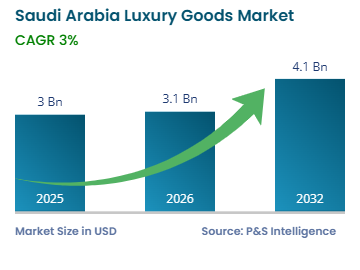
The Saudi Arabian luxury goods market size will be an estimated USD 3.0 billion for 2025, and it will grow by 4.5% during 2026–2032, to reach USD 4.1 billion by 2032.
The market growth is primarily driven by rising disposable incomes, an expanding affluent consumer base, and the Kingdom's ambitious Vision 2030 economic transformation initiatives.
The growing wealth of Saudi nationals is a key factor for market expansion. According to a report, Saudi Arabia is projected to attract 2,400 high-net-worth individuals in 2025, marking an eightfold increase from 300 millionaires in 2024. This surge positions the Kingdom as the fastest climber in global wealth migration trends. Saudi Arabia currently hosts 58,300 millionaires, including 195 centi-millionaires and 22 billionaires, marking a significant 32% increase since 2013.
The tourism boom is reshaping luxury consumption patterns across the Kingdom. According to the Ministry of Tourism, Saudi Arabia welcomed 60.9 million visitors in the first half of 2025, generating USD 43 billion (SAR 161.4 billion) in tourism spending, reflecting a 4% increase from 2024.
Saudi Arabia Luxury Goods Market Dynamics
E-commerce and Digital TransformationAre Key Trends
Digital platforms fundamentally transform how Saudi consumers discover, research, and purchase luxury goods.
The rapid expansion of e-commerce infrastructure enables luxury brands to reach consumers beyond major metropolitan areas.
Hermès launched its first flagship digital store in Saudi Arabia, while platforms like Net-A-Porter welcomed Saudi luxury brand Abadia as the first local brand on their platform.
These digital initiatives provide consumers with seamless access to international luxury collections while maintaining the personalized service standards expected in premium retail.
Social media platforms play a crucial role in shaping luxury purchase decisions.
With Saudi Arabia having over 30 million active social media users, influencers and celebrity endorsements significantly impact brand perception and consumer preferences.
Luxury brands leverage platforms like Instagram and Snapchat to create immersive brand experiences, showcase limited-edition collections, and engage directly with affluent consumers.
This digital engagement particularly resonates with younger demographics who prioritize both authenticity and exclusivity in their luxury purchases.
Vision 2030 Megaprojects Are Biggest Drivers
Vision 2030 fundamentally reshapes the luxury goods market landscape through massive infrastructure investments and economic diversification.
The Kingdom has committed hundreds of billions of dollars toward tourism mega-projects designed to position Saudi Arabia as a world-class luxury destination.
These initiatives include NEOM, the USD 500 billion futuristic sustainable city; Qiddiya, the USD 10 billion entertainment hub; and the Red Sea Project featuring 90 luxury islands.
The mega projects directly stimulate luxury retail expansion by creating high-end residential communities, premium hospitality venues, and upscale shopping districts.
These developments attract global luxury brands to establish flagship stores and exclusive boutiques across emerging destinations.
Major cities like Riyadh and Jeddah witness rapid expansion of luxury retail space, with upscale malls providing premium brands with sufficient infrastructure to broaden operations.
The Kingdom's target of attracting 150 million visitors annually by 2030 ensures sustained demand for luxury products among both domestic consumers and international tourists.
Saudi Arabia Luxury Goods Market Segmentation Analysis
Product Type Analysis
The watches & jewelry category holds the largest market share in 2025. This dominance stems from the deep cultural significance of jewelry in Saudi society, particularly for weddings, religious celebrations, and status expression. According to recent news, Saudi consumers purchased 11.5 tonnes of gold jewelry in Q1 2025, up from 8.5 tonnes in Q1 2024, despite record-high gold prices exceeding USD 3,500 per ounce. This demonstrates the enduring cultural attachment to luxury jewelry even amid price volatility. International brands like Cartier, Van Cleef & Arpels, and Tiffany maintain strong presence across major cities, while regional jewelers like L'azurde expand digital capabilities to reach broader consumer bases.
The cosmetics category will have the highest CAGR, of 4.6%, due to rising beauty consciousness among women and younger consumers, strong influence of social media and beauty influencers, and increasing demand for premium skincare and makeup products. The entry of international luxury beauty brands, expansion of e-commerce platforms, and government support for women’s participation in the workforce have also boosted sales. Additionally, high disposable income and tourism-driven retail growth further fuel the luxury cosmetics market’s rapid expansion. As per reports, color cosmetics sales in Saudi Arabia are set to touch USD 1,197.2 million, while fragrance sales will bring in USD 2,653.0 million by 2030.
The product types analyzed in this report are:
Apparel
Footwear
Leather Goods
Watches & Jewelry (Larger Category)
Eyewear
Cosmetics (Fastest-Growing Category)
Fragrances
Accessories
Others
Distribution Channel Analysis
The single-brand boutiques category holds the largest market share, of 35%, in 2025, reflecting consumer preference for immersive brand experiences and exclusive service. These mono-brand stores, strategically located in high-end shopping districts and luxury malls across Riyadh, Jeddah, and Makkah, offer complete product ranges with personalized customer service.
The official brand e-commerce sites category will have the highest CAGR, of 4.7%, driven by digital transformation and changing consumer behaviors. The COVID-19 pandemic accelerated adoption of online luxury shopping, with younger consumers particularly comfortable purchasing high-value items through authenticated brand websites. Major brands invest heavily in sophisticated e-commerce platforms offering seamless navigation, virtual try-on features, secure payment systems, and premium delivery services.
The distribution channels analyzed in this report are:
Single-Brand Boutiques (Largest Category)
Multi-Brand Department Stores
Shopping Mall Outlets
Airport Duty-Free Stores
Official Brand E-Commerce Sites (Fastest-Growing Category)
Luxury-Focused Online Marketplaces
Others
End User Analysis
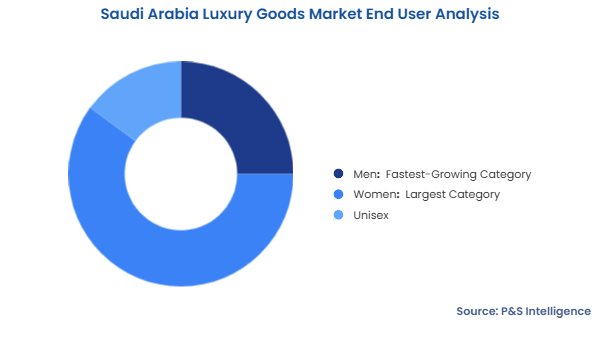
The women category holds the largest market share, of 60%, in 2025, driven by higher spending on fashion, beauty, and accessories categories. The increasing participation of women in the Saudi workforce, combined with Vision 2030's empowerment initiatives, significantly expands female purchasing power for luxury goods. Women's luxury consumption spans multiple product categories with a particularly strong presence in apparel, cosmetics, fragrances, and jewelry. The Kingdom's cultural emphasis on beauty and personal care drives sustained demand for prestige skincare and makeup products.
The men category will have the highest CAGR, of 4.9%, driven by increasing awareness of personal grooming, fashion consciousness, and acceptance of luxury items in male wardrobes. The expanding male segment demonstrates growing interest in high-end fashion, watches, fragrances, and grooming products. The rise of sneaker culture particularly appeals to male consumers, with limited-edition luxury sneakers from brands like Balenciaga, Gucci, Dior, and Louis Vuitton becoming coveted collector items. The trend toward casual luxury aligns with evolving lifestyle preferences, as professional dress codes relax and comfort becomes valued alongside style. Celebrity endorsements and collaborations between luxury brands and sportswear giants amplify demand for exclusive sneaker releases.
The end users analyzed in this report are:
Men (Fastest-Growing Category)
Women (Largest Category)
Unisex
Drive strategic growth with comprehensive market analysis
Saudi Arabia Luxury Goods Market Geographical Analysis
Al-Riyadh Luxury Goods Market Size
Al-Riyadh holds the largest market share, of 45%, in 2025. This dominance stems from the capital's status as the economic and administrative center, housing the highest concentration of high-net-worth individuals, government institutions, and major corporate headquarters.
The city's luxury retail landscape features prestigious shopping destinations, including Kingdom Centre, Al Faisaliah Tower, and the upcoming expansive developments under Vision 2030. The establishment of exclusive flagship stores by international brands like Dior, Chanel, Louis Vuitton, and Gucci underscores Riyadh's importance as a luxury retail hub. Riyadh's growing population, coupled with the rising disposable incomes and an expanding expatriate community, ensures sustained demand for luxury products. The city also serves as a business hub attracting international executives and entrepreneurs who contribute significantly to luxury consumption through both personal purchases and corporate gifting.
Makkah Luxury Goods Market Size
Makkah will have the highest CAGR, of 4.8%. The growth trajectory reflects the city's unique position as the spiritual center of Islam, attracting millions of pilgrims annually who engage in substantial luxury purchases. Religious tourism directly drives luxury consumption as pilgrims, particularly from affluent markets, purchase premium products, including designer abayas, luxury fragrances, gold jewelry, and high-end accessories. The cultural practice of purchasing gifts for family members upon returning from pilgrimage creates sustained demand for luxury items that can be easily transported. Major infrastructure upgrades near the Two Holy Mosques, including expansion of premium hotel developments and upscale retail zones, enhance shopping experiences for visiting pilgrims.
Jeddah, the gateway city within Makkah province, serves as a crucial luxury retail destination. The cosmopolitan atmosphere and Red Sea coastal location make Jeddah a magnet for luxury brands establishing Middle East operations. The city boasts sophisticated shopping centers, designer boutiques, and high-end restaurants attracting both local residents and international tourists.
The provinces of the market are as follows:
Al-Riyadh (Largest Province)
Eastern Province
Makkah (Fastest-Growing Province)
Madinah
Qassim
Asir
Tabuk
Ha'il
Northern Borders
Jazan
Najran
Al-Baha
Al-Jouf
Saudi Arabia Luxury Goods Market Share
The market is semi-consolidated with top international luxury brands holding significant market share through their extensive retail networks and strong brand recognition. The market features a balanced competitive structure where global luxury conglomerates maintain dominant positions while regional distributors and local luxury retailers carve niche segments. Major players establish presence through strategic partnerships with local retail groups who possess a deep understanding of Saudi consumer preferences and regulatory environment.
International luxury houses like LVMH, Kering, and Richemont maintain competitive advantages through diverse brand portfolios, economies of scale, and substantial marketing investments. These conglomerates operate multiple luxury brands across different price points and categories, enabling them to capture varied consumer segments. These companies collectively influence market dynamics through pricing strategies, product launches, and retail expansion decisions. However, the presence of numerous independent luxury brands, regional distributors, and emerging digital-first luxury platforms prevents excessive concentration.
Key Saudi Arabia Luxury Goods Companies:
LVMH Mo
Kering S.A.
Compagnie Financi
Chalhoub Group
Al Tayer Group
L’azurde Company for Jewelry
Damas Jewellery
The Swatch Group Ltd.
Alkaffary Group
FeatureMind
Wallan Trading Company
Majid Al Futtaim (MAF) Fashion
Rivoli Group
Harvey Nichols
Fendi Casa
Saudi Arabia Luxury Goods Market News
In October 2024, Fendi Casa launched its first flagship showroom in Riyadh on Tahliya Street, featuring a 350-square-meter store showcasing curated luxury furniture collections, expanding the brand's presence in the Saudi luxury home décor segment.
In May 2024, L'azurde Company for Jewelry announced its integration with the BigCommerce platform, enhancing digital accessibility and enabling Saudi consumers to purchase high-end jewelry through a more seamless and secure e-commerce experience.
In May 2024, FeatureMind, a provider of digital retail solutions, expanded e-commerce capabilities for the international luxury jewelry and watchmaking brand Mouawad in Saudi Arabia, strengthening the brand's online presence in the Kingdom.
In April 2024, VF Corporation, the parent company of Timberland, Dickies, Smartwool, Jansport, and Vans; engaged with retail conglomerate GMG to expand its retail network through mono-brand stores, focusing primarily on the Kingdom of Saudi Arabia.
In March 2024, Wallan Trading Company signed a strategic agreement with Lotus, providing Saudi consumers seamless access to the brand's diverse range of luxury vehicles, expanding premium automotive offerings in the Kingdom.
In November 2023, Chalhoub Group launched 'The Visitor' travel retail concept at King Abdulaziz International Airport, showcasing over 200 luxury brands, including Dior, Gucci, and La Mer, positioning the airport as a premier luxury shopping destination for international travelers.
Want a report tailored exactly to your business need?
Leading companies across industries trust us to deliver data-driven insights and innovative solutions for their most critical decisions. From data-driven strategies to actionable insights, we empower the decision-makers who shape industries and define the future. From Fortune 500 companies to innovative startups, we are proud to partner with organisations that drive progress in their industries.
Client Testimonials
Working with P&S Intelligence and their team was an absolute pleasure – their awareness of timelines and commitment to value greatly contributed to our project's success. Eagerly anticipating future collaborations.
McKinsey & Company
India
Unmatched Standards
Our insights into the minutest levels of the markets, including the latest trends and competitive landscape, give you all the answers you need to take your business to new heights
Complete Data Security
We take a cautious approach to protecting your personal and confidential information. Trust is the strongest bond that connects us and our clients, and trust we build by complying with all international and domestic data protection and privacy laws