This Report Provides In-Depth Analysis of the Saudi Arabia Fashion Apparel Market Report Prepared by P&S Intelligence, Segmented by Consumer (Men, Women, Kids), Category (Formal Wear, Casual Wear, Sportswear/Activewear, Ethnic/Traditional Wear, Innerwear/Intimates), Social Commerce (Offline, Online), Price Range (Luxury/Premium, Mid-Range, Economy/Mass Market), and Geographical Outlook for the Period of 2019 to 2032
Saudi Arabia Fashion Apparel Market Size Estimation
Key Highlights
Study Period
2019 - 2032
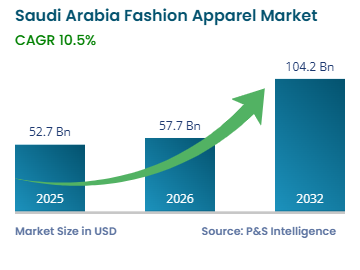
Market Size in 2025
USD 52.7 Billion
Market Size in 2026
USD 57.7 Billion
Market Size by 2032
USD 104.2 Billion
Projected CAGR
10.5%
Largest Country
Saudi Arabia
Fastest Growing Country
U.A.E.
Market Structure
Fragmented
Market Size
Explore the market potential with our data-driven report
Saudi Arabia Fashion Apparel Market Analysis
The Saudi Arabian fashion apparel market revenue is estimated at USD 32.0 billion for 2025 and is projected to reach USD 44.8 billion by 2032, at a CAGR of 5.2% during 2026–2032.
The market's robust growth trajectory is primarily driven by the kingdom's Vision 2030 economic diversification initiatives, rapidly evolving consumer preferences among the young population, and the increasing participation of women in the workforce, which has fundamentally transformed fashion consumption patterns across the nation.
The Saudi fashion apparel industry is experiencing a remarkable transformation as international brands continue to establish their presence in the kingdom, while local designers and retailers simultaneously gain prominence. The market benefits from one of the highest per capita clothing expenditures in the Middle East region, with Saudi consumers allocating approximately 6.5% of their household income to apparel purchases. This spending pattern is particularly pronounced during religious festivals and the wedding season, when fashion apparel sales typically surge by 40–45% compared to regular periods.
Digital transformation has emerged as a pivotal force reshaping the Saudi fashion landscape, with e-commerce penetration in fashion retail reaching unprecedented levels. The proliferation of social commerce platforms and the influence of fashion influencers have created new paradigms for fashion discovery and purchasing behavior, particularly among millennials and Generation Z consumers who constitute over 60% of the kingdom's population. Furthermore, the government's support for the retail sector through initiatives such as the Saudi Retail Development Program and the relaxation of social restrictions has created an environment conducive to fashion retail expansion and innovation.
The market is also witnessing a significant shift towards sustainable and modest fashion, reflecting both global trends and local cultural values. Saudi consumers are increasingly seeking fashion products that combine contemporary styles with cultural appropriateness, driving both international and local brands to develop specialized collections tailored to the kingdom's unique market requirements.
Saudi Arabia Fashion Apparel Market Emerging Trends & Growth Drivers
Digital Commerce Revolution Is Major Market Trend
The exponential growth of e-commerce and social commerce platforms has fundamentally altered how Saudi consumers discover, evaluate, and purchase fashion apparel.
Mobile commerce accounts for over 75% of all digital fashion transactions in the kingdom, as per reports.
The kingdom's young, tech-savvy population has embraced digital shopping channels, with 87% of the consumers aged 18–35 having made at least one online fashion purchase in the past year.
Social media platforms have evolved beyond marketing channels to become direct sales platforms, with Instagram Shopping and TikTok Shop gaining significant traction among Saudi fashion retailers.
Local influencers with follower counts ranging from 50,000 to over 5 million have become critical intermediaries in the fashion value chain, with influencer-driven sales accounting for approximately 23% of online fashion revenue.
The integration of AR-enabled try-on features and virtual fitting rooms has further enhanced the digital shopping experience, reducing return rates by 30% and improving customer satisfaction scores.
Rising Female Workforce Participation Is Accelerating Market Growth
The dramatic increase in female workforce participation represents one of the most transformative drivers of the Saudi fashion apparel market.
According to the Saudi General Authority for Statistics, female labor force participation rate increased from 23.2% in 2020 to 36.2% in 2024, surpassing the Vision 2030 target of 30% ahead of schedule.
This economic empowerment has created a substantial consumer category with independent purchasing power and evolving fashion requirements for professional attire.
Working women in Saudi Arabia are driving demand for diverse apparel categories, from formal business wear to smart casual clothing suitable for modern workplace environments.
The average working Saudi woman spends approximately USD 3,200 annually on clothing, representing a 65% increase compared to non-working women.
This demographic shift has prompted international fashion retailers to expand their professional wear collections and introduce designs that balance modesty requirements with contemporary professional aesthetics.
Cultural Evolution and Modernization Offer Opportunities
The kingdom's ongoing social and cultural transformation under Vision 2030 has expanded the scope and diversity of fashion choices available to Saudi consumers.
The reintroduction of entertainment options, including fashion shows, music concerts, and cultural festivals, has created new occasions for fashion consumption.
The Saudi General Entertainment Authority reported that attendance at entertainment events reached 82 million in 2023, with each event generating an average incremental fashion spending of USD 150 per attendee.
International fashion weeks and designer showcases in Riyadh and Jeddah have elevated fashion consciousness among Saudi consumers while providing platforms for local designers to gain recognition.
The emergence of Saudi Fashion Week and the Arab Fashion Council's initiatives have positioned the kingdom as an emerging fashion hub in the Middle East.
This cultural shift has also influenced traditional clothing, with modern interpretations of abayas and thobes incorporating contemporary design elements, premium fabrics, and international fashion trends.
Saudi Arabia Fashion Apparel Market Segmentation Analysis
Consumer Type Analysis
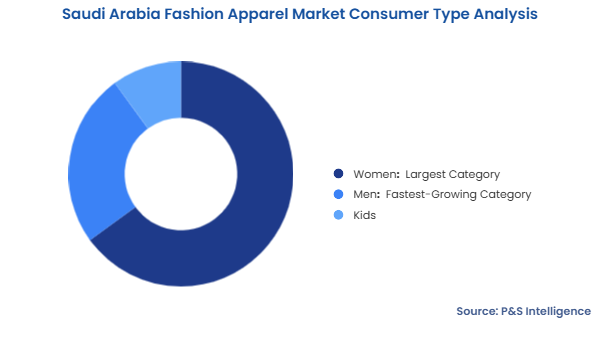
The women category dominates the Saudi Arabian fashion apparel market with 65% share in 2025, driven by increasing female workforce participation, growing fashion consciousness, and expanding social opportunities for women. The category benefits from diverse product offerings ranging from traditional abayas to western-style clothing, with premium and luxury women's fashion experiencing particularly strong growth. Saudi women's increasing presence in public spaces and professional environments has created demand for versatile wardrobes that accommodate various social and professional contexts.
The men category is projected to witness the highest CAGR, during 2026–2032, fueled by evolving male fashion attitudes and the growing acceptance of fashion-forward clothing among younger Saudi men. The traditional preference for thobes is being complemented by increased adoption of casual wear, sportswear, and international fashion brands. The rise of male fashion influencers and the growing emphasis on personal grooming and style among Saudi men aged 20–40 has catalyzed this category's expansion.
These consumer types are covered:
Women (Largest Category)
Men (Fastest-Growing Category)
Kids
Distribution Channel Analysis
Offline retail channels maintained the largest market share, of 70%, in 2025, with shopping malls and specialty stores remaining preferred destinations for fashion shopping among Saudi consumers. The kingdom's investment in retail infrastructure, including mega-malls and luxury retail destinations, has reinforced the dominance of physical retail. The experiential aspect of in-store shopping, including personalized styling services and exclusive in-store collections, continues to attract consumers despite growing digital alternatives.
Online retail channels are experiencing explosive growth, during 2026–2032, driven by improved digital infrastructure, expanding e-commerce platforms, and changing consumer shopping behaviors accelerated by the COVID-19 pandemic. The convenience of home delivery, wider product selection, and competitive pricing offered by online channels are attracting increasing numbers of Saudi shoppers. The integration of buy-now-pay-later services and the availability of same-day delivery in major cities have further enhanced the appeal of online fashion shopping.
These distribution channels are covered:
Offline (Larger Category)
Specialty Stores
Department Stores
Hypermarkets/Supermarkets
Brand Outlets
Online (Faster-Growing Category)
E-commerce Platforms
Brand Websites
Social Commerce
Price Range Analysis
The mid-range category captured 65% market share in 2025, reflecting the preferences of Saudi Arabia's growing middle class and value-conscious consumers seeking quality fashion at accessible price points. This category benefits from the presence of international fast-fashion brands and regional retailers offering trend-driven products at competitive prices. The availability of installment payment options and seasonal promotions has made mid-range fashion more accessible to broader consumer segments.
The luxury/premium category is set to grow at a CAGR, during 2026–2032, supported by high disposable incomes among affluent Saudi consumers and the increasing presence of international luxury brands in the kingdom. Saudi Arabia represents one of the largest luxury fashion markets in the Middle East, with per capita luxury spending exceeding USD 850 annually. The opening of flagship stores by leading luxury fashion houses and the development of exclusive shopping districts in Riyadh and Jeddah underscore the category's growth potential.
These price segments are covered:
Mid-Range (Largest Category)
Luxury/Premium (Fastest-Growing Category)
Economy/Mass Market
Drive strategic growth with comprehensive market analysis
Saudi Arabia Fashion Apparel Market Regional Market Performance
Riyadh Province Fashion Apparel Market Size
Riyadh Province commands the largest share, of 40%, in the Saudi Arabian fashion apparel market in 2025, leveraging its position as the kingdom's capital and largest economic center. The province's population of over 8.5 million, combined with the highest average household income in the country at USD 62,000 annually, creates substantial purchasing power for fashion products. Riyadh's retail infrastructure includes over 30 major shopping malls and numerous high-street retail districts, providing extensive distribution channels for both international and local fashion brands.
The concentration of government institutions, corporate headquarters, and international businesses in Riyadh drives demand for professional and formal apparel. According to the Riyadh Chamber of Commerce, the province hosts over 45% of the kingdom's registered businesses, creating a large workforce requiring diverse fashion options. The upcoming mega-projects, including the New Murabba development and the King Salman Park, are expected to further enhance Riyadh's position as a fashion retail hub with planned luxury retail spaces exceeding 500,000 square meters.
Eastern Province Fashion Apparel Market Outlook
Eastern Province is experiencing the highest growth rate, of approx. 5.5%, during 2026–2032, driven by its strategic location, industrial base, and increasingly diverse population. The province's economy, anchored by the oil and gas sector, provides residents with substantial disposable income, with average household spending on apparel reaching USD 4,200 annually. The presence of Saudi Aramco's headquarters and associated industries has created a cosmopolitan environment with diverse fashion preferences and requirements.
The development of mega-projects such as NEOM's THE LINE and the expansion of tourism infrastructure along the Arabian Gulf coast are attracting international fashion retailers to establish a presence in the Eastern Province. The King Abdulaziz Port in Dammam, handling over 40% of the kingdom's imports, serves as a critical logistics hub for fashion merchandise distribution across the region. The province's younger demographic profile, with 68% of the population under 35 years, drives demand for contemporary and trend-focused fashion offerings.
These provinces are covered:
Riyadh (Largest Regional Market)
Makkah
Eastern Province (Fastest-Growing Regional Market)
Madinah
Qassim
Asir
Tabuk
Ha'il
Northern Borders
Jazan
Najran
Al-Baha
Al-Jouf
Saudi Arabia Fashion Apparel Market Share
Saudi Arabia's fashion apparel market is fragmented, with no single player dominating the landscape. Global brands like Zara, H&M, and Shein each hold small individual shares, while a wide range of regional and emerging local brands compete for visibility. The e-commerce space is similarly dispersed, with top platforms like Shein and Namshi sharing the spotlight with numerous others. This fragmentation reflects diverse consumer preferences, a rapidly evolving retail ecosystem, and low market entry barriers for both online and offline players.
Key Saudi Arabia Fashion Apparel Companies:
Al Hokair Group
Landmark Group
Chalhoub Group
M.H. Alshaya Co.
Kamal Osman Jamjoom Group LLC
Adidas AG
Nike Inc.
Shein US Services, LLC
Dolce & Gabbana S.p.A.
Hennes & Mauritz AB
Industria de Dise
LVMH Mo
Giorgio Armani S.p.A.
Kering SA
Prada Group
Burberry Group plc
Versace S.r.l.
Chanel S.A.
Herm
Valentino S.p.A.
Compagnie Financi
Saudi Arabia Fashion Apparel Market News
In September 2024, Inditex launched its first sustainability-focused store concept in Riyadh, featuring renewable energy systems and recycled materials, as part of its commitment to achieving net-zero emissions by 2040 in Saudi Arabia.
In July 2024, Landmark Group announced a USD 200 million investment plan to expand its fashion retail footprint in Saudi Arabia, including the opening of 40 new stores across its brand portfolio by 2026.
In May 2024, the Saudi Fashion Commission partnered with Parsons School of Design to establish a fashion design academy in Riyadh, aiming to train 1,000 Saudi fashion professionals by 2030.
In March 2024, Chalhoub Group acquired a 60% stake in Saudi-based luxury fashion e-commerce platform Ounass for USD 150 million, strengthening its digital commerce capabilities in the kingdom.
In January 2024, H&M Group introduced its premium brand COS to Saudi Arabia with flagship stores in Riyadh and Jeddah, targeting the growing demand for minimalist, high-quality fashion.
In November 2023, Cenomi Retail completed its IPO on the Saudi Exchange, raising USD 800 million to fund the expansion of its fashion retail operations and digital transformation initiatives.
In August 2023, Amazon Fashion launched a dedicated Saudi Arabia portal featuring local and international brands, with same-day delivery services in major cities and Arabic language customer support.
Want a report tailored exactly to your business need?
Leading companies across industries trust us to deliver data-driven insights and innovative solutions for their most critical decisions. From data-driven strategies to actionable insights, we empower the decision-makers who shape industries and define the future. From Fortune 500 companies to innovative startups, we are proud to partner with organisations that drive progress in their industries.
Client Testimonials
Working with P&S Intelligence and their team was an absolute pleasure – their awareness of timelines and commitment to value greatly contributed to our project's success. Eagerly anticipating future collaborations.
McKinsey & Company
India
Unmatched Standards
Our insights into the minutest levels of the markets, including the latest trends and competitive landscape, give you all the answers you need to take your business to new heights
Complete Data Security
We take a cautious approach to protecting your personal and confidential information. Trust is the strongest bond that connects us and our clients, and trust we build by complying with all international and domestic data protection and privacy laws