Saudi Arabia Digital Therapeutics Market Size & Opportunities Analysis - Growth Strategies, Competitiveness, and Forecasts (2026 - 2032)
This Report Provides In-Depth Analysis of the Saudi Arabia Digital Therapeutics Market Report Prepared by P&S Intelligence, Segmented by Product Type (Software-based, Device-based), Application (Diabetes Management, Cardiovascular Disease Management, Respiratory Diseases, Mental Health & Behavioral Disorders, Musculoskeletal Disorders), End User (Patients, Healthcare Providers, Payers, Employers), Sales Channel (Business-to-Consumer (B2C), Business-to-Business (B2B)), and Geographical Outlook for the Period of 2019 to 2032
Saudi Arabia Digital Therapeutics Market Revenue Insights
Key Highlights
Study Period
2019 - 2032
Market Size in 2025
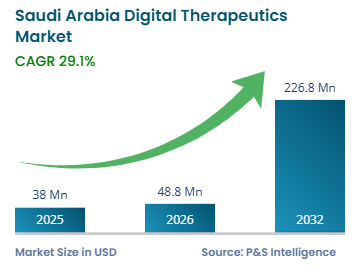
USD 38.0 Million
Market Size in 2026
USD 48.8 Million
Market Size by 2032
USD 226.8 Million
Projected CAGR
29.1%
Largest Province
Al-Riyadh
Fastest-Growing Province
Makkah
Market Structure
Fragmented
Market Size
Explore the market potential with our data-driven report
Saudi Arabia Digital Therapeutics Market Future Outlook
The Saudi Arabian digital therapeutic market size will be an estimated USD 38.0 million for 2025, and it will grow by 29.1% during 2026–2032, to reach USD 226.8 million by 2032.
The rapid expansion of the market is fueled by the government's ambitious Vision 2030 healthcare transformation initiatives, rising prevalence of chronic diseases, and increasing adoption of digital health technologies among the Saudi population. The market growth is particularly accelerated by the widespread deployment of government-backed digital health platforms, such as Tawakkalna and Mawid, which have collectively reached millions of users and established a robust foundation for digital therapeutic interventions.
The Kingdom's strategic focus on healthcare digitalization through the Health Sector Transformation Program has created an enabling environment for digital therapeutics adoption. According to the IDF, 5.3 million adult diabetes cases exist in the country, representing a prevalence rate of 23.1%. Thus, the demand for innovative therapeutic solutions has reached unprecedented levels.
In July 2025, HIMSS joined forces with WHX Tech to advance digital health transformation in Saudi Arabia, focusing on scaling innovations in artificial intelligence and interoperability within healthcare systems. This collaboration, along with strategic partnerships between local healthcare providers and international digital therapeutics companies, is establishing Saudi Arabia as a regional hub for digital health innovation in the Middle East.
Saudi Arabia Digital Therapeutics Market Dynamics
Technological Infrastructure and Digital Adoption Are Key Trends
The robust technological infrastructure and high digital adoption rates in Saudi Arabia are the key trends.
With one of the highest smartphone penetration rates in the Middle East, combined with widespread internet connectivity and a digitally native young population, the Kingdom possesses the fundamental prerequisites for successful digital therapeutics implementation.
The COVID-19 pandemic accelerated digital health adoption, with virtually booked physician appointments exceeding 3.8 million through the Sehhaty platform alone.
The integration of advanced technologies such as artificial intelligence, machine learning, and predictive analytics into healthcare delivery is transforming how therapeutic interventions are designed and delivered.
In 2023, the Tawakkalna app launched a feature that links telehealth services with EHRs, promoting real-time data sharing and improving care coordination.
Healthcare providers are increasingly leveraging these technologies to develop personalized treatment algorithms, predict disease progression, and optimize therapeutic outcomes through data-driven insights.
The emergence of specialized digital health startups and the entry of international digital therapeutics companies into the Saudi market are introducing innovative solutions tailored to local healthcare needs.
Companies are developing Arabic-language interfaces, culturally appropriate content, and region-specific therapeutic protocols that resonate with Saudi patients, ensuring higher engagement rates and better clinical outcomes.
This localization of digital therapeutics solutions, combined with growing investment in the sector, is accelerating market maturation and establishing Saudi Arabia as a regional leader in digital health innovation.
Rising Chronic Disease Burden Is Biggest Driver
The escalating prevalence of chronic diseases represents the most significant driver for digital therapeutics market growth in Saudi Arabia.
The cardiovascular disease landscape is equally concerning, with CVDs representing the main cause of mortality and morbidity in the Kingdom, creating substantial strain on the healthcare system.
The respiratory disease burden further compounds the chronic disease challenge.
The prevalence rate of COPD increased by 49%, from 1,381.26 cases per 100,000 in 1990 to 2,053.04 cases per 100,000 in 2019, with higher trends observed in males.
Mental health conditions have emerged as another critical area, with the national prevalence of people at risk of MDD and GAD found to be 12.7% and 12.4%, respectively, highlighting the substantial unmet need for accessible mental health interventions.
The growing chronic disease burden contributes significantly to Saudi Arabia’s healthcare expenditure, with chronic illnesses accounting for the majority of long-term care spending and increasing pressure on healthcare budgets, driving the transition toward more cost-effective digital therapeutic solutions.
The country faces a shortage of specialized healthcare professionals, particularly in endocrinology, cardiology, respiratory care, and mental health, intensifying the need for scalable digital tools helping patients access specialist care even in underserved regions.
Patient preferences are shifting rapidly toward remote and digitally supported healthcare models, supported by high smartphone penetration and increased acceptance of virtual care following the pandemic, further accelerating digital therapeutics adoption.
This underscores the urgent requirement for scalable, cost-effective therapeutic solutions that can reach patients across the Kingdom's diverse geographic landscape.
Digital therapeutics platforms are uniquely positioned to address this burden by providing continuous monitoring, personalized interventions, and real-time data analytics to manage chronic conditions effectively.
The ability to deliver evidence-based therapeutic interventions through mobile applications and connected devices enables healthcare providers to extend their reach beyond traditional clinical settings, particularly benefiting patients in remote areas where access to specialized care remains limited.
Saudi Arabia Digital Therapeutics Market Segmentation Analysis
Product Type Analysis
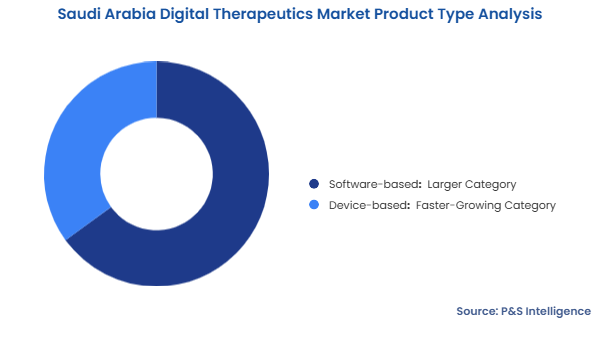
The software-based category holds the largest market share, of 65%, in 2025. This segment's leadership stems from the lower barriers to entry, scalability advantages, and the ability to rapidly iterate and update therapeutic protocols based on real-world evidence. Software-based solutions encompass mobile applications, web-based platforms, and cloud-based therapeutic programs that deliver evidence-based interventions for various chronic conditions. The widespread smartphone adoption in Saudi Arabia, coupled with the government's digital health initiatives, has created an ideal ecosystem for software-based therapeutics proliferation.
The device-based category will have the highest CAGR, of 29.4%, driven by technological advancements in wearable sensors, connected medical devices, and the integration of IoT in healthcare. The growing demand for continuous monitoring solutions, particularly for diabetes and cardiovascular disease management, is propelling this segment's growth. Device-based therapeutics offer the advantage of real-time biometric data collection, enabling more precise therapeutic interventions and better clinical outcomes. The increasing availability of FDA-cleared and CE-marked digital therapeutic devices, combined with growing physician confidence in prescribing these solutions, is accelerating adoption rates across Saudi healthcare facilities.
The product types analyzed in this report are:
Software-based (Larger Category)
Device-based (Faster-Growing Category)
Application Analysis
The diabetes management category holds the largest market share in 2025, reflecting the substantial disease burden and the urgent need for innovative management solutions. This dominance is supported by the country’s rapidly growing diabetic population, one of the highest globally, resulting from lifestyle transitions, rising obesity rates, urbanization, and genetic predisposition. Additionally, increasing availability of AI-enabled glucose monitoring systems, mobile health apps, and integrated digital care pathways through hospitals and insurance networks has strengthened adoption, positioning diabetes management within the market.
The mental health & behavioral disorders category will have the highest CAGR, of 29.3%, driven by the increasing recognition of mental health importance, reduced stigma around seeking psychological support, and the acute shortage of mental health professionals in the Kingdom. Digital therapeutics platforms offering cognitive behavioral therapy, mindfulness interventions, and mood tracking capabilities are addressing the significant treatment gap, particularly appealing to younger demographics who prefer digital-first healthcare solutions.
The applications analyzed in this report are:
Diabetes Management (Largest Category)
Cardiovascular Disease Management
Respiratory Diseases
Mental Health & Behavioral Disorders (Fastest-Growing Category)
Musculoskeletal Disorders
Others
End User Analysis
The patients category holds the largest market share, of 40%, in 2025, driven by the increasing consumer awareness of digital health benefits and the growing preference for self-managed care solutions. Saudi patients, particularly those with chronic conditions, are actively seeking digital tools that provide convenient access to therapeutic interventions, real-time health monitoring, and personalized treatment plans. The government's push for patient empowerment through platforms like Sehhaty has normalized the use of digital health tools among the general population.
The healthcare providers category will have the highest CAGR. This growth is attributed to the increasing integration of digital therapeutics into clinical workflows, growing evidence of improved patient outcomes, and the potential for enhanced care efficiency. Healthcare providers are recognizing digital therapeutics as valuable tools for remote patient monitoring, treatment adherence improvement, and reducing the burden on healthcare facilities. The Ministry of Health's support for digital health adoption and the availability of reimbursement mechanisms for certain digital therapeutic interventions are accelerating provider adoption.
The end users analyzed in this report are:
Patients (Largest Category)
Healthcare Providers (Fastest-Growing Category)
Payers
Employers
Others
Sales Channel Analysis
The business-to-consumer category holds the largest market share, of 55%, in 2025, due to the strong consumer-driven demand for accessible digital health solutions. The direct-to-consumer model has thrived in Saudi Arabia due to high digital literacy, widespread smartphone adoption, and the population's willingness to invest in health and wellness solutions. Digital therapeutics companies are leveraging social media marketing, influencer partnerships, and app store optimization to reach consumers directly, bypassing traditional healthcare channels.
The business-to-business category will have the highest CAGR, as healthcare institutions, insurance companies, and employers increasingly recognize the value of digital therapeutics in improving health outcomes while managing costs. The B2B model benefits from larger contract values, more stable revenue streams, and the ability to reach multiple end-users through institutional partnerships. The growing interest from Saudi employers in employee wellness programs and the expanding role of insurance companies in preventive care are key drivers for B2B channel growth.
Drive strategic growth with comprehensive market analysis
Saudi Arabia Digital Therapeutics Market Regional Outlook
Al-Riyadh Digital Therapeutics Market Size
Al-Riyadh holds the largest market share, of 35%, in 2025, establishing itself as the epicenter of digital therapeutics adoption in Saudi Arabia. The capital region's dominance is driven by its concentration of advanced healthcare facilities, higher disposable income levels, and the presence of key government institutions driving digital health initiatives. Riyadh-based hospitals have begun to deploy such solutions in pilot programs, particularly for chronic disease management. The province benefits from superior digital infrastructure, with widespread 5G coverage enabling seamless delivery of bandwidth-intensive digital therapeutic applications.
The region's tech-savvy population and early adopter mindset have facilitated the rapid uptake of digital health solutions. Major tertiary care centers in Riyadh, including King Faisal Specialist Hospital & Research Centre, have pioneered the integration of digital therapeutics into clinical practice. In June 2025, King Faisal Specialist Hospital & Research Centre in Riyadh implemented a new AI-based imaging solution, demonstrating the province's leadership in adopting cutting-edge healthcare technologies. The concentration of healthcare technology startups and the presence of regulatory sandbox initiatives in Riyadh further reinforce its position as the primary market for digital therapeutics innovation.
Makkah Digital Therapeutics Market Size
Makkah will have the highest CAGR, of 29.2%, attributed to its large population base, increasing healthcare infrastructure investments, and the unique healthcare demands posed by millions of annual pilgrims. The provincial government has prioritized digital health solutions to manage the surge in healthcare needs during the Hajj and Umrah seasons, creating substantial opportunities for digital therapeutics deployment.
The urban centers of Jeddah and Makkah city are witnessing accelerated adoption of digital health platforms, supported by improving internet connectivity and growing smartphone penetration. Healthcare providers in the province are increasingly leveraging digital therapeutics to address the high prevalence of chronic diseases among residents and to provide continuity of care for international visitors. The establishment of specialized digital health units in major hospitals and the integration of digital therapeutics into primary healthcare centers are driving market expansion across the province.
The provinces of the market are as follows:
Al-Riyadh (Largest Province)
Eastern Province
Makkah (Fastest-Growing Province)
Madinah
Qassim
Asir
Tabuk
Ha'il
Northern Borders
Jazan
Najran
Al-Baha
Al-Jouf
Saudi Arabia Digital Therapeutics Market Share
The market is fragmented, characterized by the presence of international digital health companies, regional players, and emerging local startups. This fragmentation is evident from the diverse range of solutions offered by different players, with no single company commanding the market share. The competitive intensity in the market is increasing as players differentiate through specialized therapeutic offerings, Arabic language localization, and integration with national health platforms. Additionally, the growing entry of new players and the fast pace of technological innovation are intensifying competition, pushing companies to prioritize meaningful innovation, proven clinical outcomes, and stronger patient engagement to strengthen their market position.
Key Saudi Arabia Digital Therapeutics Companies:
DarioHealth
Akili Interactive
Biofourmis
Huma
Noom Inc.
Canary Health
Propeller Health
Livongo Health Inc.
2Morrow Inc.
WellDoc Inc.
DoctorNow
Omada Health Inc.
Saudi Arabia Digital Therapeutics Market News
In August 2024, Saudi Arabia's Ministry of Health launched the Regulatory Healthcare Sandbox, a digital health service platform designed to accelerate innovation in healthcare, providing a controlled environment for testing digital therapeutic solutions.
In June 2025, Powerful Medical partnered with Alphaiota to expand the deployment of its AI-powered cardiovascular diagnostic platform PMcardio in Saudi Arabia, representing an advancement in cardiovascular digital therapeutics.
In February 2025, Aster DM Healthcare launched its first digital health platform, myAster, in Saudi Arabia, allowing users to monitor vital signs and manage chronic diseases digitally.
Want a report tailored exactly to your business need?
Leading companies across industries trust us to deliver data-driven insights and innovative solutions for their most critical decisions. From data-driven strategies to actionable insights, we empower the decision-makers who shape industries and define the future. From Fortune 500 companies to innovative startups, we are proud to partner with organisations that drive progress in their industries.
Client Testimonials
Working with P&S Intelligence and their team was an absolute pleasure – their awareness of timelines and commitment to value greatly contributed to our project's success. Eagerly anticipating future collaborations.
McKinsey & Company
India
Unmatched Standards
Our insights into the minutest levels of the markets, including the latest trends and competitive landscape, give you all the answers you need to take your business to new heights
Complete Data Security
We take a cautious approach to protecting your personal and confidential information. Trust is the strongest bond that connects us and our clients, and trust we build by complying with all international and domestic data protection and privacy laws