North America Shower Glass Door Market Size & Share Analysis - Trends, Drivers, Competitive Landscape, and Forecasts (2026 - 2032)
This Report Provides In-Depth Analysis of the North America Shower Glass Door Market Report Prepared by P&S Intelligence, Segmented by Product Type (Frameless Shower Glass Doors, Framed Shower Glass Doors), Sale Channel (Indirect Sales, Direct Sales), Glass Type (Tempered Glass, Laminated Glass), Door Type (Single, Bifold, Sliding), End User (Residential, Commercial), and Geographical Outlook for the Period of 2021 to 2032
Explore the market potential with our data-driven report
North America Shower Glass Door Market Overview
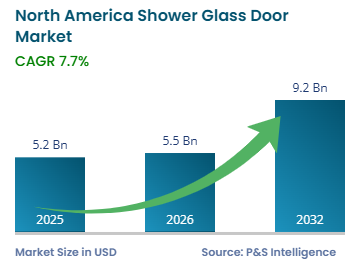
The North America shower glass door market size was USD 5.2 billion for 2025, and it will grow by 7.7% during 2026–2032, to reach USD 9.2 billion by 2032.
This growth is supported by rising adoption of frameless shower glass doors, expanding indirect sales through kitchen and bath showrooms, big-box retailers, and online channels, and sustained residential bathroom remodeling activity across the U.S. and Canada. Growing consumer preference for modern, minimalist bathroom designs is further driving demand for premium shower glass door solutions, particularly frameless and customized configurations.
Demand is reinforced by an aging housing stock and continued homeowner renovation activity, which support repair-and-remodel spending. NAHB attributed the continued upward trend in improvement spending partly to the aging housing stock and sustained renovation demand. NAHB reported that residential remodeling activity is expected to increase by 3% in 2026 and an additional 2% in 2027 in inflation-adjusted terms, supporting continued demand for renovation-related products, including bathroom fixtures and shower glass doors.
Key Market Insights
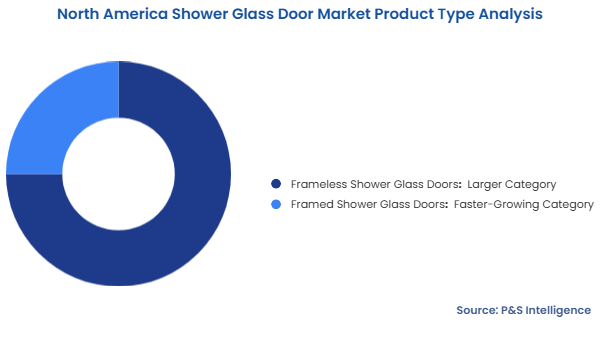
The frameless shower glass doors category holds the larger market share, of 75%, in 2025, driven by sustained demand for minimalist, heavyweight-glass installations in bathroom renovations.
The indirect sales category holds the larger market share, of 80%, in 2025, and it will have the highest CAGR, of approximately 8.1%, driven by expanding retail and digital channels.
The tempered glass category held the largest market share, of 65%, in 2025, driven by its safety, durability, and widespread use in residential and commercial shower doors and enclosures.
The residential category held the larger market share, of 80%, in 2025, driven by ongoing homeowner spending on bathroom renovations and upgrades.
U.S. holds the larger market share, of 75%, in 2025, and it will have the higher CAGR, of approximately 8.6%, driven by renovation activity and demand for modern shower enclosures.
North America Shower Glass Door Market Trends and Drivers
Digital-First Retail Models Is Key Trend
Sales channel structures are shifting as indirect sales through kitchen and bath showrooms, big-box retailers, and online platforms gain importance in the distribution of shower glass doors. Online purchasing is becoming increasingly important as consumers research, compare, configure, and purchase home-improvement products digitally, reducing reliance on traditional showroom-only purchasing journeys. Digital-first brands are further supporting this shift through online configurators, virtual measurement tools, and guided product-selection platforms.
The U.S. Census Bureau reported that e-commerce sales accounted for 16.6% of total U.S. retail sales in Q4 2025, increasing 5.3% year over year, demonstrating the continued expansion of online retail channels. This shift is expected to continue as manufacturers and retailers expand digital product-selection, configuration, and purchasing capabilities, making online channels an increasingly important component of shower glass door distribution.
Safety Glazing Codes and Renovation Cycles Are Biggest Drivers
Building-code safety requirements are supporting demand for tempered glass in shower-door and bathroom glazing applications. Under the IBC and IRC, glazing in doors and enclosures for showers, bathtubs, and similar wet areas is classified as a hazardous location and is required to meet applicable safety-glazing performance requirements. The U.S. Consumer Product Safety Commission (CPSC) also requires safety glazing for glazing used in bathtub and shower-door enclosures, reinforcing the importance of compliant safety glass in these applications.
ANSI Z97.1 establishes performance specifications and testing methods for safety glazing materials used in buildings and provides a recognized basis for safety-glazing requirements. As homeowners renovate aging bathrooms and replace older shower-door installations, compliance with safety-glazing requirements supports continued adoption of tempered glass over conventional annealed glass.
Skilled Installer Shortages Is Key Restraint
Custom and frameless shower glass installations require precise measurements, specialized handling, and skilled on-site installation to ensure proper fit, safety, and finish. A shortage of qualified installers can reduce project capacity and make it difficult for contractors to manage multiple installations simultaneously. Limited labor availability may also extend installation schedules and increase labor costs, particularly for complex or customized enclosure designs that require greater technical expertise and coordination between manufacturers, contractors, and installation teams.
Installer shortages can also discourage contractors and customers from selecting highly customized shower glass solutions when simpler alternatives can be completed more quickly. Delays in measurement, fabrication coordination, and installation can affect overall project timelines and customer satisfaction. For manufacturers and distributors, limited installation capacity can restrict the number of projects they can fulfill, particularly in renovation-heavy markets. Consequently, persistent workforce constraints can slow adoption and limit growth of custom and frameless shower glass door segments.
Hospitality and Healthcare Construction Are Biggest Opportunities
Beyond residential remodeling, commercial end-use segments, including hospitality and healthcare, represent an underpenetrated growth opportunity for shower glass door manufacturers as hotels, hospitals, outpatient facilities, and other institutional properties invest in new construction, renovations, and facility upgrades. Demand for durable, easy-to-maintain, and aesthetically appealing glass shower enclosures creates opportunities for suppliers to expand beyond residential applications and secure commercial projects.
The American Institute of Architects (AIA) July 2026 Consensus Construction Forecast identifies hotels and healthcare facilities among the stronger-performing nonresidential construction segments. Hotel construction spending is projected to increase 4.6% in 2026 and 5.2% in 2027, while healthcare construction spending is forecast to rise 2.6% in 2026 and 4.4% in 2027. This construction and renovation pipeline creates an opportunity for shower glass door manufacturers to expand commercial-grade product offerings and pursue specification opportunities with hospitality developers, healthcare facilities, contractors, architects, and designers.
North America Shower Glass Door Market Segmentation Analysis
Product Type Analysis
The frameless shower glass doors category holds the larger market share, of 75%, in 2025, driven by sustained demand for minimalist, heavyweight-glass installations in bathroom renovations. Homeowners increasingly favor frameless configurations for their unobstructed sightlines and premium appearance compared with framed alternatives, despite their higher installed cost. The National Association of REALTORS (NAR) and National Association of the Remodeling Industry (NARI) reported that 35% of REALTORS observed increased demand for bathroom renovations over the previous two years, highlighting continued homeowner investment in bathroom improvements.
The framed shower glass doors category will have the higher CAGR, of approximately 7.9%, supported by continued demand for heavyweight glass, contemporary designs, and premium bathroom installations. This growth is further supported by increasing bathroom renovation activity, rising consumer interest in upgraded shower enclosures, and the replacement of older shower systems with modern glass-door solutions.
The indirect sales category holds the larger market share, of 80%, in 2025, and it will have the higher CAGR, of approximately 8.1%, as manufacturers strengthen retail partnerships and expand digital purchasing and product-selection capabilities to reach renovation-driven buyers beyond direct-to-installer relationships. The continued expansion of e-commerce and digital purchasing in U.S. home-improvement and building-product categories is supporting the development of online channels, enabling consumers to research, compare, configure, and purchase shower glass door products with greater convenience. This trend complements traditional showroom and big-box distribution and broadens manufacturers' access to renovation customers.
The sale channels analyzed in this report are:
Indirect Sales (Largest and Fastest-Growing Category)
Kitchen and Bath Showrooms
Big-Box Stores
Online Channels
Direct Sales
Glass Type Analysis
The tempered glass category holds the largest market share in 2025, and it will have the highest CAGR, of approximately 8.4%, supported by its widespread use in shower doors and enclosures, safety requirements, durability, and suitability for residential and commercial bathroom applications. The U.S. Consumer Product Safety Commission (CPSC), under 16 CFR Part 1201, establishes safety requirements for architectural glazing products used in hazardous locations, including certain shower and bathtub enclosures. These requirements support the use of compliant safety glazing materials, including tempered and laminated glass, in applicable installations.
The glass types analyzed in this report are:
Tempered Glass (Largest and Fastest-Growing Category)
Laminated Glass
Others
Door Type Analysis
The single category holds the largest market share, of 65%, in 2025, and it will have the highest CAGR, supported by their simpler design, lower installation complexity, and suitability for smaller and standard-sized bathroom layouts. Their relatively straightforward installation and competitive cost make single-door configurations attractive for residential renovations, particularly where homeowners prioritize practical space utilization and manageable remodeling budgets. The continued construction and renovation of residential housing provides a broad application base for single-door shower enclosures. Census Bureau data, as compiled by the National Association of Home Builders (NAHB), show that the median size of new single-family homes declined to 2,176 square feet in Q3 2025.
The door types analyzed in this report are:
Single (Largest and Fastest-Growing Category)
Bifold
Sliding
End User Analysis
The residential category holds the larger market share in 2025, and it will have the higher CAGR, of approximately 8.3%, driven by sustained homeowner investment in bathroom renovations and upgrades amid an aging housing stock. Demand for shower glass doors is supported by homeowners replacing older bathroom fixtures and upgrading to modern, aesthetically oriented shower enclosures. According to the Harvard Joint Center for Housing Studies (JCHS), the U.S. remodeling market remained above USD 600 billion through 2025, supported by the aging of homes and households and record-high property values.
The end users analyzed in this report are:
Residential (Larger and Faster-Growing Category)
Commercial
Hospitality
Healthcare
Corporate
Others
Drive strategic growth with comprehensive market analysis
North America Shower Glass Door Market Regional Analysis
U.S. Shower Glass Door Market Size
U.S. holds the larger market share, of 75%, in 2025, and it will have the higher CAGR, of approximately 8.6%, supported by the country’s large base of aging owner-occupied homes, ongoing residential renovation activity, and growing demand for frameless and tempered-glass shower enclosures. Elevated homeowner equity and continued residential construction activity further support replacement, renovation, and upgrade demand. The U.S. Census Bureau reports that residential construction spending increased 1.8% year over year in May 2026, reflecting continued activity in the U.S. housing and construction market. The National Association of Home Builders (NAHB) has also highlighted the aging housing stock as an important factor supporting remodeling demand.
Canada Shower Glass Door Market Size
Canada represents the second-larger country market within North America, with renovation-driven demand providing a stable, if more modest, growth base relative to the U.S. Residential renovation activity continues to support demand for shower glass doors, particularly as homeowners invest in existing housing stock and bathroom upgrades.
Statistics Canada reports that residential renovation costs increased 0.9% in the second quarter of 2025, following a 0.3% increase in the first quarter, reflecting continued increases in renovation-related costs across Canada. The Canada Mortgage and Housing Corporation (CMHC) reported 113,017 year-to-date housing starts through June 2026 in centres with populations of 10,000 or more, although this represented a 1% decline from the same period in 2025. The continued level of residential construction nevertheless provides a supporting base for demand for ancillary fixtures, including shower glass doors.
The countries of the market are as follows:
U.S. (Larger and Faster-Growing Country)
Canada
North America Shower Glass Door Market Competitive Landscape
The market is fragmented because it includes a mix of established manufacturers, regional glass fabricators, specialty shower-door suppliers, distributors, and local installation companies rather than being dominated by a small number of players. Product customization, local fabrication, precise measurement, and installation requirements create opportunities for regional and specialized companies to compete alongside larger manufacturers. The market also serves diverse residential and commercial customers, further supporting a broad competitive landscape. Companies such as Kohler, MAAX, and DreamLine contribute to this fragmented structure by offering shower-door products across different designs, price points, distribution channels, and customer segments, while regional fabricators and installers compete through customization, local service, and project-specific solutions.
Key Players in the North America Shower Glass Door Market:
Coastal Shower Doors
DreamLine
Aston Global Inc.
Basco Manufacturing Company
Kohler Co.
VIGO Industries
MAAX Bath Inc.
American Bath Group
Fleurco Products Inc.
Alumax Bath Enclosures
C.R. Laurence Co., Inc.
Moen Incorporated
North America Shower Glass Door Market Developments
In February 2026, Kohler Co. introduced the Anthem EvoCycle smart showering system at KBIS 2026 in Orlando, offering a 2.5-gallon-per-minute shower experience with up to 80% water savings in Cycle Mode, reinforcing the company's focus on sustainable and connected shower solutions.
In August 2025, C.R. Laurence Co., Inc. opened five new service centers in Seattle, St. Louis, Cincinnati, Tampa, and Copenhagen, expanding local access to glazing hardware, supplies, and glass products. The expansion strengthens CRL's North American distribution network and improves product availability and service for regional glaziers.
In April 2025, LIXIL and American Bath Group entered into a strategic partnership under which ABG gained exclusive rights to produce and distribute bathing products under the American Standard, DXV, and Eljer brands. ABG also acquired LIXIL’s Salem, Ohio manufacturing facility, strengthening its bathing product portfolio and North American manufacturing capabilities.
Frequently Asked Questions About This Report
What are the major trends in the North America shower glass door market?+
Key trends include rising demand for frameless and semi-frameless shower doors, growing adoption of customized glass enclosures, increased use of low-maintenance and easy-clean glass, and greater demand for modern bathroom designs driven by residential renovation and remodeling.
What factors are driving the North America shower glass door market?+
Market growth is driven by increasing residential construction, bathroom renovation and remodeling activity, consumer preference for premium bathroom aesthetics, rising adoption of frameless shower enclosures, and demand for durable and low-maintenance bathroom products.
What are the major challenges facing the North America shower glass door market?+
Key challenges include high installation and customization costs, fluctuations in glass and metal raw-material prices, complex installation requirements, breakage and transportation risks, and competition from lower-cost shower curtains and acrylic or plastic enclosures.
How is bathroom renovation driving demand for shower glass doors in North America?+
Bathroom remodeling is supporting demand as homeowners increasingly replace traditional shower curtains and older enclosures with modern glass doors. Renovation projects also create demand for customized frameless and semi-frameless systems that improve bathroom appearance and functionality.
What factors influence the price of shower glass doors in North America?+
Prices are influenced by glass thickness and type, door configuration, frameless or framed construction, hardware quality and finish, customization requirements, enclosure size, installation complexity, transportation costs, and labor charges.
Want a report tailored exactly to your business need?
Leading companies across industries trust us to deliver data-driven insights and innovative solutions for their most critical decisions. From data-driven strategies to actionable insights, we empower the decision-makers who shape industries and define the future. From Fortune 500 companies to innovative startups, we are proud to partner with organisations that drive progress in their industries.
Client Testimonials
Working with P&S Intelligence and their team was an absolute pleasure – their awareness of timelines and commitment to value greatly contributed to our project's success. Eagerly anticipating future collaborations.
McKinsey & Company
India
Unmatched Standards
Our insights into the minutest levels of the markets, including the latest trends and competitive landscape, give you all the answers you need to take your business to new heights
Complete Data Security
We take a cautious approach to protecting your personal and confidential information. Trust is the strongest bond that connects us and our clients, and trust we build by complying with all international and domestic data protection and privacy laws