India Smart Wearable Device Market Size & Share Analysis - Trends, Drivers, Competitive Landscape, and Forecasts (2026 - 2032)
This Report Provides In-Depth Analysis of the India Smart Wearable Device Market Report Prepared by P&S Intelligence, Segmented by Product Type (Wristwear, Eyewear, Earwear, Headwear, Bodywear, Footwear), Connectivity (Bluetooth, LTE/eSIM), Distribution Channel (Online, Offline), End Use (Consumer Electronics, Shopping, Healthcare, Gaming, Enterprise & Industrial), and Geographical Outlook for the Period of 2021 to 2032
Explore the market potential with our data-driven report
India Smart Wearable Device Market Overview
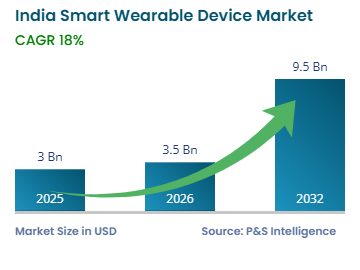
The India smart wearable device market size was USD 3.0 billion in 2025, and it is anticipated to expand at a CAGR of 18.0% during 2026–2032, reaching USD 9.5 billion by 2032. This growth is supported by the integration of smartwatches, fitness bands, and earwear devices across health monitoring, payments, and connectivity applications, positioning wearable technology as essential infrastructure within India's rapidly digitalizing consumer electronics ecosystem.
Key Market Insights
Wristwear has largest share, of 35%, driven by smartwatch and fitness band adoption for consumer electronics and healthcare monitoring applications.
LTE/eSIM has highest CAGR, of 18.3%, as 5G infrastructure deployment reaches 99% district coverage and enabling standalone communication capabilities.
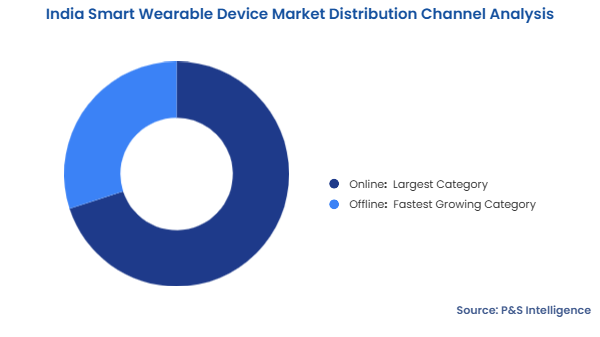
Online channels held largest share, of 70%, driven by extensive product selection, competitive D2C pricing, and urban consumers’ preference for convenience via e-commerce.
Offline channels have highest CAGR, of 18.5%, as tier-2 and tier-3 city consumers prioritize physical product inspection and immediate possession over online convenience.
Consumer electronics held the largest share, of 35%, reflecting wearable devices’ position as lifestyle products emphasizing connectivity, entertainment, convenience, and basic health tracking.
Maharashtra holds the largest share, of 40%, anchored by Mumbai's concentration of tech-savvy consumers, established e-commerce infrastructure, and presence of all leading local and international brands.
Karnataka has highest CAGR, of 18.4%, propelled by Bengaluru's technology sector workforce prioritizing fitness tracking and productivity, alongside expanding retail distribution networks targeting tier-2 urban centers.
India’s smart wearable device market has expanded rapidly as consumers embrace fitness, convenience, and connectivity. Increasing health awareness has driven demand for wearable technology that tracks activity, sleep, and vital signs. Growing smartphone adoption and more affordable devices have made wearables accessible across diverse demographics. Fashionable designs and seamless integration with mobile apps have enhanced appeal among younger users. Additionally, tech brands are tailoring products to local preferences, boosting relevance. The ecosystem of accessories, payments, and notifications further enriches user experience. Overall, India’s wearable market reflects a broader shift toward intelligent, everyday technology that supports lifestyle and wellness goals.
The Production Linked Incentive scheme provides customs duty reductions of 15–20% on imported wearable device components through fiscal year 2026, compressing manufacturing costs and improving affordability for price-sensitive consumer segments. This policy intervention enables domestic manufacturers to expand production volumes while reducing retail prices, broadening market accessibility beyond metropolitan areas into tier-2 and tier-3 cities where disposable income growth supports technology adoption but import-dependent pricing previously constrained penetration.
India Smart Wearable Device Market Trends & Drivers
AI Integration and Digital Health Ecosystems Are Biggest Trends in Market
Advanced AI algorithms and IoT connectivity are transforming India's smart wearable devices from passive tracking tools into predictive health management platforms. Manufacturers integrate AI-powered personalization features including adaptive watch faces, personalized health insights, and predictive analytics for sleep patterns and stress levels, creating differentiated value propositions beyond basic step counting. Product launches from domestic brands demonstrate this evolution, with AI Companion features providing individualized fitness recommendations and gesture-based controls enhancing user accessibility across price segments.
Ministry of Health & Family Welfare data shows that approximately 74 crore Ayushman Bharat Health Accounts (ABHA) were established as of February 2025, creating infrastructure for longitudinal electronic health record integration that enables smartwatch and fitness band data synchronization with national digital health platforms. This ecosystem development positions wearable devices as medical data contributors rather than standalone consumer electronics, accelerating adoption among healthcare-conscious consumers and corporate wellness programs. Device manufacturers increasingly design products compatible with Ayushman Bharat Digital Mission standards, anticipating regulatory evolution toward health data interoperability requirements that could mandate electronic health record integration for medical-grade wearables.
India's escalating burden of lifestyle-related health conditions creates sustained demand for continuous health monitoring capabilities embedded in wearable devices. According to the Indian government’s self-reported chronic conditions data, cardiovascular diseases affect about 34.6% of adults, chronic heart disease about 5.2%, stroke about 2.7%, diabetes and high blood sugar about 14.2%, chronic lung disease about 8.3% (including COPD 2.8% and asthma 5.9%), neurological or psychiatric conditions about 2.6% (with Alzheimer’s/dementia 1.0%), and cancer about 0.7% of adults.
In addition, the Global Burden of Disease (GBD) 2023 study, coordinated by the Institute for Health Metrics and Evaluation (IHME) and published globally, confirms that ischemic heart disease has become the single largest cause of mortality in India as part of the transition from infectious to chronic diseases. The Lancet-linked analysis of GBD 2023 data estimated that India had about 138 million CKD patients in 2023, the second-highest globally.
Epidemiological shift drives preventive healthcare approaches emphasizing early risk identification through biometric tracking, positioning smartwatches and fitness bands featuring blood oxygen monitoring, heart rate variability measurement, and electrocardiogram functionality as essential health management tools. The rising incidence of chronic diseases in India is driving greater demand for preventive healthcare, directly supporting the smart wearable device market growth. Smartwatches and health trackers enable continuous monitoring of key health metrics, such as heart rate, sleep, activity, and stress.
This helps individuals detect early signs of health deterioration and manage chronic conditions more proactively in daily life, aligning with shifting health priorities in India toward early detection and prevention rather than only treatment. This shift is reflected in increased adoption of health-focused wearables, with India among the top countries for health tracker use and expanding integration of wearable data into chronic disease management programs, demonstrating how the chronic disease burden is creating clear market pull for wearable tech solutions in preventive healthcare.
Underserved Urban and Rural Markets Offer Growth Opportunities
Market penetration remains concentrated in India's largest metropolitan areas, with Maharashtra, Karnataka, and Delhi accounting for disproportionate adoption due to higher purchasing power and established distribution infrastructure. Tier-2 cities, including Pune, Ahmedabad, Jaipur, and Kochi, are witnessing rising middle-class income levels, increasing health awareness, and expanding retail presence. Domestic manufacturers leveraging local production under PLI incentives achieve cost structures enabling sub-INR 3,000 smartwatch retail prices, positioning products within reach of mass-market consumers previously excluded by premium import-dependent pricing.
Rural and semi-urban markets present longer-term opportunities as digital literacy improves, mobile connectivity expands through 5G rollout covering 99% of districts, and offline distribution networks extend into smaller towns. Wearable device utility expands beyond fitness tracking into payment functionality through UPI integration, creating use cases relevant to populations prioritizing transaction convenience over health monitoring. Manufacturers developing localized feature sets including regional language support, lower battery consumption for areas with intermittent electricity access, and simplified user interfaces addressing varying digital proficiency levels position themselves to capture demand as affordability barriers recede and infrastructure constraints moderate.
India Smart Wearable Device Market Segmentation Analysis
Product Type Analysis
Wristwear products accounted for the largest share in 2025, of 35%, driven by smartwatch and fitness band adoption for consumer electronics and healthcare monitoring applications. Smartwatch dominance reflects multi-sensor integration capabilities enabling simultaneous fitness tracking, payment functionality through Unified Payments Interface compatibility, and cellular connectivity supporting standalone operation independent of smartphone tethering. Manufacturing infrastructure established under PLI programs enables domestic brands to achieve competitive pricing through localized assembly, expanding addressable consumer base beyond premium metropolitan segments into tier-2 urban markets where affordability determines purchase decisions.
Earwear is expected to register the fastest growth during 2026–2032, at 18.2% CAGR, propelled by expanding true wireless stereo adoption and increasing consumer preference for audio-centric wearables combining music playback with ambient noise cancellation. Distribution channel expansion through offline retail networks, particularly in tier-3 cities where product trial influences buying behavior, accelerates market penetration. Domestic manufacturers leverage component sourcing advantages and established brand recognition from smartwatch categories to capture earwear demand, while premium international brands maintain niche positioning through audiophile-focused product differentiation.
The market segments into the following product types:
Wristwear (Largest Category)
Eyewear
Earwear (Fastest Growing Category)
Headwear
Bodywear
Footwear
Others
Connectivity Analysis
Bluetooth commanded the largest share in 2025, of 55%, sustained by reduced device bills-of-materials and extended battery life through lower power consumption. Bluetooth-only architectures enable manufacturers to position products at entry price points below INR 3,000, accessing mass-market segments where upfront affordability determines purchase feasibility. Established smartphone penetration exceeding 600 million users creates installed base supporting Bluetooth-dependent wearable functionality, as consumers accept smartphone tethering requirements in exchange for device affordability and extended operational duration between charging cycles.
LTE/eSIM is expected to register the fastest growth during 2026–2032, at 18.3% CAGR, as 5G infrastructure deployment reaches 99% district coverage and enabling standalone communication capabilities. Cellular-equipped wearables unlock emergency calling functionality valuable for elderly users and parents monitoring school-age children, while untethered music streaming and over-the-air diagnostic updates enhance user experience relative to Bluetooth-dependent alternatives. Telecommunications operators introducing dedicated wearable data plans at INR 99 monthly subscriptions create recurring revenue partnerships with device manufacturers. This accelerates LTE variant adoption as connectivity costs moderate and use case justifications strengthen.
The market segments into the following connectivity types:
Bluetooth (Largest Category)
LTE/eSIM (Fastest Growing Category)
Others
Distribution Channel Analysis
Online channels held the largest share in 2025, of 70%, driven by extensive product selection, competitive D2C pricing eliminating retail markups, and convenience factors appealing to urban consumers with established e-commerce familiarity. Digital marketing campaigns enable precise demographic targeting, and customer acquisition cost optimization favor online channel investments by domestic brands operating asset-light business models. Festive season promotional events concentrating demand during October-November periods and platform financing options providing monthly installments reduce purchase friction for price-sensitive consumers.
Offline channels are projected to experience the fastest growth during 2026–2032, as tier-2 and tier-3 city consumers prioritize physical product inspection and immediate possession over online convenience benefits. Retail expansion strategies by established consumer electronics chains and exclusive brand outlets create touchpoint density facilitating product trial and assisted selling processes critical for first-time wearable device purchasers unfamiliar with feature sets and sizing requirements. Offline channel resilience during market correction phases, demonstrated through 7.2% year-over-year growth in 2024 despite overall market decline, validates physical retail importance for sustaining baseline demand when online enthusiasm moderates.
The market segments into the following distribution channels:
Online (Largest Category)
Offline (Fastest Growing Category)
End Use Analysis
Consumer electronics held the largest share in 2025, reflecting wearable device positioning as lifestyle technology products emphasizing connectivity, entertainment, and convenience features alongside basic health tracking. This application dominance stems from mass-market adoption patterns prioritizing multi-functionality over specialized use cases. Consumers value unified device ecosystems integrating smartwatches with smartphones, wireless earbuds, and smart home devices. Retail availability through electronics-focused distribution channels and aggressive marketing campaigns positioning wearables as fashion accessories rather than medical equipment reinforce consumer electronics application leadership.
Healthcare applications are projected to demonstrate the highest CAGR during 2026–2032, of 18.1%, driven by chronic disease prevalence requiring continuous monitoring and government digital health infrastructure enabling electronic health record integration. Insurance companies introducing premium rebates for activity target achievement further accelerate healthcare application growth. While, corporate wellness programs deploying wearables for employee health management expand enterprise demand channels.
The market segments into the following end uses:
Consumer Electronics (Largest Category)
Shopping
Healthcare (Fastest Growing Category)
Gaming
Enterprise & Industrial
Others
Drive strategic growth with comprehensive market analysis
India Smart Wearable Device Market Regional Outlook
Maharashtra Smart Wearable Device Market Size
Maharashtra holds the largest state market share in 2025, of 40%, anchored by Mumbai's concentration of technology-adopting consumers, established e-commerce fulfillment infrastructure, and retail presence from domestic brands including boAt and Noise alongside international manufacturers. The state's metropolitan demand patterns drive early adoption of advanced smartwatch features such as LTE connectivity and health monitoring sensors, supported by mature digital payment ecosystems facilitating UPI-enabled wearable transactions.
In major urban centers, like Mumbai and Pune, high disposable incomes, tech‑savvy consumers, and lifestyle trends accelerate adoption of smartwatches, fitness bands, and health trackers, especially for health monitoring and fitness use. Mumbai’s dense corporate population and Pune’s young professional and student demographic create robust demand for smart wearables, while widespread smartphone use and retail availability in these cities further fuel uptake. Urban healthcare awareness and connected lifestyles are key demand drivers in Maharashtra, making it one of the most significant regional markets in India’s wearable ecosystem.
Karnataka Smart Wearable Device Market Size
Karnataka demonstrates the fastest growth trajectory among major states, propelled by Bengaluru's technology sector workforce prioritizing fitness tracking and productivity integration, alongside expanding retail distribution networks targeting tier-2 urban centers. Karnataka’s wearable device demand is expanding rapidly, led by Bengaluru’s tech‑savvy, high‑income population and strong digital consumption culture, which drives early adoption of smartwatches, fitness bands, smart rings, and health‑focused wearables, aligning with India’s broader and wearable ecosystem growth.
Major corporations, startups and a deep pool of IT professionals fuel tech adoption and digital lifestyle trends, creating sustained device demand in urban centers. Bengaluru’s global tech hub status — with high funding activity, a large skilled workforce and innovation clusters—further attracts brands and retail presence focused on connected health and lifestyle devices. Beyond the metro, Karnataka’s ‘Beyond Bengaluru’ initiative is fostering tech expansion in tier‑2 hubs like Mysuru, Mangaluru and Hubballi‑Dharwad, increasing disposable income and digital engagement outside the capital. Growth in digital infrastructure, startup ecosystems and rising awareness of preventive health solutions in these cities boosts consumer interest in wearables.
Delhi Smart Wearable Device Market Size
Delhi’s smart wearable device market is experiencing rapid growth, driven by a large, affluent, and tech-conscious urban population. High disposable incomes and strong digital adoption make residents keen to integrate smartwatches, fitness bands, earwear, and health-focused wearables into their daily routines. The city’s lifestyle trends — including fitness, preventive healthcare, and wellness monitoring — encourage consumers to track activity levels, heart rate, sleep patterns, and stress, making wearables an essential part of a connected lifestyle.
Retail and e-commerce infrastructure in Delhi is highly developed, offering consumers easy access to the latest devices and brands, which accelerates adoption. Professionals, students, and health-conscious urban residents are particularly attracted to features such as AI-powered health insights, activity tracking, and notifications, which enhance convenience and personal well-being. Growing awareness of preventive healthcare and the desire for data-driven lifestyle management further fuels demand.
With ongoing consumer interest in advanced wearable features and a tech-savvy urban base, Delhi represents one of the fastest-growing regional markets in India. The combination of lifestyle awareness, digital literacy, and easy availability of devices positions the city as a key driver for overall growth in India’s wearable device market.
These states are covered
Maharashtra (Largest State Market)
Karnataka (Fastest Growing State Market)
Delhi
Tamil Nadu
Uttar Pradesh
West Bengal
Rest of India
India Smart Wearable Device Market Share
The Indian smart wearable device market is currently moderately fragmented, with both foreign and Indian players competing across multiple price segments and product types. On the premium and upper-mid segment, the market is relatively consolidated, dominated by a few global brands. These players lead due to strong brand recognition, advanced features, and ecosystem integration with smartphones and other devices, giving them a competitive advantage in urban, tech-savvy consumer segments. On the other hand, the budget and mid-range segment is highly fragmented, with numerous Indian brands, alongside smaller foreign entrants, offering affordable fitness trackers, smartwatches, and health-monitoring wearables.
Intense price competition, frequent product launches, and heavy reliance on e-commerce platforms drive fragmentation in this space. Consumers in smaller cities and price-sensitive segments have multiple choices, contributing to the lack of dominant market concentration. The fragmentation is also reinforced by regional differences in demand, urban vs tier-2/tier-3 markets, and diverse consumer preferences for fitness tracking, heart-rate monitoring, sleep analysis, and smartwatch functionalities. Players compete with aggressive pricing strategies, localized feature development, and extensive distribution networks spanning online and offline channels. This market configuration reflects the industry's accessibility to new entrants due to moderate capital requirements, diverse customer preferences and price segments, and opportunities for product differentiation through software customization.
Competitive intensity remains elevated as product life cycles compress, feature parity across price tiers increases through rapid technology diffusion, and participants spend more to establish brand differentiation in crowded shelf space. Strategic moves emphasize backward integration into component manufacturing, horizontal diversification across consumer electronics categories to reduce R&D costs, and partnerships with insurance providers offering premium rebates for activity-target achievement. Scale advantages in distribution, brand awareness, and component sourcing favor established players. Though, low barriers enable entry of new smartphone manufacturers, expansion of product portfolios, and specialized startups targeting premium niches.
Key India Smart Wearable Device Companies:
Imagine Marketing Pvt. Ltd. (boAt)
Nexxbase Technologies Pvt. Ltd.
Boult Audio
Apple Inc.
Samsung Electronics Co. Ltd.
Realme Chongqing Mobile Telecommunications Co. Ltd.
Xiaomi Corporation
Oppo Electronics Corporation
Garmin Ltd.
Fitbit LLC (Alphabet Inc.)
Fossil Group Inc.
Microsoft Corporation
Sony Group Corporation
BRAGI GmbH
Huawei Technologies Co. Ltd.
India Smart Wearable Device Market News & Updates
In March 2025, Garmin Ltd. launched the Enduro 3 series GPS smartwatches in India priced at INR 105,990. They feature solar charging capability providing 110 hours battery life in GPS mode and titanium construction. The launch targets endurance athletes and adventure enthusiasts with advanced health monitoring sensors and preloaded TopoActive navigation maps.
In January 2025, Nexxbase Technologies Pvt. Ltd. (Noise) introduced the ColorFit Pro 6 Series smartwatches featuring AI-powered personalization, including adaptive watch faces and AI Companion health insights. They are priced from INR 5,999 to INR 7,999 across multiple strap variants. The product launch emphasizes artificial intelligence integration and a premium stainless steel design, targeting mid-market consumer segments.
In July 2024, Imagine Marketing Pvt. Ltd. (boAt) launched the Smart Ring Active for health tracking, priced below INR 10,000.
In March 2024, Ultrahuman secured USD 35 million in Series B funding comprising USD 25 million equity and USD 10 million debt, enabling manufacturing capacity expansion targeting USD 200 million annual revenue capability. The funding, led by existing investors Blume Ventures, Steadview Capital, and Nexus Venture Partners, supports smart ring production scaleup and health-tracking technology research.
Frequently Asked Questions About This Report
What was India smart wearable device market size in 2025?+
In 2025, the smart wearable device market in India size was USD 3.0 billion.
Which product type has largest India smart wearable device industry share?+
Wristwear has the largest India smart wearable device industry share, of 35%.
What are the key India smart wearable device industry drivers?+
The India smart wearable device industry is driven by integration of smartwatches, fitness bands, and earwear devices across health monitoring, payments, and connectivity applications, positioning wearable technology as essential infrastructure within India's rapidly digitalizing consumer electronics ecosystem.
What is the India smart wearable device market nature?+
The smart wearable device market in India is moderately fragmented.
Want a report tailored exactly to your business need?
Leading companies across industries trust us to deliver data-driven insights and innovative solutions for their most critical decisions. From data-driven strategies to actionable insights, we empower the decision-makers who shape industries and define the future. From Fortune 500 companies to innovative startups, we are proud to partner with organisations that drive progress in their industries.
Client Testimonials
Working with P&S Intelligence and their team was an absolute pleasure – their awareness of timelines and commitment to value greatly contributed to our project's success. Eagerly anticipating future collaborations.
McKinsey & Company
India
Unmatched Standards
Our insights into the minutest levels of the markets, including the latest trends and competitive landscape, give you all the answers you need to take your business to new heights
Complete Data Security
We take a cautious approach to protecting your personal and confidential information. Trust is the strongest bond that connects us and our clients, and trust we build by complying with all international and domestic data protection and privacy laws