This Report Provides In-Depth Analysis of the Hearth Market Report Prepared by P&S Intelligence, Segmented by Product (Fireplaces, Stoves, Inserts), Fuel (Wood, Gas, Electricity, Pellet), Placement (Indoor, Outdoor, Portable), Application (Residential, Commercial, Hospitality), and Geographical Outlook for the Period of 2019 to 2032
Explore the market potential with our data-driven report
Hearth Market Future Outlook
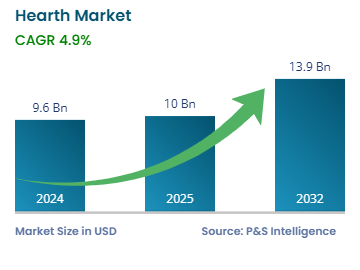
The global hearth market generated revenue of USD 9.6 billion in 2024, which is expected to witness a CAGR of 4.9% during 2025–2032, to reach USD 13.9 billion by 2032. This can be ascribed to the increasing consumer preference for home heating solutions, growing focus on home aesthetics and comfort, as well as rising demand for sustainable and renewable energy solutions.
Growing demand for home aesthetics and luxury interiors is a key driver of the global hearth market. According to industry surveys, over 70% of homebuyers in North America consider a fireplace a desirable feature. In luxury real estate, fireplaces are included in nearly 80% of upscale residential construction projects globally.
In colder regions such as the northern U.S., Canada, and much of Northern and Central Europe, average temperatures during winter months (December to February) typically range from -10 °C to 5 °C (14 °F to 41 °F). These low temperatures drive significant demand for hearth products as primary or supplemental heating sources. In the U.S., about 47% of homes have at least one fireplace, with higher percentages in colder states like Minnesota and Vermont. Similarly, in Canada, nearly 40% of households report owning a fireplace or wood stove, underscoring its importance for both heating and ambiance during long winters.
Moreover, ongoing technological advancements, growing interest in outdoor hearth products, and the demand for aesthetically appealing designs present significant growth opportunities for market players.
Hearth Market Trends & Drivers
Rising Demand for Home Automation Is Key Driver
The growing demand for home automation is a significant driver for growth in the hearth market.
Studies suggest that people around the world will spend USD 86.8 billion on it by 2030.
As consumers seek more convenience, energy efficiency, and control over their living environments, the demand for smart home technologies has surged.
This is influencing various sectors, including the hearth industry, as more homeowners look to integrate their heating systems into broader home automation networks.
Modern consumers expect to control their home heating and ambiance settings from their smartphones, voice assistants, or centralized smart home platforms.
As a result, hearth manufacturers are developing smart, Wi-Fi-enabled fireplaces and stoves that can be integrated with popular home automation systems such as Google Home, Amazon Alexa, and Apple HomeKit.
This integration allows users to remotely control the hearth’s temperature, lighting, and even schedule when it operates, making it more convenient and user-friendly.
Increasing Demand for Hearth Products from the Hospitality Sector Is a Key Opportunity
The increasing demand for hearth products from the hospitality sector is a significant growth opportunity for the market.
The global hospitality sector encompasses over 700,000 hotels with an estimated 17 million rooms worldwide.
Around 100,000 new hotel rooms are under construction or planned, reflecting continued industry growth.
As hotels, resorts, restaurants, and other commercial establishments focus on enhancing guest experiences and creating inviting, memorable environments, hearth products—such as fireplaces, fire pits, and custom-designed hearths have become key features in both indoor and outdoor spaces.
Fireplaces are widely used in lobbies, lounges, dining areas, and outdoor terraces to create a warm, aesthetically appealing atmosphere, contributing to the overall ambiance of the property.
Fireplaces are popular amenities in upscale and boutique hotels, especially in colder regions, enhancing guest comfort and ambiance.
It is estimated that about 15–20% of hotel rooms globally feature fireplaces or hearth elements, particularly in luxury resorts and ski destinations.
This trend is driven by consumer demand for cozy, unique experiences. As hotels increasingly focus on personalized stays, fireplaces remain a sought-after feature in the competitive hospitality market.
Additionally, with the rise of outdoor hospitality and event spaces, outdoor hearth solutions, like fire pits and fire tables, are gaining popularity, allowing venues to extend their appeal and comfort to guests even in cooler weather.
Furthermore, energy-efficient hearth products, particularly gas and electric fireplaces, offer a cost-effective alternative to traditional heating systems while providing effective, controlled warmth for large public spaces.
Availability of Alternative Heating Solutions
The availability of alternative heating solutions represents a significant challenge for the hearth market.
As consumers and businesses seek more energy-efficient, cost-effective, and sustainable options, the competition from alternative heating technologies, such as electric heating systems, heat pumps, and solar heating solutions has intensified.
These alternatives often offer several advantages, such as lower installation costs, high energy efficiency, and a smaller environmental footprint, which can make them more attractive compared to traditional hearth products like wood or gas fireplaces.
Furthermore, as sustainability becomes a key consideration for consumers, renewable heating options like solar-powered systems are becoming more widely adopted, further competing with conventional hearth products.
As a result, the hearth market faces pressure to innovate and differentiate its offerings.
Manufacturers must focus on improving the energy efficiency, environmental performance, and cost-effectiveness of hearth products to remain competitive with these alternative heating solutions.
Hearth Market Segmentation Analysis
Product Insights
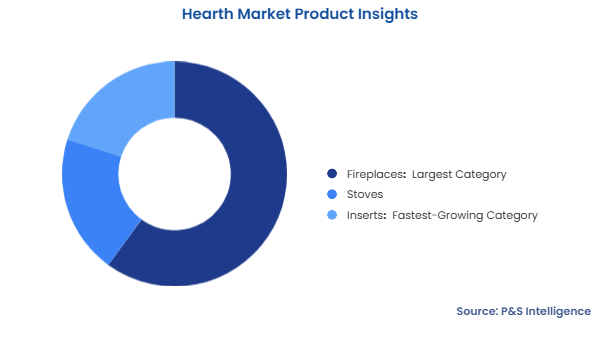
The fireplaces category held the largest market share, of 60%, in 2024. This is attributed to its widespread popularity and diverse consumer appeal. Fireplaces, particularly gas, wood, and electric models, are key components in residential and commercial heating systems, offering both functional warmth and aesthetic value.
As homeowners and businesses continue to prioritize comfort and ambiance, fireplaces remain a central feature in home design and luxury accommodations. Additionally, technological advancements, such as smart controls and energy-efficient designs, have further boosted consumer interest, driving the growth of the fireplace segment in the hearth market.
Inserts are the fastest-growing category, with 5.5% CAGR, driven by their energy efficiency, ease of installation, and versatility. Inserts allow homeowners to upgrade existing fireplaces with improved heat output and reduced emissions. Increasing environmental regulations and consumer preference for sustainable, cost-effective heating solutions further boost their popularity worldwide.
During the study, we have analyzed the following products in the report:
Fireplaces (Largest Category)
Stoves
Inserts (Faster-Growing Category)
Fuel Analysis
The wood category holds the largest market share, of 45%, in 2024. This is due to several key factors, including its aesthetic appeal, availability, and traditional appeal.
Wood-burning fireplaces and stoves have long been a popular choice for consumers due to the warmth, comfort, and natural ambiance they provide. Many homeowners prefer the crackling sound and the visual appeal of a wood fire, making it an integral part of the home for both functional and decorative purposes. Additionally, wood is often more affordable and readily available than alternative fuel sources, such as gas or electricity, in many regions.
The electricity category is projected to witness the highest CAGR, during 2025–2032 in the market. Electric hearth products, such as electric fireplaces and stoves, offer a convenient, clean, and low-maintenance heating solution, making them increasingly popular among consumers. These products do not require a chimney, venting, or the storage of fuel, which simplifies installation and reduces ongoing maintenance costs.
Below are the fuels analyzed:
Wood (Largest Category)
Gas
Electricity (Fastest-Growing Category)
Pellet
Placement Insights
The indoor category accounts for the largest share, of 55%, in 2024. This is primarily due to the increasing demand for home heating solutions that enhance comfort and aesthetics. Indoor hearth products, such as fireplaces, stoves, and electric heaters, are a central feature in many homes, providing warmth, ambiance, and a sense of luxury.
The popularity of indoor hearths is driven by their ability to create a cozy atmosphere, especially in colder climates where they serve as a primary heating source. Indoor hearths are also versatile, with options that suit various design preferences, from traditional wood-burning units to modern electric and gas fireplaces. The growing trend of home renovations and interior design improvements further fuels the demand for indoor hearths, as consumers seek products that complement their living spaces.
The portable category has the highest CAGR, due to their flexibility, ease of use, and ability to create cozy atmospheres both indoors and outdoors. They do not require permanent installation or chimneys, making them ideal for renters and those with limited space. Portability allows easy relocation for social gatherings or seasonal use, while modern designs offer safe, clean-burning fuels that align with environmental awareness. Additionally, their growing popularity is fueled by trends in outdoor living and entertaining, where portable hearths provide warmth and ambiance without the complexity of traditional fireplaces. Convenience and versatility remain key reasons for their rising demand.
The following placements are included in the report:
Indoor (Largest Category)
Outdoor
Portable (Fastest-Growing Category)
Application Analysis
The residential category holds the largest market share, of 50%, in 2024. This is due to the growing demand for home heating solutions that offer both functionality and aesthetic appeal. Residential consumers prioritize comfort, energy efficiency, and ambiance, which hearth products like fireplaces, stoves, and electric heaters can provide. These products not only serve as effective heating sources but also enhance the interior design of homes by adding warmth and a cozy atmosphere, making them highly sought after.
The rise in homeownership, along with increased investments in home renovations and new construction, has significantly boosted the demand for residential hearth products. As energy efficiency becomes a top priority, consumers are increasingly opting for modern hearth solutions that offer sustainable, cost-effective, and environmentally friendly alternatives to traditional heating methods, such as gas or electric systems.
Below are the applications analyzed:
Residential (Largest Category)
Commercial
Hospitality (Fastest-Growing Category)
Drive strategic growth with comprehensive market analysis
Hearth Market Regional Outlook
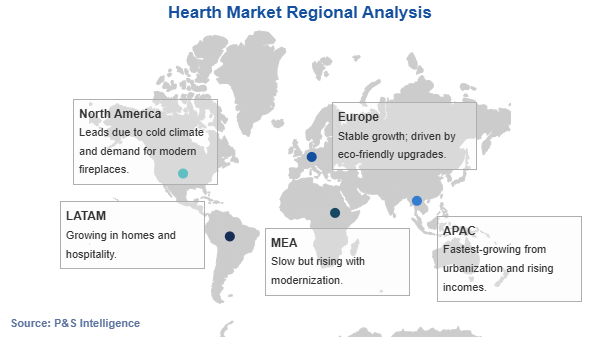
Geographically, North America holds the largest market share, of 40%, in 2024. This is due to several factors that drive demand for hearth products in the region. The region's colder climate, especially in the northern United States and Canada, creates a strong need for efficient heating solutions, including wood, gas, and electric fireplaces, stoves, and inserts. Hearth products are essential for maintaining warmth and comfort during long winters, making them highly popular in residential homes, particularly in suburban and rural areas.
Furthermore, North American consumers place a high value on home aesthetics and comfort, driving the demand for stylish and functional hearth solutions. The region's robust construction and renovation markets also contribute to the growing demand for hearth products, as new homeowners and those undertaking remodeling projects seek to integrate fireplaces and stoves into their living spaces. Additionally, increasing awareness of energy-efficient and environmentally friendly products has fueled the growth of gas and electric hearths, which are seen as cleaner and more sustainable alternatives to traditional wood-burning options.
APAC is the fastest-growing market, due to increasing urbanization, growing disposable incomes, and a shift toward modern home aesthetics. While traditional fireplaces remain uncommon in many tropical areas, colder regions like northern China, Japan, and South Korea see greater adoption for heating and ambiance. Rising interest in eco-friendly and electric hearths aligns with regional sustainability goals. Additionally, expanding middle-class populations in countries such as India and Southeast Asia are investing in home comfort and luxury, boosting demand for versatile hearth products. The trend toward outdoor living spaces also supports the growing popularity of portable and decorative hearths across APAC.
Further, regions and countries analyzed for this report include:
Brazil (Largest and Fastest-Growing Country Market)
Mexico
Rest of LATAM
Middle East and Africa (MEA)
Saudi Arabia (Largest Country Market)
South Africa
U.A.E. (Fastest-Growing Country Market)
Rest of MEA
Hearth Market Competitive Landscape
The global hearth industry is fragmented with numerous companies offering a wide range of hearth products, including fireplaces, stoves, inserts, and related accessories. This fragmentation is driven by the diverse needs of consumers and the variety of heating solutions available across different regions. Manufacturers range from large, well-established brands to smaller, niche players, each targeting specific consumer preferences, price points, and geographic markets.
As a result, the market has a broad competitive landscape, where companies differentiate themselves through product innovation, design, energy efficiency, and sustainability. Companies are also forming partnerships to leverage advanced technologies, improve energy efficiency, and meet growing demand for eco-friendly solutions.
Key Hearth Companies:
HNI Corporation
Innovative Hearth Products LLC
FPI Fireplace Products International Ltd.
Hearth Products Controls Company
Wolf Steel Ltd.
Empire Comfort Systems
Travis Industries Inc.
Glen Dimplex Group
Johnson Gas Appliance Co.
SimpliFire
Stoll Industries
Valor Fireplace
Hearth Market News & Updates
In March 2024, Universal Remote-Control Inc. and the hearth & home technologies (HHT) division of HNI Corporation co-launched the next generation of smart hearth integration solution for residential and commercial spaces. It enables users to connect the hearth systems of HHT with the Total Control platform of URC. This integration allows people to manage Wi-Fi-connected hearths via the IntelliFire Touch technology.
In October 2023, the hearth & home technologies division of HNI Corporation launched new wood-burning fireplace inserts equipped with advanced clean-burn technology.
In June 2023, HNI Corporation purchased Kimball International Inc. The acquisition aims to integrate complementary strengths and capitalize on post-pandemic demand to enhance market leadership and stakeholder value.
Want a report tailored exactly to your business need?
Leading companies across industries trust us to deliver data-driven insights and innovative solutions for their most critical decisions. From data-driven strategies to actionable insights, we empower the decision-makers who shape industries and define the future. From Fortune 500 companies to innovative startups, we are proud to partner with organisations that drive progress in their industries.
Client Testimonials
Working with P&S Intelligence and their team was an absolute pleasure – their awareness of timelines and commitment to value greatly contributed to our project's success. Eagerly anticipating future collaborations.
McKinsey & Company
India
Unmatched Standards
Our insights into the minutest levels of the markets, including the latest trends and competitive landscape, give you all the answers you need to take your business to new heights
Complete Data Security
We take a cautious approach to protecting your personal and confidential information. Trust is the strongest bond that connects us and our clients, and trust we build by complying with all international and domestic data protection and privacy laws