Hair Loss Treatment Products Market Size & Share Analysis - Trends, Drivers, Competitive Landscape, and Forecasts (2026 - 2032)
This Report Provides In-Depth Analysis of the Hair Loss Treatment Product Market Report Prepared by P&S Intelligence, Segmented by Product Type (Shampoos & Conditioners, Serums & Oils, Supplements & Vitamins), Category (Topical, Oral), Gender (Female, Male), Distribution Channel (Health & Beauty Stores, Online Retail, Supermarkets & Hypermarkets, Pharmacies & Drug Stores), Age Group (41, 26, Above 55, Below 25), Availability (Over-the-Counter (OTC), Prescription), and Geographical Outlook for the Period of 2021 to 2032
Explore the market potential with our data-driven report
Hair Loss Treatment Products Market Analysis
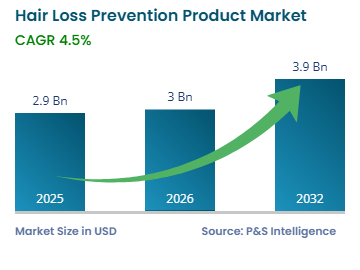
The global hair loss treatment products market valued USD 2.9 billion in 2025, and it is projected to reach USD 3.9 billion by 2032, expanding at a CAGR of 4.5% over the forecast period (2026–2032). The market is driven by the escalating global prevalence of androgenetic alopecia (AGA), alopecia areata, and telogen effluvium, rising consumer awareness of appearance, expanding OTC and prescription product portfolios, and growing normalization of hair loss treatment.
Key Market Insights
Shampoos & conditioners commanded 45% of market share in 2025.
Oral formulations will demonstrate the fastest growth, with 4.8% CAGR.
OTC products hold the largest share, of 80%.
Females hold the largest share, of 85%, and they also highest CAGR, of 5.2%.
Health & beauty stores captured 40% market share in 2025.
The 26–40 years category will demonstrate the fastest growth, with 4.9% CAGR.
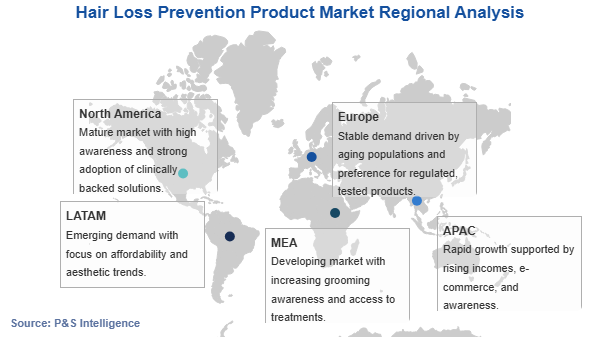
North America held the largest share, of 40%, in 2025.
Asia-Pacific will register the highest CAGR, of 5.5%.
Other key demand drivers include the rising incidence of hormonally and genetically driven hair loss conditions, growing willingness of consumers to invest in evidence-based treatment regimens, and a wave of regulatory approvals for prescription pharmaceuticals. The U.S. Food and Drug Administration (FDA) approved deuruxolitinib (Leqselvi) in July 2024 as the first oral JAK1/JAK2 inhibitor specifically indicated for severe alopecia areata in adults. This followed the authorization of ritlecitinib (Litfulo) in 2023 for alopecia areata in patients aged 12 and above.
Each new approval reduces physician hesitation, generates media coverage, which raises consumer awareness, and creates competitive pressure for OTC brands to improve formulation efficacy. The pipeline remains robust with ongoing Phase II and Phase III trials for novel biologics, siRNA-based therapies, and follicular stem cell activators. Merck & Co., Sun Pharmaceutical Industries, and Pfizer are actively expanding their dermatology portfolios.
Hair Loss Treatment Product Market Emerging Trends
Social Media Normalization and Direct-to-Consumer Channels Are Key Trends
The key market trend is the shift in how consumers discover, evaluate, and purchase hair loss treatment products. Digital platforms including TikTok, Instagram, and YouTube have normalized conversations around hair thinning, particularly among women and younger adults, dismantling the stigma that historically deterred early treatment-seeking. The AAD designated August 2024 as Hair Loss Awareness Month, amplifying public education efforts that align with and reinforce the social media-driven information ecosystem. The promotion of minoxidil, biotin supplements, and caffeine-based shampoos by beauty influencers is shortening the consumer journey from awareness to purchase. Moreover, telemedicine platforms, such as Hims and Roman, enable instant prescription access, while subscription-based e-commerce models sustain repeat purchase cycles, thus improving lifetime customer value for brands.
Rising Prevalence of Hair Loss Conditions and Aging Are Biggest Market Drivers
The escalating burden of AGA, alopecia areata, and telogen effluvium drives the demand for hair loss prevention products. According to NIH StatPearls, it affects nearly 50% of the men and women, with prevalence increasing significantly after the age of 40. Additional dermatology studies estimate that approximately 80% of the men and 40–50% of the women experience noticeable AGA by age 70. As per the United Nations, the global population aged 60 years and older will reach 2.1 billion by 2050. Aging is strongly correlated with progressive follicular miniaturization and hair density reduction, making older populations a key consumer base for topical minoxidil solutions, nutraceuticals, scalp serums, and regenerative therapies.
However, hair loss is no longer confined to older populations, with lifestyle factors driving early-onset hair thinning. The AAD indicates that about 40% of the men experience visible hair loss by the age of 35, while female pattern hair loss affects around 30 million women in the United States alone. Additionally, alopecia areata affects approximately 2% of the global population at some point in their lives.
The rising levels of chronic stress, hormonal imbalances (particularly PCOS in women), poor nutrition, and urban pollution are linked to telogen effluvium and premature hair thinning. More than 40% of the individuals aged 25–40 across Asia and Europe report moderate hair thinning or hair fall. The NIH’s All of Us Research Program (2025) confirms that AGA is highly prevalent in Americans aged 20–39. As the awareness of hair health rises and early intervention becomes more common, consumers are adopting medicated shampoos, scalp serums, nutraceutical supplements, and dermatology-prescribed treatments to prevent hair loss early.
Safety Concerns and Regulatory Scrutiny Constrain Prescriptions and DTC Sales
Safety concerns and escalating regulatory scrutiny around widely used prescription treatments restrain the market growth, particularly within the rapidly expanding DTC telehealth and compounded medication segments. The FDA issued a formal public health alert in April 2025, warning consumers, healthcare providers, and compounders about serious risks associated with compounded topical finasteride products. The agency reported 32 cases of adverse events between 2019 and 2024, including erectile dysfunction, anxiety, suicidal ideation, brain fog, depression, fatigue, insomnia, and decreased libido—many of which persisted after product discontinuation. Many consumers were unaware of these risks because they had been misled into believing topical application eliminated systemic absorption.
No topical formulation of finasteride has received FDA approval, yet such products are routinely marketed through telehealth platforms operating outside the advertising standards applicable to traditional pharmaceutical manufacturers. Due to this regulatory gap, patient misinformation erodes trust in the DTC channel, while adverse events trigger tighter pharmacy regulations on this fast-growing prescription distribution pathway. This heightened safety scrutiny is likely to slow adoption among first-time buyers, who are risk-averse, increase physician gatekeeping for prescription products, and raise compliance costs for DTC platforms.
Hair Loss Treatment Product Market Segmentation Analysis
Product Type Analysis
Shampoos & conditioners commanded 45% of market share in 2025. Their integration into daily personal hygiene routines creates habitual, high-frequency purchase behavior, which no other product type replicates. The OTC channel where shampoos and conditioners are accessible without a prescriptions, physician referrals, or specialist consultations democratizes access across income levels and geographies, including price-sensitive emerging markets. Established brands, such as The Procter & Gamble Company (Pantene Anti-Hair Fall), Unilever PLC (Dove Advanced Hair Series), and Henkel AG & Co. KGaA (Schwarzkopf Bonacure), have built multi-decade consumer trust in this format.
Serums & oils are projected to register the fastest growth over 2026–2032, driven by the presence of clinically validated active ingredients in them. Minoxidil derivatives, caffeine complexes, biotin peptides, and plant stem cell extracts deliver targeted follicular penetration beyond the rinse-off limitations of shampoos. The rising consumer health literacy, amplified by dermatology-focused social media communities, is accelerating premiumization from shampoos to serum-based regimens.
The market segments into the following product types:
Shampoos & Conditioners (Largest Category)
Serums & Oils (Fastest-Growing Category)
Supplements & Vitamins
Others
Category Analysis
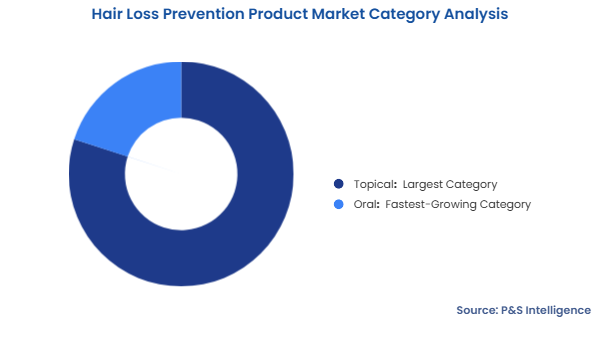
Topical formulations held 80% market share in 2025. The category’s OTC regulatory classification across major markets enables free retail access without a prescription, removing the physician gatekeeping that constrains oral pharmaceutical growth. The high consumer preference for localized, targeted application directly to the affected scalp minimizes systemic exposure concerns. Topical minoxidil is a key ingredient in these formulations as it has been approved by the FDA for AGA since 1988. Newer topical actives include finasteride-minoxidil combination formulations and ketoconazole-based anti-androgen shampoos. The FDA maintains topical minoxidil 2% and 5% solutions on its approved drugs database as first-line OTC treatments.
Oral formulations will demonstrate the fastest growth over 2026–2032, due to their convenience, systemic effectiveness, and growing clinical validation. Supplements containing biotin, collagen, zinc, and saw palmetto support hair follicle health from within, appealing to consumers seeking holistic solutions. Additionally, prescription oral treatments, such as finasteride, are widely used for AGA. The rising nutraceutical adoption, improving consumer awareness, and preference for easy daily supplementation drive this category. The growing clinical acceptance of oral minoxidil as an off-label treatment for various hair loss types, particularly in women, is also credited for this. The AAD has even published clinical guidance supporting oral treatments for appropriate patients.
The market segments into the following categories:
Topical (Largest Category)
Oral (Fastest-Growing Category)
Availability Analysis
OTC products hold the largest share in the global hair loss treatment products market, of 80%. The most-popular products shampoos, conditioners, and topical serums & oils are overwhelmingly OTC-classified across all major markets. Thus, they are accessible at mass retail, pharmacy, and e-commerce channels without prescription. OTC topical minoxidil, available in 2% and 5% solutions, is a highly popular treatment for AGA among both men and women. Moreover, biotin supplements, caffeine-based shampoos, and ketoconazole formulations are all OTC, available without gatekeeping. This widens sales across income levels and geographies where dermatologist access is limited. Habitual daily use, repeat purchase behavior, and low consumer friction sustain OTC sales volumes even in price-sensitive markets.
Prescription is the fastest-growing category over the forecast period, driven by the frequent regulatory approvals, which are rapidly expanding both the prescriber community and the consumer-accessible treatment universe. The FDA’s approval of the oral JAK inhibitors deuruxolitinib (Leqselvi) in July 2024 and ritlecitinib (Litfulo) in 2023 for alopecia areata has expanded the prescriber community. Simultaneously, the rise of DTC telemedicine platforms has removed the requirement for an in-person dermatologist visit, enabling same-day finasteride and oral minoxidil delivery across the U.S. and U.K. The strong pipeline of biologics, siRNA therapies, and JAK inhibitor class extensions in late-stage trials will further drive this category.
The market segments into the following availability types:
Over-the-Counter (OTC) (Largest Category)
Prescription (Fastest-Growing Category)
Gender Analysis
Females held the largest revenue share, of approximately 85%, in 2025, and they also represent the fastest-growing category, due to a vast and demographically concentrated demand base. Women also demonstrate higher treatment initiation rates, greater willingness to invest in multi-step haircare regimens, stronger brand loyalty in personal care categories, and sensitivity to cosmetic appearance outcomes. The social media normalization of conversations around female pattern hair loss and expanding telemedicine access to minoxidil and spironolactone prescriptions accelerate product purchases by females aged 26–40. The NIH’s cross-sectional study via the All of Us Research Program (2025) confirms that female AGA presentation is concentrated in the 60–69 age bracket.
The market segments into the following genders:
Female (Largest and Fastest Growing Category)
Male
Distribution Channel Analysis
Health & beauty stores captured 40% market share in 2025, due to physical trial opportunities, knowledgeable sales staff, curated brand adjacency, and high-intent shopper demographics. Specialty health and beauty retailers including Sephora, Ulta Beauty, Boots, Watsons, and regional drugstore chains allow consumers to discover and compare formulations, access tester products, and receive in-store consultation. This builds purchase confidence for higher-priced serums and treatment regimens. This channel also benefits from established stocking relationships with leading brands, creating visibility among consumers. The U.S. FDA Modernization of Cosmetics Regulation Act is reinforcing consumer preference for established retail channels, where products carry transparent safety substantiation.
Online retail is projected to register the fastest growth through 2026–2032, fueled by the privacy-driven purchasing preference for hair loss products. Moreover, the rise of DTC subscription models supports consistent treatment adherence, and social commerce integration on TikTok and Instagram compresses discovery-to-purchase cycles. As per studies, global beauty and personal care e-commerce sales are set to rise to nearly USD 340 billion by 2030. Online channels already account for over 25% of the global beauty spending, and this share may cross 30% by 2030. The majority of the online shoppers purchase beauty products through mobile apps and are influenced by social media content and digital marketing.
The market segments into the following distribution channels:
Health & Beauty Stores (Largest Category)
Online Retail (Fastest-Growing Category)
Supermarkets & Hypermarkets
Pharmacies & Drug Stores
Others
Age Group Analysis
The 41–55 years category accounted for the largest revenue share in 2025, of 40%, due to the direct relationship between AGA and advancing age. The NIH’s StatPearls confirms that prevalence rises in the 40s and 50s, with approximately 50% of the males experiencing AGA by the age of 50. These consumers demonstrate heightened clinical awareness, often prompted by physician consultation following significant shedding events. Moreover, their higher discretionary income enables the purchase of premium serums and supplements, alongside daily shampoos. The cohort also includes post-menopausal women, who experience accelerated hair thinning due to estrogen decline.
The 26–40 years category is expected to demonstrate the fastest growth over 2026–2032. Social media platforms have fundamentally normalized early-intervention treatment-seeking among millennial and Gen Z consumers. Further, telemedicine services deliver minoxidil and finasteride prescriptions directly to smartphones, thus reducing access friction. The NIH All of Us study (2025) confirms that U.S. male AGA presentations are most concentrated in the 20–39-year bracket.
The market segments into the following age groups:
41–55 Years (Largest Category)
26–40 Years (Fastest-Growing Category)
Above 55 Years
Below 25 Years
Drive strategic growth with comprehensive market analysis
Hair Loss Treatment Product Market Regional Performance
North America Hair Loss Treatment Products Market Outlook
North America held the largest regional share of the global hair loss treatment products market, of 40%, in 2025. The region benefits from a mature omnichannel retail infrastructure spanning health and beauty specialty chains, pharmacies, and an expanding DTC telemedicine ecosystem. Platforms such as Hims, Roman, and Keeps enable instant physician consultations and prescription delivery, substantially reducing access friction for both topical and oral treatments. The FDA’s approval of deuruxolitinib (Leqselvi) and ritlecitinib (Litfulo) creates clinical legitimacy for the systemic treatment category and drives new physician engagement. The sustained per-capita spending on personal care, rising purchase of treatment products by males, and premium serum adoption among women aged 26–55 also drive the market.
On average, U.S. households spend about USD 978 annually on personal care products and services, accounting for around 1.2% of total household expenditures. Consumer surveys also indicate that individuals may spend as much as USD 1,700 per year on beauty products, with millennials often spending even more. Skincare alone accounts for roughly USD 492 in annual spending, highlighting the importance of appearance-focused products within overall beauty expenditures.
United States Hair Loss Treatment Market Outlook
The United States market is driven by the high documented diagnosis rates of AGA. The AAD estimates 80 million Americans are affected by hereditary hair loss, including approximately 30 million women. Approximately 40% of the women experience noticeable hair thinning by age 40. The frequent approvals of therapeutics, deep specialty retail penetration, and consumer willingness to pay more for clinically validated products also drive the market. Pharmaceutical innovation (JAK inhibitors), wellness-category supplements (Nutrafol), and digital-first DTC models are the other key drivers for the country’s market. AI-powered scalp diagnostics, personalized prescription delivery, and increasing regulatory clarity on compounded topical formulations further support the market advance.
Europe Hair Loss Treatment Products Market Outlook
Europe demonstrates a high preference for prescription pharmaceuticals most pronounced in Germany and France, where dermatologist referrals and pharmacy distribution are culturally embedded. This structure coexists with a large cosmetic OTC ecosystem increasingly oriented toward natural, plant-based ingredients. The European Medicines Agency (EMA) has sanctioned baricitinib for alopecia areata. Moreover, Eurostat reports that 21.6% of the EU’s population (449.3 million people) is aged 65+ and that this share could reach 30% by 2060. Premiumization, specialty retail expansion, and sustainable formulations are expected to define European market evolution. In the EU27, households spend about EUR 33.70 per person per month on beauty and personal care products and services.
Germany Hair Loss Treatment Products Market Outlook
Germany’s market is driven by a dense pharmacy network for professional consultation and OTC distribution, strong support for product innovation and regulatory processing, and high consumer receptiveness to preventive healthcare and clinically substantiated formulations. Approximately 41.2% of the German men experience hair loss by their mid-40s, generating a high demand for topicals and supplements. Statistisches Bundesamt (Destatis) reports that Germany’s population aged 65 and over reached 19.01 million in 2024.
Specialist domestic brands including Dr. Kurt Wolff (Alpecin) and Henkel AG & Co. KGaA (Gliss) command strong pharmacy shelf equity, while international players, such as L’Oréal and P&G, compete through health and beauty retail. Statistisches Bundesamt further confirms that 98% of the internet users in Germany in 2024 were aged 16–44, hinting at the rising online sale of these products. The increasing demand for premium serums and TikTok-driven social commerce adoption among younger consumers sustain Germany’s market growth.
United Kingdom Hair Loss Treatment Products Market Outlook
The United Kingdom’s market growth is underpinned by a large and well-documented affected population. As per the National Health Service (NHS), approximately 6.5 million men and 8 million women in the U.K. are currently living with some form of hair loss. AGA accounts for approximately 95% of the male hair loss cases, while the National Institute for Health and Care Excellence (NICE) estimates that alopecia areata affects approximately 15 in 10,000 people in the country.
The NHS provides a structured pathway to dermatologist consultation and clinical treatment, including topical minoxidil and corticosteroid prescriptions. This sustains consumer familiarity with evidence-based regimens, in turn, driving OTC product sale. The U.K.’s advanced e-commerce ecosystem accelerates online sales. An increasing number of people are enrolling in finasteride and minoxidil subscription platforms, including Hims U.K. and Treated.com. The market is also driven by DTC telehealth expansion, growing female population with hair loss in the 26–45 age group, and increasing consumer willingness to invest in clinically validated premium serums.
Asia-Pacific Hair Loss Treatment Products Market Outlook
Asia-Pacific will register the highest CAGR, of 5.5%, driven by the rapidly rising per-capita income in China, India, and Southeast Asia. E-commerce and social commerce platforms including Tmall, JD.com, Flipkart, and Shopee are enabling brand reach in geographies previously inaccessible to international players. Urbanization-driven stress and air and water pollution are accelerating hair loss incidence among 25–40-year-olds. Regional firms are culturally adapting premium scalp serums and clinical supplements, with K-beauty-inspired formulations exerting growing influence across ASEAN, Japan, and South Korea. In South Korea consumers spend around USD 493 per person per year on beauty products. The average spending per person on beauty and personal care in Asia is around USD 57.95 per year.
China Hair Loss Treatment Products Market Outlook
China is the largest country market within Asia-Pacific. The China Association of Health Promotion and Education (CAHEP) reports approximately 250 million Chinese individuals with hair loss, 130 million of them affected by AGA. The rapidly rising middle class now has more disposable income, enabling spending on treatment products beyond basic shampoos. Additionally, the social commerce platforms Tmall, JD.com, Douyin, and Xiaohongshu have elevated scalp care into a mainstream consumer category, driven by KOL content. The sustained GNI per capita growth in China drives premiumization from mass shampoos toward targeted serums and clinical supplements. Kintor Pharmaceuticals entered Phase III Chinese clinical trials in 2024 for pyrilutamide (KX-826), a topical androgen receptor antagonist.
India Hair Loss Treatment Products Market Outlook
India is the fastest-growing country market in Asia-Pacific, driven by an expanding middle class with a discretionary spending capacity for personal care beyond commodity shampoos. The changing dietary patterns, occupational stress, and environmental pollution in major metros increase hair loss incidence, particularly among adults under 30. Approximately 50% of the Indian men experience some degree of hair loss, with onset commonly in the late teens or early 20s and becoming more pronounced after the age of 30.
Around 30% of the women experience noticeable hair thinning, with prevalence rising after menopause due to hormonal changes. Early-onset hair loss is becoming more common, with studies indicating that over 50% of the affected men are under the age of 25. Clinical observations also show that a large share of hair loss cases occur in individuals aged 12–39, due to stress, pollution, poor nutrition, and hormonal imbalances.
The strong consumer preference for Ayurvedic and herbal-based formulations creates a premium segment alongside conventional minoxidil-based products, with The Himalaya Drug Company and Kesh King sustaining large domestic followings. E-commerce enables brand reach into Tier 2 and Tier 3 cities, which were previously underserved by modern retail. A large and young affected population, rising incomes, expanding DTC access, and government-backed manufacturing initiatives will sustain the market growth.
The regions and countries analyzed in this report include:
North America (Largest Region)
U.S. (Largest Country Market)
Canada (Fastest-Growing Country Market)
Europe
Germany
U.K.
France
Italy
Spain
Rest of Europe
Asia-Pacific (Fastest-Growing Region)
China (Largest Country Market)
India (Fastest-Growing Country Market)
Japan
South Korea
Australia
Rest of Asia-Pacific
Latin America
Brazil (Largest Country Market)
Mexico (Fastest-Growing Country Market)
Rest of Latin America
Middle East & Africa
Saudi Arabia
U.A.E.
South Africa
Rest of Middle East & Africa
Hair Loss Treatment Products Market Share
The global hair loss treatment products market is moderately fragmented, as it is split into two broad segments. In the consumer personal care segment, large multinational FMCG brands compete on formulation, distribution scale, and marketing reach. Whereas, in the pharmaceutical/clinical segment, prescription and OTC drug manufacturers compete on regulatory credentials, clinical evidence, and physician endorsement. This creates room for participants across different price points, geographies, and product categories, preventing any single player from establishing decisive dominance. Brand trust, product efficacy claims, digital marketing capability, and distribution breadth collectively determine competitive positioning more than R&D investment alone.
The competition will intensify as DTC telehealth brands and biotech startups deploying AI-driven scalp diagnostics and novel delivery systems challenge incumbent consumer and pharma players. Established participants are responding with portfolio diversification moving into serum and supplement adjacencies and strategic acquisitions targeting innovative early-stage brands with proven digital customer acquisition capabilities.
Major Hair Loss Treatment Products Companies:
The Procter & Gamble Company
L’Oréal S.A.
Unilever PLC
Taisho Pharmaceutical Holdings Co. Ltd.
Johnson & Johnson Services Inc.
Merck & Co., Inc.
Pierre Fabre Laboratories
Sun Pharmaceutical Industries Ltd.
The Est
Shiseido Company Limited
Pfizer Inc.
Dr. Reddy
Henkel AG & Co. KGaA
Beiersdorf AG
Coty Inc.
Reckitt Benckiser Group plc
Colgate Palmolive Company
Kao Corporation
Amorepacific Corporation
Bayer AG
Himalaya Wellness Company
Hair Loss Treatment Product Market News
In July 2025, Sun Pharmaceutical Industries Limited launched LEQSELVI (deuruxolitinib) 8 mg tablets in the United States for the treatment of adults with severe alopecia areata. The July 2024 FDA approval for this oral selective JAK1/JAK2 inhibitor was based on data from the Phase 3 THRIVE-AA1 and THRIVE-AA2 trials involving 1,220 patients. This launch, backed by the LEQSELVI Support Program, offers eligible patients medication access for USD 0 for up to two years.
In June 2025, L’Oréal S.A. signed an agreement to acquire Color Wow, a professional hair care brand based in the U.S. and the U.K. The acquisition strengthens L’Oréal’s professional products division in the premium styling and anti-thinning treatment segment, extending its omnichannel reach across salons, Sephora, and e-commerce platforms in the U.S., Europe, and internationally.
In February 2025, Mallia Therapeutics and Northway Biotech announced a strategic partnership to develop cGMP manufacturing processes for soluble CD83 (sCD83) protein as a topical biologic treatment targeting AGA and alopecia areata through novel immunomodulatory mechanisms.
In November 2024, Vichy Laboratoires, owned by L’Oréal S.A., expanded its Dercos scalp care line into the U.S. with the launch of a selenium sulfide anti-dandruff shampoo, moisturizing conditioner, and salicylic acid serum.
In October 2024, Sun Pharmaceutical Industries Limited presented new long-term clinical efficacy and durability data for LEQSELVI (deuruxolitinib) at the 44th Annual Fall Clinical Dermatology Conference in Las Vegas, Nevada. Pooled open-label extension study results showed 76.6% of the initial responders achieving significant scalp hair regrowth by Week 68.
Frequently Asked Questions About This Report
What will be the hair loss prevention product market 2032 size?+
In 2032, the market for hair loss prevention product will value USD 3.9 billion.
Which product type leads the hair loss prevention product industry?+
Shampoos & conditioners dominate the hair loss prevention product industry with 45% revenue.
Which is the largest region in the hair loss prevention product market?+
North America is the largest market for hair loss prevention product, with 40% share.
What are the key hair loss prevention product industry drivers?+
The hair loss prevention product industry is driven by escalating global prevalence of hair loss, rising consumer awareness of appearance, expanding OTC and prescription product portfolios, and growing normalization of hair loss treatment.
What is the hair loss prevention product market nature?+
The market for hair loss prevention product is severely fragmented.
Want a report tailored exactly to your business need?
Leading companies across industries trust us to deliver data-driven insights and innovative solutions for their most critical decisions. From data-driven strategies to actionable insights, we empower the decision-makers who shape industries and define the future. From Fortune 500 companies to innovative startups, we are proud to partner with organisations that drive progress in their industries.
Client Testimonials
Working with P&S Intelligence and their team was an absolute pleasure – their awareness of timelines and commitment to value greatly contributed to our project's success. Eagerly anticipating future collaborations.
McKinsey & Company
India
Unmatched Standards
Our insights into the minutest levels of the markets, including the latest trends and competitive landscape, give you all the answers you need to take your business to new heights
Complete Data Security
We take a cautious approach to protecting your personal and confidential information. Trust is the strongest bond that connects us and our clients, and trust we build by complying with all international and domestic data protection and privacy laws