GCC Weight Loss Market Size & Opportunities Analysis - Growth Strategies, Competitiveness, and Forecasts (2026 - 2032)
This Report Provides In-Depth Analysis of the GCC Weight Loss Market Report Prepared by P&S Intelligence, Segmented by Solution Type (Dietary Supplements, Meal Replacements, Prescription Weight-Loss Drugs, Medical Devices & Equipment, Surgery), Service Provider (Fitness Centers & Gyms, Slimming & Wellness Centers, Hospitals, Specialty Clinics & Bariatric Centers, Online/Digital Weight-Loss Platforms), Age Group (Adults (18-35 years), Middle-aged (35-50 years), Seniors (Above 50 years)), Gender (Female, Male), and Geographical Outlook for the Period of 2019 to 2032
Explore the market potential with our data-driven report
GCC Weight Loss Market Future Outlook
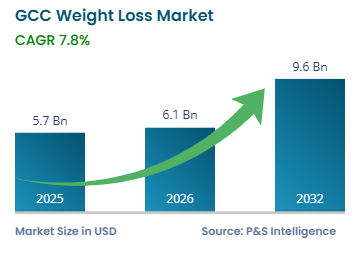
The GCC weight loss market size will be an estimated USD 5.7 billion for 2025, and it will grow by 7.8% during 2026–2032, to reach USD 9.6 billion by 2032.
The market growth is primarily driven by escalating obesity rates, increasing health consciousness, and rising disposable incomes across the Gulf Cooperation Council countries. The rapid economic transformation following oil discoveries has fundamentally altered lifestyles across GCC countries, leading to increased consumption of processed foods, reduced physical activity due to extreme temperatures, and widespread adoption of Western dietary patterns.
Additionally, rising obesity-related healthcare burdens, GCC governments have intensified public health interventions focused on preventive care, nutrition awareness, and physical activity promotion. Ministries of Health across Saudi Arabia, the UAE, and Qatar have expanded national screening programs for non-communicable diseases, including obesity, diabetes, and cardiovascular disorders, reinforcing long-term demand for structured weight management solutions. According to the World Health Organization, more than 78% of the Saudi women and a significant portion of the UAE population are overweight or obese, creating substantial demand for effective weight management solutions.
GCC Weight Loss Market Dynamics
Digital Health Is Key Trend Transforming Service Delivery
The integration of digital health technologies is a key trend revolutionizing weight loss service delivery in the GCC region.
Online weight loss programs and mobile health applications have gained significant traction, particularly among younger demographics and professionals seeking convenient health management solutions.
The proliferation of wearable fitness devices, AI-powered nutrition apps, and telehealth services has expanded market accessibility, enabling personalized weight management programs that cater to individual lifestyle requirements.
This technological advancement has particularly benefited urban populations with high disposable incomes and technology adoption rates.
National health strategies increasingly emphasize early intervention, lifestyle modification, and weight reduction as cost-containment measures, indirectly stimulating demand for fitness services, dietary programs, and medically supervised weight loss solutions.
Rising Obesity EpidemicIs Biggest Driver
The alarming rise in obesity rates across GCC countries represents the primary driver for market growth.
Current data indicates that GCC nations rank among the world's most affected regions by the obesity epidemic.
According to WHO-based estimates, Kuwait has an obesity rate of approximately 45.2%, followed by Qatar at 43.8% and Saudi Arabia at 41.4%, which significantly exceeds the global adult obesity average.
The economic burden of obesity is substantial, with the UAE alone losing nearly USD 12 billion annually due to obesity-related healthcare costs.
This financial impact has prompted both government initiatives and private sector investment in preventive weight management solutions, creating favorable market conditions for industry growth.
Public healthcare expenditure pressures linked to obesity-related conditions such as diabetes and cardiovascular disease have reinforced government prioritization of preventive weight management.
National health strategies increasingly emphasize early intervention, lifestyle modification, and weight reduction as cost-containment measures, indirectly stimulating demand for fitness services, dietary programs, and medically supervised weight loss solutions.
GCC Weight Loss Market Segmentation Analysis
Solution Type Analysis
The dietary supplements category holds the largest market share, of 35%, in 2025. This reflects strong consumer preference for convenient, non-invasive weight management solutions that can be easily integrated into daily routines. Government-led nutrition awareness campaigns and preventive healthcare initiatives further support the adoption of dietary supplements as initial weight management solutions, particularly among consumers seeking non-medical approaches.
The prescription weight-loss drugs category will have the highest CAGR. This is attributed to advancing pharmaceutical innovations, increasing healthcare provider acceptance, and rising consumer willingness to invest in medically supervised weight management programs. The category benefits from growing awareness of obesity as a medical condition requiring professional intervention. Public healthcare systems across the GCC are expanding obesity screening and physician-led weight management programs, improving patient access to prescription therapies, and accelerating adoption within hospital and specialty clinic settings.
The fitness centers & gyms category holds the largest market share in 2025, reflecting strong consumer preference for structured, supervised weight management programs. Programs promoting active lifestyles, community fitness participation, and subsidized access to sports facilities have increased gym memberships, particularly in urban areas, reinforcing the segment’s dominance.
The online/digital weight-loss platforms category will have the highest CAGR, driven by increasing internet penetration, smartphone adoption, and consumer preference for flexible, accessible weight management solutions that accommodate busy lifestyles and cultural considerations. Rapid growth of online and digital weight-loss platforms is enabled by government-backed telehealth regulations and digital health strategies across the GCC. Licensing frameworks for telemedicine and virtual consultations have legitimized remote weight management services, encouraging adoption among tech-savvy consumers seeking culturally flexible and time-efficient solutions.
The service providers analyzed in this report are:
The middle-aged category holds the largest market share, of 45%, in 2025, driven by increased health consciousness following lifestyle-related health concerns and higher disposable income levels. This age group shows particular susceptibility to obesity-related health conditions, creating urgency for weight management interventions.
The adults category will have the highest CAGR, of 8.0%. This growth reflects increasing health awareness among younger professionals, social media influence promoting fitness culture, and greater adoption of technology-enabled weight management solutions.
The age groups analyzed in this report are:
Adults (18–35 years) (Fastest-Growing Category)
Middle-aged (35–50 years) (Largest Category)
Seniors (Above 50 years)
Gender Analysis
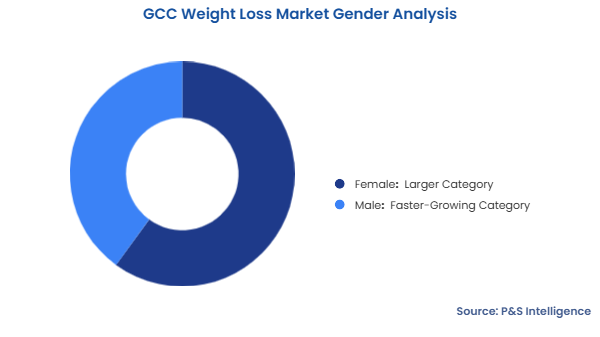
The female category holds the larger market share, of 60%, in 2025, due to higher participation in slimming and wellness centers, stronger aesthetic and lifestyle-driven weight management needs, and greater adoption of diet programs, supplements, and non-invasive weight loss solutions. The strong participation of women is reinforced by government-supported women’s health initiatives focusing on metabolic health, maternal wellness, and lifestyle disease prevention. Public awareness campaigns and improved access to female-focused wellness facilities have further supported sustained engagement in structured weight management programs.
The male category will have the higher CAGR, of 8.1%, driven by rising obesity-related health risks, increasing gym and fitness center memberships, greater awareness of preventive healthcare, and growing uptake of medically supervised and digital weight loss programs across GCC countries. Moreover, accelerating male participation is linked to public health messaging highlighting obesity-related risks such as cardiovascular disease and diabetes. Government-led fitness challenges, workplace wellness programs, and increased availability of male-oriented fitness infrastructure have contributed to rising engagement in weight loss services among men.
The genders analyzed in this report are:
Female (Larger Category)
Male (Faster-Growing Category)
Drive strategic growth with comprehensive market analysis
GCC Weight Loss Market Geographical Analysis
Saudi Arabia Weight Loss Market Size
Saudi Arabia holds the largest market share, of 40%, in 2025, attributed to its large population, high obesity prevalence, and substantial government investment in healthcare infrastructure. The Kingdom's Vision 2030 initiative has catalyzed significant investment in health and wellness infrastructure, including fitness facilities, sports complexes, and health awareness programs. This government support, combined with increasing disposable income and evolving lifestyle preferences, positions Saudi Arabia as the region's primary growth driver for weight loss solutions. According to the Saudi 2024 Health Determinants Statistics, 23.1% of the population aged 15+ are obese and 45.1% overweight. The Saudi Guidelines on Overweight and Obesity provide standardized clinical frameworks for prevention and management.
UAE Weight Loss Market Size
UAE will have the highest CAGR, of 7.9%, driven by the country's cosmopolitan population, advanced healthcare system, and strong adoption of international wellness trends. Dubai's position as a regional business hub attracts health-conscious expatriates, creating demand for premium weight management services. The UAE's emphasis on medical tourism and wellness tourism has attracted international weight loss service providers, enhancing market competitiveness and service quality. Government initiatives promoting fitness and wellness, including tax incentives for health-related businesses, further support market expansion. The UAE’s health strategy incorporates the National Plan for Prevention of Non-Communicable Diseases and the National Nutrition Plan, supported by emirate-level initiatives such as screening programs, nutrition labeling (Weqaya), and school nutrition standards.
Kuwait Weight Loss Market Size
Kuwait faces the region's most-severe obesity challenge, which is why it has a substantial market potential for weight loss interventions. The government has implemented awareness campaigns and health initiatives, including support for walking programs and Mediterranean diet education, to address this public health crisis. The Kuwaiti market demonstrates strong demand for comprehensive weight management solutions, including bariatric surgery, structured diet programs, and fitness services. Consumer willingness to invest in health solutions, supported by government healthcare benefits, creates favorable market conditions for service providers.
The countries analyzed in the market are as follows:
Saudi Arabia (Largest Country)
UAE (Fastest-Growing Country)
Kuwait
Qatar
Bahrain
Oman
GCC Weight Loss Market Share
The market is semi-consolidated and characterized by the presence of a limited number of established international brands and large regional players alongside numerous local and niche providers. Major fitness chains, hospital groups, and branded nutrition companies command a meaningful share of the market, particularly in urban centers, benefiting from strong brand recognition, standardized service offerings, and expanding multi-location networks. However, a substantial portion of demand is still served by independent wellness centers, clinics, and digital platforms. Ongoing mergers, acquisitions, and strategic partnerships indicate gradual consolidation as players seek scale, geographic expansion, and integrated weight management solutions.
Key GCC Weight Loss Companies:
Leejam Sports Company
Gold
Fitness First Middle East
Anytime Fitness Middle East
PureGym Arabia
VLCC Health Care Ltd.
Dr. Nutrition
Right Weight
Saudi German Hospitals Group
Cleveland Clinic Abu Dhabi
Hamad Medical Corporation
Burjeel Holdings
WeightWatchers
Noom, Inc.
Herbalife Nutrition
GCC Weight Loss Market News
In July 2025,WeightWatchers, Inc. expanded its collaboration with Novo Nordisk A/S to enhance access to the FDA-approved obesity treatment Wegovy (semaglutide) through the NovoCare pharmacy, with promotional pricing and a streamlined prescription process integrated into WeightWatchers Clinic offerings.
In May 2025,WeightWatchers Inc. entered into a strategic partnership with UK-based CheqUp Health Ltd., combining CheqUp’s clinical expertise in GLP-1-based weight loss therapies with WeightWatchers’ GLP-1 Companion Programme to deliver more comprehensive, medically supported weight-management solutions.
In March 2025, Herbalife signed a binding MoU to acquire the digital wellness platforms Pro2col Health LLC and Pruvit Ventures Inc., along with a controlling interest in Link BioSciences, Inc., strengthening its position in personalized digital nutrition and health support.
In December 2023, Beyond Activ FZ-LLC entered into a strategic partnership with Leejam Sports Company for three years, aimed at promoting Leejam's businesses and developing the annual EMEA Festival while encouraging new investments in Saudi Arabia and the GCC region.
Want a report tailored exactly to your business need?
Leading companies across industries trust us to deliver data-driven insights and innovative solutions for their most critical decisions. From data-driven strategies to actionable insights, we empower the decision-makers who shape industries and define the future. From Fortune 500 companies to innovative startups, we are proud to partner with organisations that drive progress in their industries.
Client Testimonials
Working with P&S Intelligence and their team was an absolute pleasure – their awareness of timelines and commitment to value greatly contributed to our project's success. Eagerly anticipating future collaborations.
McKinsey & Company
India
Unmatched Standards
Our insights into the minutest levels of the markets, including the latest trends and competitive landscape, give you all the answers you need to take your business to new heights
Complete Data Security
We take a cautious approach to protecting your personal and confidential information. Trust is the strongest bond that connects us and our clients, and trust we build by complying with all international and domestic data protection and privacy laws