This Report Provides In-Depth Analysis of the GCC Luxury Goods Market Report Prepared by P&S Intelligence, Segmented by Product Type (Apparel, Footwear, Leather Goods, Watches & Jewelry, Eyewear, Cosmetics, Fragrances, Accessories), Distribution Channel (Single-Brand boutiques, Multi-Brand department stores, Shopping Mall Outlets, Airport Duty-Free Stores, Official Brand E-Commerce Sites, Luxury-Focused Online Marketplaces), End User (Men, Women, Unisex), and Geographical Outlook for the Period of 2019 to 2032
Explore the market potential with our data-driven report
GCC Luxury Goods Market Outlook
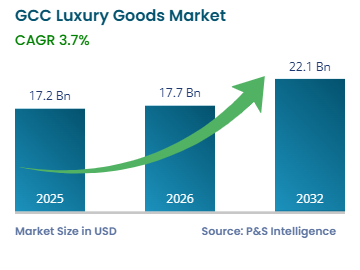
The GCC luxury goods market size will be an estimated USD 17.2 billion for 2025, and it will grow by 3.7% during 2026–2032, to reach USD 22.1 billion by 2032.
The GCC has become a key global luxury market, fueled by strong economic growth, high disposable incomes, and a cultural preference for products that reflect prestige and success. The region's strategic position as a crossroads between East and West, coupled with its thriving tourism sector and world-class retail infrastructure, has attracted virtually every major luxury brand to establish a significant presence across the six member states.
The GCC's luxury market demonstrates remarkable resilience and continues to outperform global benchmarks, with growth rates exceeding international averages by substantial margins. The exceptional performance underscores the region's unique position in the global luxury landscape, characterized by a young, affluent population with sophisticated tastes and an appreciation for both traditional craftsmanship and contemporary innovation. The market benefits from the region's tax-free shopping environment, extensive duty-free operations at major airports, and the presence of exclusive flagship stores and pop-up concepts that create immersive brand experiences tailored specifically for Gulf consumers.
GCC Luxury Goods Market Emerging Trends
Redefining of Luxury Consumption Patterns by Millennials and Gen Z Is Key Trend
The emergence of Millennials and Generation Z as dominant forces in the GCC represents one of the most transformative trends reshaping the industry landscape.
The purchasing power of these younger consumers in the GCC is remarkable, with Gen Z and Millennials averaging 16 and 14 luxury items per year, respectively, significantly outpacing older generations in transaction frequency.
Unlike their Western counterparts, who may be experiencing economic pressures, young GCC consumers benefit from family wealth, tax-free incomes, and a cultural environment that celebrates luxury consumption as a legitimate expression of achievement and social standing.
This heightening consumption is driven by the higher disposable incomes among young professionals, cultural emphasis on luxury as a marker of success, and the prevalence of social occasions requiring premium products.
The shift has prompted luxury brands to invest heavily in sophisticated e-commerce platforms, augmented reality try-on features, and social media marketing strategies specifically tailored to Gulf audiences.
The rise of live shopping events, where influencers showcase luxury products in real-time interactive sessions, has gained particular traction in the GCC.
This mirrors successful models from Asia, while incorporating regional preferences for personal connection and trust-based commerce.
Luxury brands are partnering with local influencers and creating Arabic-language content that resonates with cultural values while maintaining global brand prestige.
Most significantly, Millennial and Gen Z consumers in the GCC are demanding that luxury brands align with their values around sustainability, authenticity, and social responsibility.
Approximately 73% of the Millennials and 64% of the Gen Z consumers express willingness to invest more in quality purchases that will last, while over 60% from both generations are prepared to pay premium prices for ethically made items.
This values-driven consumption is manifesting in the GCC through the increasing demand for sustainable luxury products, transparent supply chains, and brands that contribute positively to society.
The rise of halal luxury products, particularly in cosmetics and fashion, reflects how these generations seek products that align with both their religious values and luxury aspirations.
Luxury brands operating in the GCC are developing region-specific sustainability initiatives, supporting local artisans and craftspeople, and creating limited-edition collections that celebrate Gulf heritage, while embracing the contemporary values of environmental and social consciousness.
Focus on Cultural Authenticity and Regional Exclusivity Are Biggest Drivers
The intersection of global luxury with local culture has created a unique market dynamic where international brands increasingly develop region-specific products that celebrate Gulf heritage while maintaining universal luxury appeal.
This localization strategy has proven highly successful in capturing the hearts of discerning GCC consumers, who seek products that reflect their cultural identity while satisfying their desire for international prestige.
Collections featuring regional motifs, Arabic calligraphy, and local architectural designs frequently achieve premium pricing and sell out rapidly.
For instance, the collaboration between Adidas Originals and Saudi designer Arwa Al Banawi resulted in a sand-toned sneaker collection, which sold out immediately upon its exclusive virtual release in May 2021.
Similarly, luxury watch brands have created special editions featuring Arabic numerals, moon phase complications aligned with the Islamic calendar, and designs inspired by regional landmarks.
The concept of exclusivity extends beyond product design to encompass unique shopping experiences tailored to Gulf consumers' preferences.
Private shopping appointments, gender-segregated boutiques, and VIP lounges offering traditional designs are also rather popular.
Arabic hospitality has become the standard feature in luxury retail environments.
During Ramadan, luxury brands create special collections and host exclusive iftar events, demonstrating cultural sensitivity, while capitalizing on the season's heightened gift-giving traditions.
This emphasis on cultural authenticity has also fueled the growth of homegrown luxury brands that combine international quality standards with deep regional roots.
These local luxury houses are gaining recognition for their ability to interpret Gulf culture through a contemporary lens, attracting both regional consumers seeking authentic representation and international buyers interested in unique, culturally rich products.
GCC Luxury Goods Market Segmentation Analysis
Product Type Analysis
The apparel category holds the largest market share, of 30%, in 2025, driven by the region's fashion-conscious consumers and their preference for haute couture and ready-to-wear collections from prestigious international fashion houses. The dominance of luxury apparel reflects cultural factors, including the importance of personal presentation in Gulf societies, frequent social gatherings requiring diverse wardrobes, and the region's unique climate, which necessitates seasonal collections despite relatively stable weather patterns.
Affluent GCC consumers dedicate a significant part of their spending to curated wardrobes, including runway collections, bespoke tailoring, and exclusive limited-edition items, which signify social status.
The cosmetics category will have the highest CAGR, of 4.7%, driven by the increasing emphasis on personal grooming and beauty across all demographics, the rising influence of beauty influencers and social media tutorials, and the introduction of innovative products tailored to Middle Eastern skin types and climate conditions. Studies predict the GCC Color cosmetics market value to reach USD 2,415.7 million by 2030, with luxury products witnessing the faster sales growth.
The product types analyzed in this report are:
Apparel (Largest Category)
Footwear
Leather Goods
Watches & Jewelry
Eyewear
Cosmetics (Fastest-Growing Category)
Fragrances
Accessories
Others
Distribution Channel Analysis
The single-brand boutiques category holds the largest market share, of 45%, in 2025, reflecting luxury consumers' preference for immersive brand experiences and the personalized service that flagship stores provide. These mono-brand environments allow luxury houses to showcase their complete product ranges, heritage, and craftsmanship while offering exclusive services such as made-to-measure options, personalization stations, and VIP customer programs. The success of single-brand boutiques in the GCC is enhanced by their strategic locations within prestigious shopping destinations and their ability to create culturally sensitive shopping environments that cater to local preferences while maintaining global brand standards.
The official brand e-commerce sites category will have the highest CAGR, of 4.0%, driven by the digital transformation accelerated by the changing consumer behavior and technological advancement. The rapid expansion of online luxury retail is supported by sophisticated logistics networks enabling same-day delivery, virtual shopping assistants providing personalized recommendations, and augmented reality features allowing customers to virtually try products before purchase. The growth of official e-commerce channels is particularly pronounced among younger luxury consumers who value the convenience, privacy, and extensive product selection that online shopping provides.
The distribution channels analyzed in this report are:
Single-Brand boutiques (Largest Category)
Multi-Brand department stores
Shopping Mall Outlets
Airport Duty-Free Stores
Official Brand E-Commerce Sites (Fastest-Growing Category)
Luxury-Focused Online Marketplaces
Others
End User Analysis
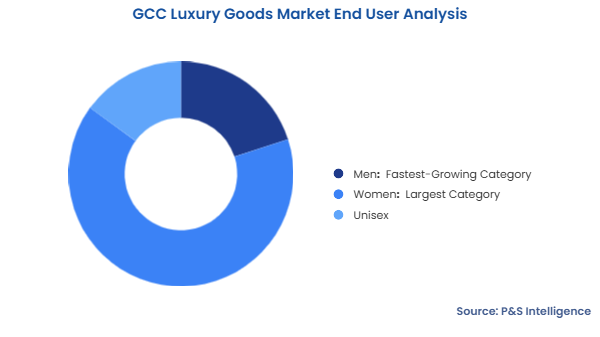
The women category holds the largest market share, of 65%, in 2025, driven by the expanding economic empowerment of women across the region, their increasing participation in the workforce, and their influence over household purchasing decisions. Female consumers in the GCC demonstrate a sophisticated understanding of luxury brands and show strong loyalty to houses that offer products aligning with their lifestyle needs, from modest fashion options to bold statement pieces. The women's segment benefits from the extensive product ranges available across all luxury categories, with particular strength in cosmetics, fragrances, handbags, and jewelry purchases.
The men category will have the highest CAGR, of 4.5%, due to shifting cultural attitudes, rising disposable incomes, and increased emphasis on personal grooming and fashion among men. Growing demand for premium apparel, watches, and grooming products further accelerates this segment’s rapid expansion.
The end users analyzed in this report are:
Men (Fastest-Growing Category)
Women (Largest Category)
Unisex
Drive strategic growth with comprehensive market analysis
U.A.E. holds the largest market share, of 50%, in 2025, positioning itself as the undisputed luxury retail capital of the Middle East. This leadership position is underpinned by Dubai's status as a global shopping destination, attracting many international visitors annually who contribute significantly to luxury retail sales. The UAE's luxury market benefits from the zero taxation on personal income, a highly diverse and affluent expatriate population, and world-class retail infrastructure featuring iconic shopping destinations like The Dubai Mall, Mall of the Emirates, and the newly developed retail districts in Abu Dhabi.
According to the World Economic Forum, the U.A.E. witnessed a net increase of 6,700 high-net-worth individuals in 2024, the highest globally, creating an expanding customer base for luxury goods. The upcoming Expo 2030 and continuous investment in tourism infrastructure, including luxury hotels and entertainment complexes, are expected to further accelerate market growth by attracting affluent visitors and residents.
The emirate of Dubai has a significant portion of the Middle East's entire luxury goods market, with its free trade zones, efficient logistics networks, and business-friendly environment attracting luxury brands to establish regional headquarters and distribution centers. The presence of exclusive shopping festivals, particularly the Dubai Shopping Festival and Dubai Summer Surprises, creates periodic surges in luxury consumption, with brands offering limited-edition products and exclusive collections designed specifically for these events.
Saudi Arabia Luxury Goods Market Size
Saudi Arabia will have the highest CAGR, of 4.6%, driven by the kingdom's Vision 2030 transformation program, which includes significant liberalization of social policies, massive investments in entertainment and tourism infrastructure, and the emergence of a young, globally connected consumer base.
The transformation of Saudi society, particularly regarding women's empowerment and their increasing participation in public life and the workforce, has created new opportunities for luxury brands across all categories. The authorization for women to drive, attend sporting events, and participate more fully in economic activities has led to explosive growth in categories such as luxury automobiles, watches, and fashion accessories. Additionally, the development of mega-projects, including NEOM, the Red Sea Project, and Qiddiya Entertainment City, is creating new luxury retail destinations that will rival established shopping capitals.
Government initiatives to reduce dependence on oil revenues have led to the creation of a more diverse economy with a growing private sector, increasing disposable incomes among young Saudis. The General Entertainment Authority's efforts to bring international events, concerts, and cultural activities to the Kingdom have created new occasions for luxury consumption, with consumers purchasing high-end fashion and accessories for these social gatherings. Major luxury groups are responding by opening flagship stores in Riyadh and Jeddah, with some brands creating Saudi-exclusive collections that celebrate local culture while maintaining international luxury standards.
Qatar Luxury Goods Market Size
Qatar's luxury goods market, while smaller in absolute terms compared to its neighbors, is significant. The country's market is characterized by the world's highest per capita income, creating an environment where luxury consumption is deeply embedded in the lifestyle of both nationals and expatriate residents. Qatar's preparations for hosting major international events and its national vision to become a regional hub for culture, sports, and business continue to drive investments in luxury retail infrastructure.
The development of new luxury shopping destinations, such as Place Vendôme; and the expansion of existing venues like Villaggio Mall and the Pearl-Qatar have created sophisticated retail environments that rival those in Paris, Milan, and New York. These developments, combined with Qatar's position as a major aviation hub through Qatar Airways and Hamad International Airport's extensive duty-free operations, ensure steady growth in luxury goods consumption from both residents and transit passengers.
The geographical breakdown of the market is as follows:
U.A.E. (Largest Market)
Saudi Arabia (Fastest-Growing Market)
Qatar
Kuwait
Bahrain
Oman
GCC Luxury Goods Market Share
The market is semi-consolidated due to the presence of dominant international brands alongside numerous smaller, regional players. High capital requirements, strong brand positioning, and marketing investments favor established luxury brands, yet niche and local players continue to operate successfully. Consumer demand is spread across both global and regional brands, preventing any single company from fully dominating the market. This balance of market power, with a few key players holding significant shares while others maintain smaller niches, defines its semi-consolidated nature.
Key GCC Luxury Goods Companies:
LVMH Mo
Kering S.A.
Compagnie Financi
Chanel S.A.
Herm
The Swatch Group Ltd.
The Est
Rolex SA
Chalhoub Group LLC
Al Tayer Group LLC
Ahmed Seddiqi & Sons LLC
Paris Gallery LLC
GCC Luxury Goods Market News
In April 2025, Majid Al Futtaim announced that it will launch more than 30 new stores featuring both luxury and high-street brands, across the GCC. This expansion will encompass five independent Eleventy stores, the regional introduction of Corneliani, and the inaugural Poltrona Frau store outside the UAE, located in Saudi Arabia. The expansion will be centered around esteemed Italian brands Eleventy, Corneliani, and Poltrona Frau, with a series of store openings scheduled in prominent locations across the UAE and Saudi Arabia.
In March 2024, Bahrain welcomed its first Chanel store, marking a significant expansion of luxury brands into new GCC markets.
Want a report tailored exactly to your business need?
Leading companies across industries trust us to deliver data-driven insights and innovative solutions for their most critical decisions. From data-driven strategies to actionable insights, we empower the decision-makers who shape industries and define the future. From Fortune 500 companies to innovative startups, we are proud to partner with organisations that drive progress in their industries.
Client Testimonials
Working with P&S Intelligence and their team was an absolute pleasure – their awareness of timelines and commitment to value greatly contributed to our project's success. Eagerly anticipating future collaborations.
McKinsey & Company
India
Unmatched Standards
Our insights into the minutest levels of the markets, including the latest trends and competitive landscape, give you all the answers you need to take your business to new heights
Complete Data Security
We take a cautious approach to protecting your personal and confidential information. Trust is the strongest bond that connects us and our clients, and trust we build by complying with all international and domestic data protection and privacy laws