This Report Provides In-Depth Analysis of the GCC Influencer Marketing Market Report Prepared by P&S Intelligence, Segmented by Influencer Type (Mega Influencers (>1 Million followers), Macro Influencers (100,000-1 Million followers), Micro Influencers (10,000-100,000 followers), Nano Influencers (<100,000 followers)), Platform (Instagram, TikTok, YouTube, Snapchat, X (Formerly Twitter), LinkedIn), Content Type (Sponsored Posts, Product Reviews, Brand Ambassadorships, Affiliate Marketing, Giveaways and Contests, Live Streaming), Industry (Fashion & Beauty, Food & Beverage, Travel & Tourism, Technology & Electronics, Healthcare & Fitness, Automotive, Real Estate, BFSI), and Geographical Outlook for the Period of 2019 to 2032
Explore the market potential with our data-driven report
GCC Influencer Marketing Market Overview
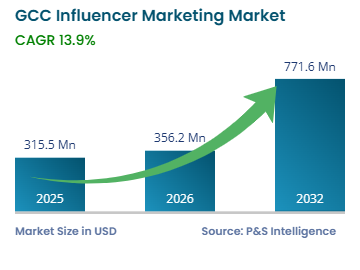
The GCC influencer marketing market value is estimated at USD 315.5 million in 2025, and it is projected to grow at a CAGR of 13.9% during 2026–2032, to reach USD 771.6 million by 2032.
The exponential growth of the market is primarily attributed to the region's exceptionally high social media penetration rates, increasing digital transformation initiatives under national vision programs, and the rapid emergence of micro and nano influencers who resonate deeply with culturally diverse audiences across the Gulf states.
The region's unique demographic composition, with over 70% of the population under the age of 35 and nearly 80% of Saudi citizens under 35 years old, creates an ideal environment for influencer-driven campaigns. This youth-dominated landscape, combined with some of the world's highest social media usage rates, positions the GCC as one of the most lucrative markets for influencer marketing globally.
GCC Influencer Marketing Market Dynamics
Rise of Micro and Nano Influencers Is Key Trend in Market
A significant shift toward micro and nano influencers is reshaping the GCC influencer marketing landscape.
Brands in the UAE are increasingly turning to micro-influencers (10,000–100,000 followers) and nano-influencers (1,000–10,000) for their higher engagement and more niche communities.
A recent survey found that 58% of the UAE consumers are more likely to trust recommendations from micro-influencers than celebrities.
Nano-influencers in the UAE report average engagement rates of 6–8%, well above the global Instagram average of 1.2%.
This trend reflects a fundamental change in how regional consumers perceive authenticity and trust.
Local influencers who are rooted in their communities can create content that speaks directly to the local experience, making it more relevant to consumers.
The cultural nuances and language preferences unique to each GCC market make micro-influencers particularly valuable for brands seeking genuine connections with specific audience segments.
High Social Media Penetration and Government Support Drive Market Growth
The exceptional social media penetration rates across the GCC region serve as the primary catalyst for influencer marketing growth.
The UAE presents unparalleled opportunities with 99% internet penetration and over 11.3 million active social media users in a population of 11.35 million, creating multiple user identities per person.
In Saudi Arabia, there are 36.84 million internet users with 99% penetration and more than 35.10 million social media users, equating to 94.3% of the total population.
This digital saturation extends beyond mere access, as daily social media usage in the UAE averages 7.2 hours per user, significantly above the global average of 5.3 hours.
The region's consumers demonstrate remarkably high engagement with influencer content, particularly among younger demographics.
In the MENA region, more than 50% of the population is under the age of 30, creating a digitally native audience that naturally gravitates toward influencer recommendations.
In the UAE, influencer marketing has emerged as a significant driver of consumer purchase intentions, especially among youth who look to social media not only for entertainment but also for product discovery.
This behavioral pattern is reinforced by cultural factors, as Saudi Arabia has a strong culture of word-of-mouth recommendations, and influencer advertising taps into this tradition in a modern way.
Strategic government initiatives across the GCC are institutionalizing and professionalizing the influencer marketing industry.
Dubai announced a fund of USD 40.8 million (AED 150 million) in January 2024 dedicated to supporting influencers and digital content creators, signaling the emirate's commitment to establishing itself as a global influencer hub.
The UAE has set clear influencer licensing guidelines through the National Media Council, requiring any social media influencer monetizing content to hold a license costing around AED 15,000 annually.
This regulatory structure has legitimized the industry, improved transparency, and attracted more structured brand investments.
The implementation of disclosure requirements and commercial licensing across the region ensures authentic partnerships and protects consumer interests.
These regulations have created a more mature ecosystem where brands can confidently invest in influencer campaigns knowing that partnerships comply with legal standards.
The regulatory framework particularly benefits micro and nano influencers who can now operate as legitimate businesses, encouraging more professionals to enter the creator economy.
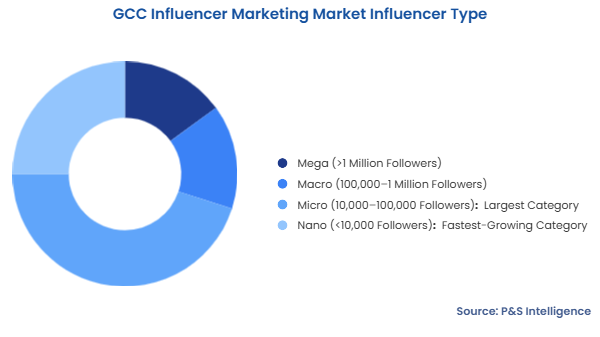
The micro influencers category holds the largest share in the GCC influencer marketing market in 2025, of 45%, and it is expected to maintain its dominance throughout the forecast period. This category's leadership position stems from the increasing recognition among brands that smaller, more engaged audiences deliver superior return on investment compared to broad-reach celebrity endorsements. Micro influencers in the GCC demonstrate exceptional ability to foster community trust, with their recommendations perceived as more authentic and relatable than those from mega influencers. The category benefits from the region's preference for community-based recommendations and the cultural importance of personal relationships in purchasing decisions.
Nano influencers will witness the highest CAGR, during the forecast period, driven by their hyper-localized content creation capabilities and exceptional engagement rates. Nano-influencers in the UAE report exceptionally high engagement rates, driven by genuine connections and close-knit communities. The rapid growth of this category reflects brands' increasing sophistication in understanding that authentic, community-driven content generates stronger consumer response than traditional celebrity endorsements. The lower cost per engagement and ability to target specific niches make nano influencers particularly attractive for brands entering new market segments or launching localized products.
The influencer types covered in the market include:
Instagram dominates the GCC influencer marketing platform landscape in 2025 with 35% share, maintaining its position as the premier platform for visual storytelling and lifestyle content. The platform's sophisticated shopping features, stories functionality, and reel format align perfectly with GCC consumers' preference for visual content consumption. Instagram's strength in fashion, beauty, and luxury segments particularly resonates with the region's affluent consumer base. As of January 2025, the United Arab Emirates had the second-highest TikTok reach, with over 118.5% of its population aged 18 and older using the popular social video app.
TikTok is experiencing the fastest growth, during 2026–2032, revolutionizing how brands engage with younger GCC audiences. The platform's algorithm-driven content discovery and emphasis on creativity over follower count democratize influencer marketing opportunities. TikTok offers seamless shopping experiences as social commerce explodes in Saudi Arabia. The platform's particular strength among Gen Z consumers and its ability to create viral moments make it increasingly essential for brands targeting younger demographics.
Platforms analyzed include:
Instagram (Largest Category)
TikTok (Fastest-Growing Category)
YouTube
Snapchat
X (Formerly Twitter)
LinkedIn
Others
By Industry Type
Fashion & beauty commands the largest market share, of 35%, in 2025, reflecting the GCC's position as a global luxury consumption hub. The category benefits from the region's high disposable income, cultural emphasis on personal appearance, and strong affinity for premium brands. The British Beauty Council expects the Middle East and North Africa's beauty market to be worth USD 46 billion, and it will expand to USD 60 billion by 2025. The fashion and beauty sector's success in influencer marketing stems from the visual nature of products and the importance of social proof in luxury purchasing decisions.
Technology & electronics represent the fastest-growing category, through 2032. The surge is driven by the region's rapid digital transformation, high smartphone penetration, and growing interest in gaming and smart home technologies. The category benefits from the GCC's young, tech-savvy population eager to adopt the latest innovations and the increasing role of technology influencers in educating consumers about complex products.
Saudi Arabia holds the largest share in the GCC influencer marketing market in 2025, of 40%, and is expected to maintain its leadership position through 2032. With one of the highest social media penetration rates in the world and nearly 80% of citizens under the age of 35, the Kingdom presents unparalleled opportunities for influencer-driven campaigns. The market's dominance is further strengthened by Vision 2030 initiatives promoting digital transformation and entrepreneurship, creating a supportive ecosystem for content creators and digital marketing agencies.
Saudi Arabia's young and tech-savvy population, with a high percentage of internet users highly active on social media platforms, makes influencer advertising an effective way to reach them. With Vision 2030 pushing for a greener future, brands are incorporating sustainability into their marketing strategies, with Saudi consumers, especially the younger generation, increasingly favoring brands that align with their values. The Kingdom's influencer marketing success is also driven by 32% of marketers who use influencer marketing to promote their products and services, with local influencers playing crucial roles in bridging cultural gaps and ensuring message relevance.
UAE Influencer Marketing Market Share
The UAE is the fastest-growing market in the GCC region, with a projected CAGR of approx. 14.0% during 2026–2032. The UAE government has been proactive in supporting and regulating influencer marketing through several key initiatives aimed at nurturing digital content creation. With USD 276.61 million in spending projected for 2025 and 8.14% annual growth through 2029, the UAE has established itself as the region's innovation hub for influencer marketing strategies.
Dubai's vibrant digital ecosystem and a population that is highly active on social media platforms make it a game-changer for brands striving to connect with audiences. The market benefits from 100% internet penetration as of 2023 and the highest social media penetration rate of 115% globally as of 2024. The UAE's multicultural population creates unique opportunities for brands to engage diverse audience segments through targeted influencer partnerships.
These countries are covered:
Saudi Arabia (Largest Regional Market)
UAE (Fastest-Growing Regional Market)
Kuwait
Qatar
Bahrain
Oman
GCC Influencer Marketing Market Share
The GCC influencer marketing market is slightly fragmented, characterized by a mix of global agencies establishing regional offices and homegrown agencies leveraging local expertise. The competitive landscape features numerous specialized agencies alongside traditional marketing firms expanding into influencer services, creating a dynamic environment where innovation and cultural understanding determine success. The market's fragmented nature stems from the diverse requirements across different GCC countries, varying platform preferences, and the need for culturally nuanced content creation.
The competitive dynamics are shaped by agencies' abilities to provide comprehensive services, including influencer discovery, campaign management, content creation, and performance analytics. AWISEE creates influencer campaigns aligned with Ramadan, Eid, and cultural values across GCC, with no other agency matching their cultural sensitivity and execution. Success factors include maintaining extensive influencer databases, offering AI-powered analytics tools, and demonstrating proven ROI through data-driven campaigns.
Recent strategic activities have focused on technology integration and cross-border capabilities. Agencies are investing heavily in artificial intelligence for influencer vetting and fraud detection, while establishing partnerships with e-commerce platforms to enable seamless social commerce integration. The emphasis on micro and nano influencers has led agencies to develop specialized recruitment and management systems for handling larger numbers of smaller creators efficiently.
Opportunities exist particularly in emerging verticals such as fintech, healthcare, and B2B services, where influencer marketing remains underutilized. The growing importance of video content and live streaming presents additional growth avenues for agencies capable of producing high-quality multimedia campaigns. New entrants can differentiate through specialized industry expertise, innovative pricing models, or superior technology platforms.
Key GCC Influencer Marketing Companies:
AWISEE
Starfish Agency
Influencer Marketing Factory
Glimpse Digital Agency
Expin
Smart Touch
First Growth Agency
Spike Media
Koraspond
The W Factory
Influencer Hero
Rekoya
Arab Influencer Agency
Grynow
Socialize Agency
GCC Influencer Marketing Market News
In July 2025, the Government of the Emirate of Dubai announced a fund of AED 150 million to support influencers and digital content creators.
In March 2025, Saudi Arabia's Public Investment Fund acquired a 54% stake in MBC Group for SAR 7.46 billion, integrating free-to-air and OTT inventory.
In February 2025, TikTok Shop launched in Saudi Arabia and the UAE, enabling direct social commerce transactions and revolutionizing how influencers monetize their content through integrated shopping features.
In November 2024, Faden Media inked an exclusive in-store advertising agreement with Tamimi Markets, expanding retail media assets.
In September 2024, Instagram introduced Arabic-first creator tools and monetization features specifically designed for MENA content creators, including enhanced analytics and branded content partnerships.
In June 2024, Snapchat launched its Creator Marketplace in the GCC, connecting brands directly with verified local influencers and streamlining campaign management through automated workflows.
In January 2024, the UAE National Media Council updated its influencer licensing requirements, introducing tiered licensing structures based on follower count and content categories to better regulate the growing creator economy.
Want a report tailored exactly to your business need?
Leading companies across industries trust us to deliver data-driven insights and innovative solutions for their most critical decisions. From data-driven strategies to actionable insights, we empower the decision-makers who shape industries and define the future. From Fortune 500 companies to innovative startups, we are proud to partner with organisations that drive progress in their industries.
Client Testimonials
Working with P&S Intelligence and their team was an absolute pleasure – their awareness of timelines and commitment to value greatly contributed to our project's success. Eagerly anticipating future collaborations.
McKinsey & Company
India
Unmatched Standards
Our insights into the minutest levels of the markets, including the latest trends and competitive landscape, give you all the answers you need to take your business to new heights
Complete Data Security
We take a cautious approach to protecting your personal and confidential information. Trust is the strongest bond that connects us and our clients, and trust we build by complying with all international and domestic data protection and privacy laws