Electric Heat Tracing Market Size & Share Analysis - Trends, Drivers, Competitive Landscape, and Forecasts (2025 - 2032)
This Report Provides In-Depth Analysis of the Electric Heat Tracing Market Report Prepared by P&S Intelligence, Segmented by Type (Self-Regulating, Constant Wattage, Mineral-insulated, Skin Effect), Component (Electric Heat Tracing Cables, Power Connection Kits, Control and Monitoring Systems, Thermal Insulation Materials), Application (Freeze Protection & Process Temperature Maintenance, Roof & Guttering De-icing, Floor Heating), Vertical (Oil & Gas, Chemical, Commercial, Residential, Power & Energy, Food & Beverage, Pharmaceutical, Water & Wastewater Treatment), and Geographical Outlook for the Period of 2019 to 2032
Explore the market potential with our data-driven report
Electric Heat Tracing Market Overview
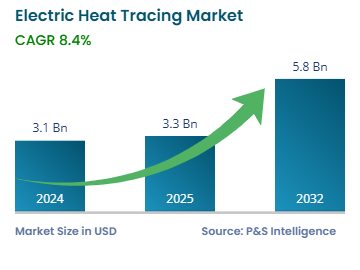
The global electric heat tracing market will generate an estimated revenue of USD 3.1 billion in 2024, which is expected to witness a CAGR of 8.4% during 2025–2032, to reach USD 5.8 billion by 2032.
This can be ascribed to the increasing demand for efficient temperature maintenance and control in various industries, including oil and gas, chemicals, power generation, and construction. Electric heat tracing systems are widely used to prevent freezing, maintain process temperatures, and ensure the smooth operation of pipelines, valves, and tanks in harsh environmental conditions.
According to the International Energy Agency (IEA), coal-fired power generated over 10,700 TWh globally in 2024, maintaining its position as the largest source of electricity. The IEA’s Electricity Market Report 2024 states that natural gas accounted for approximately 22% of global electricity generation, driven by its role as a transitional and balancing fuel. As per the World Nuclear Association, global nuclear power capacity stands at around 414 GW, with over 60 GW under construction and contributing roughly 10% of total electricity generation.
The growing emphasis on energy efficiency, coupled with technological advancements in self-regulating and constant-wattage heating cables, is further driving the adoption of electric heat tracing solutions.
Additionally, the expanding industrial sectors in emerging economies and the rising focus on improving operational safety and reducing energy consumption are key factors contributing to the market's growth. As industries continue to prioritize cost-effective and sustainable solutions, the electric heat tracing market is expected to experience significant expansion in the coming years.
Electric Heat Tracing Market Dynamics
Rising Demand for Energy-Efficient Electric Heat Tracing Systems Is Key Trend
One of the key drivers of the global electric heat tracing market is the rising demand for energy-efficient electric heat tracing systems.
As industries across the world face increasing pressure to reduce energy consumption and minimize operational costs, energy-efficient solutions have become a priority.
Electric heat tracing systems are crucial in maintaining consistent temperatures for pipelines, tanks, and equipment in harsh environments, ensuring the smooth flow of liquids and gases, and preventing freezing.
Traditional heating methods, such as steam-based or traditional mechanical heating systems, are often less energy-efficient, leading to higher operational costs and increased carbon footprints.
Whereas, modern electric heat tracing systems, particularly self-regulating and constant wattage cables, offer precise temperature control, reducing energy wastage.
These systems adjust their heat output according to the surrounding temperature, ensuring optimal heating, when necessary, thus minimizing energy consumption.
Governments' stricter regulations on energy usage and carbon emissions also play a significant role in encouraging the adoption of electric heat tracing systems.
The rules and initiatives make them an attractive option for industries looking to reduce environmental impact while enhancing operational efficiency.
Growing Adoption of Heat Tracing Systems in Power Plants Is a Key Driver
Power generation facilities, particularly thermal and nuclear power plants, rely heavily on maintaining precise temperature control in various systems such as pipelines, valves, and tanks.
Electric heat tracing systems are increasingly being used to prevent freezing of fluids, maintain the required temperatures for fuel or chemicals, and ensure the efficient operation of critical infrastructure in power plants.
These systems provide reliable and energy-efficient heating solutions, which are crucial for preventing downtime, ensuring safety, and optimizing the performance of plant operations.
The adoption of electric heat tracing systems in power plants is being driven by the increasing demand for operational efficiency and reduced maintenance costs.
Additionally, as power plants seek to modernize and upgrade their infrastructure to meet stricter environmental regulations, electric heat tracing systems offer a cost-effective and sustainable solution for temperature control.
The growing focus on reducing greenhouse gas emissions and improving the energy efficiency of power generation further accelerates the adoption of these systems, presenting a significant opportunity for market expansion.
Electric heat tracers are essential in power plants to maintain optimal temperatures in pipes and equipment, ensuring uninterrupted steam and coolant flow in thermal (coal, gas) and nuclear facilities.
With global thermal power capacity exceeding 2,130 GW and producing over 10,480 TWh annually, and planned additions of around 204 GW under construction, consistent heat tracing prevents freeze-ups, corrosion, and efficiency losses.
As capacity expands and new fossil and nuclear plants come online, the demand for reliable electric heat tracer systems grows.
These systems protect infrastructure integrity and optimize performance in increasingly complex and high-output generation environments worldwide.
High Initial Installation Cost Poses Challenge
Electric heat tracing requires specialized components such as cables, control panels, and sensors, as well as skilled labor for proper installation.
The upfront investment can be substantial, particularly for large-scale installations in industries such as oil and gas, chemicals, and power generation, where numerous pipelines, valves, and equipment require temperature regulation.
Additionally, the installation process often involves significant modifications to existing infrastructure, which further increases the overall cost.
While electric heat tracing systems offer long-term energy savings and operational efficiency, the initial financial outlay can be a deterrent.
This is especially a problem when companies are accustomed to more conventional heating methods, such as steam or mechanical heating systems that have lower upfront costs.
On average, electric heat tracing systems for industrial plants typically cost USD 10–50 per linear foot ( USD 30–USD 165 per meter) for installation and materials.
This range depends on pipe diameter, length, and the required temperature.
Heat trace cables are generally priced at USD 3–10 per foot, while insulation adds roughly USD 1–3 per square foot.
Control and monitoring components may cost from USD 100 to more than USD 1,000, and installation labor often contributes significantly to the total.
Electric Heat Tracing Market Segmentation Analysis
Type Insights
The self-regulating category is projected to grow at the highest CAGR, of 8.8%, during 2025–2032, after holding the largest market share in 2024. This is due to its significant advantages in energy efficiency, safety, and versatility. Self-regulating heat tracing systems automatically adjust their heat output based on temperature fluctuations, providing energy-efficient heating solutions that reduce power consumption. This ability to self-regulate makes them ideal for applications in industries such as oil and gas, chemicals, and power generation, where temperature control is essential for maintaining the flow of fluids and preventing freezing.
Furthermore, self-regulating systems are safer compared to constant wattage systems because they minimize the risk of overheating, ensuring that they do not exceed the required temperature limits. This characteristic is particularly valuable in sensitive environments or hazardous areas, where overheating could lead to equipment damage or safety concerns. The growing demand for energy-efficient solutions, combined with the increasing need for precise temperature control in critical industrial processes, is driving the widespread adoption of self-regulating systems.
During the study, we have analyzed the following types in the report:
Self-Regulating (Largest and Fastest-Growing Category)
Constant Wattage
Mineral-insulated
Skin Effect
Component Analysis
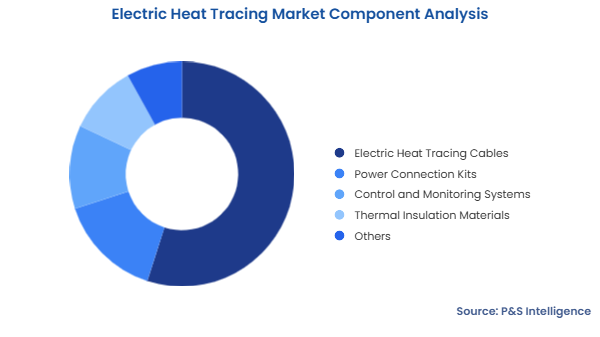
The electric heat tracing cables category holds the largest market share, of around 55%, in 2024, and it also has the highest CAGR. This is due to their critical role in providing efficient and reliable temperature regulation across various industries. These cables are essential for maintaining the required temperature in pipelines, tanks, and equipment, ensuring that fluids remain at optimal temperatures to prevent freezing or maintain flow consistency.
As industries such as oil and gas, chemicals, power generation, and food processing rely heavily on precise temperature control for operational efficiency and safety, the demand for electric heat tracing cables has surged. Additionally, advancements in cable technology, such as self-regulating and constant wattage cables, have improved performance, making them suitable for a wide range of applications.
Below are the components analyzed:
Electric Heat Tracing Cables (Largest and Faster-Growing Category)
Power Connection Kits
Control and Monitoring Systems
Thermal Insulation Materials
Others
Application Insights
The freeze protection & process temperature maintenance is projected to grow at the highest CAGR, of 8.9%, during 2025–2032, after holding the largest market share in 2024. This is due to its critical role in maintaining smooth and efficient operations across various industries. Freeze protection is essential for preventing damage to pipes, tanks, and other equipment in environments where temperatures can drop below freezing.
In industries such as oil and gas, chemicals, and power generation, maintaining consistent temperatures is vital for ensuring the flow of liquids and gases, preventing blockages, and avoiding costly downtime. Additionally, process temperature maintenance is crucial for various manufacturing and industrial processes, where precise temperature control is needed to maintain product quality and consistency. Electric heat tracing systems offer an energy-efficient solution by providing localized and on-demand heat, ensuring that these critical systems operate efficiently and without interruption.
During the study, we have analyzed the following applications in the report:
Freeze Protection & Process Temperature Maintenance (Largest and Fastet-Growing Category)
Roof & Guttering De-icing
Floor Heating
Others
Vertical Insights
The oil & gas category accounts for the largest share in 2024. This is due to the critical need for temperature regulation in this industry. Oil and gas operations often take place in extreme environmental conditions, where maintaining the temperature of pipelines, tanks, and other equipment is essential to prevent freezing, ensure smooth fluid flow, and maintain safe operations. Electric heat tracing systems offer a highly efficient solution to prevent ice formation in pipelines, ensuring that the transportation of crude oil, natural gas, and other fluids is not interrupted by cold weather conditions.
Electric heat tracing systems are preferred in this sector because they provide precise temperature control and are easier to maintain compared to traditional heating methods such as steam. The growing investments in oil and gas exploration and infrastructure expansion, particularly in remote or cold regions, are further propelling the demand for electric heat tracing systems, positioning the oil and gas vertical as the largest segment in the market.
As per the International Energy Agency (IEA), the worldwide oil supply—which includes crude oil, condensate, and other liquid forms—is projected to average about 104 million barrels per day in 2025. Of this total, crude oil is expected to represent roughly 82.4 million barrels per day, according to the U.S. Energy Information Administration (EIA). In 2023, the overall global output of petroleum liquids exceeded 4.5 billion tonnes, as indicated by BP’s Statistical Review of World Energy.
Regarding natural gas, the International Gas Union (IGU) has reported that global production reached an estimated 4.1 trillion cubic meters in 2023. This signifies the growing importance of gas in the global energy landscape, especially for applications in power generation, heating, and industrial processes.
The following verticals are included in the report:
Oil & Gas (Largest and Faster-Growing Category)
Chemical
Commercial
Residential
Power & Energy
Food & Beverage
Pharmaceutical
Water & Wastewater Treatment
Others
Drive strategic growth with comprehensive market analysis
Electric Heat Tracing Market Regional Outlook
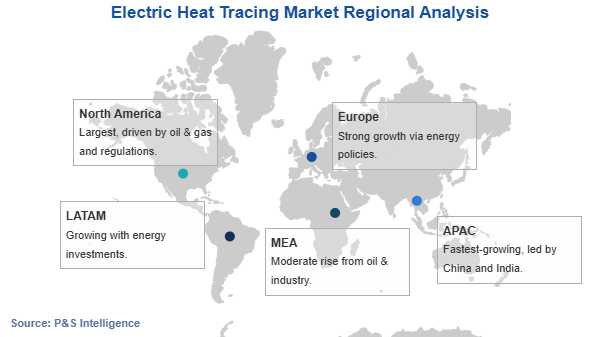
Geographically, North America holds the largest market share in 2024. The region is home to a large number of industries, including oil and gas, chemicals, power generation, and food processing, all of which rely heavily on effective temperature regulation for operational efficiency. Additionally, North America has well-established infrastructure and manufacturing capabilities that drive the demand for electric heat tracing systems.
The region’s focus on improving energy efficiency, reducing operational costs, and meeting stringent safety and environmental regulations has also spurred the adoption of electric heat tracing solutions, which offer precise temperature control and energy savings. Furthermore, the growing focus on sustainability and reducing carbon emissions aligns with the benefits of electric heat tracing systems, as they provide more energy-efficient and environmentally friendly alternatives to traditional heating methods.
Asia-Pacific (APAC) is the fastest-growing region, driven by significant industrial expansion in China, India, South Korea, and Japan. China's oil and gas sector achieved a record high of over 390 million metric tons of oil equivalent in 2023, with substantial investments in offshore and unconventional resources. India's chemical industry produced approximately 31.1 million metric tons of basic major chemicals and petrochemicals in fiscal year 2023.
South Korea's thermal power capacity continues to grow, supporting its energy needs. Japan's chemical industry remains robust, contributing significantly to its industrial output. These developments necessitate advanced electric heat tracing systems to ensure operational efficiency and safety in extreme temperatures.
Further, regions and countries analyzed for this report include:
Brazil (Largest and Fastest-Growing Country Market)
Mexico
Rest of LATAM
Middle East and Africa (MEA)
Saudi Arabia (Largest Country Market)
South Africa
U.A.E. (Fastest-Growing Country Market)
Rest of MEA
Electric Heat Tracing Market Share
The industry is fragmented and characterized by a wide range of companies offering various products and services across multiple industries. Key players in the market include manufacturers of heat tracing cables, control and monitoring systems, and insulation materials, alongside specialized service providers offering installation and maintenance solutions. These companies range from large multinational corporations to smaller, regional firms that cater to specific market niches.
Moreover, the presence of numerous regional players who cater to local markets with specific regulatory requirements further contributes to market growth. Mergers and acquisitions, along with partnerships and collaborations, are becoming more common as companies seek to strengthen their position in the competitive and rapidly evolving electric heat tracing market. This dynamic suggests that the market could gradually become more consolidated over time.
Key Electric Heat Tracing Companies:
Anhui Huanrui Heating Manufacturing Co., Ltd.
Bartec Top Holding GmbH
Danfoss A/S
Drexan Energy Systems, Inc.
Ebeco AB
Emerson Electric Company
Heat Trace Products, LLC
Ives Equipment, Inc.
Neptech Inc.
Spirax-Sarco Engineering Plc
Parker-Hannifin Corporation
Pentair PLC
QmaxTest Research Corporation
Wuhu Jiahong New Materials Co., Ltd.
Thermon Group Holdings, Inc.
Electric Heat Tracing Market News
In February 2025, Brookfield Asset Management acquired Chemelex from nVent Electric PLC for USD 1.7 billion. Chemelex designs and manufactures electric heat trace systems for industrial facilities and commercial structures.
In June 2024, Thermal Technology Distribution Solutions acquired Thermal Devices, a value-added distributor of industrial electric heaters, controls, thermocouples, and related products for manufacturers. Additionally, the transaction encompasses Heat Tracing Sales, the company's heat trace cables, controls, and engineering support services for mechanical and electrical contractors.
In December 2023, BARTEC Top Holding GmbH launched the Helos Pro heat loss calculation software designed to optimize electrical heat tracing in pipelines and tanks.
In June 2023, Spirax-Sarco Limited launched the Turflew Heat Exchanger for fluid temperature management. It optimizes the heating and cooling processes and enables more-efficient management of process water.
In April 2022, nVent Electric PLC launched the nVent RAYCHEM STS-HV cable for heating applications. It offers greater circuit lengths and enhanced durability.
Want a report tailored exactly to your business need?
Leading companies across industries trust us to deliver data-driven insights and innovative solutions for their most critical decisions. From data-driven strategies to actionable insights, we empower the decision-makers who shape industries and define the future. From Fortune 500 companies to innovative startups, we are proud to partner with organisations that drive progress in their industries.
Client Testimonials
Working with P&S Intelligence and their team was an absolute pleasure – their awareness of timelines and commitment to value greatly contributed to our project's success. Eagerly anticipating future collaborations.
McKinsey & Company
India
Unmatched Standards
Our insights into the minutest levels of the markets, including the latest trends and competitive landscape, give you all the answers you need to take your business to new heights
Complete Data Security
We take a cautious approach to protecting your personal and confidential information. Trust is the strongest bond that connects us and our clients, and trust we build by complying with all international and domestic data protection and privacy laws