This Report Provides In-Depth Analysis of the Chile Cosmetic Product Market Report Prepared by P&S Intelligence, Segmented by Product Type (Skincare, Color Cosmetics, Haircare, Baby Care, Bath and Shower, Oral Care, Men's Grooming, Deodorant, Sun Care, Fragrance, Depilatory), By Distribution Channel (Online/E-Commerce Platforms, Supermarkets & Hypermarkets, Specialty Beauty Stores, Pharmacies & Chemists, Brand-Owned Stores & Exclusive Outlets, Direct Selling, Social Commerce), By Customer Gender (Women, Men, Unisex), By Age Group (Below 25 Years, 26, 41, Above 55 Years), By Source (Conventional, Organic/Natural), By Mode of Payment (UPI/QR Code, Credit Card/Debit Card, Cash on Delivery, Digital Wallet, Net Banking, Buy Now Pay Later), and Geographical Outlook for the Period of 2021 to 2032
Explore the market potential with our data-driven report
Chile Cosmetic Product Market Future Prospects
Chile Cosmetic Product Market Key Insights
Skincare commanded the largest share in 2025, of 25%.
Online/e-commerce platforms have the highest CAGR, of approximately 10.7%.
Women command the largest share, of 60%, in 2025.
The below 25 years (Gen Z) has the fastest growth during 2026–2032, of approximately 10.8%.
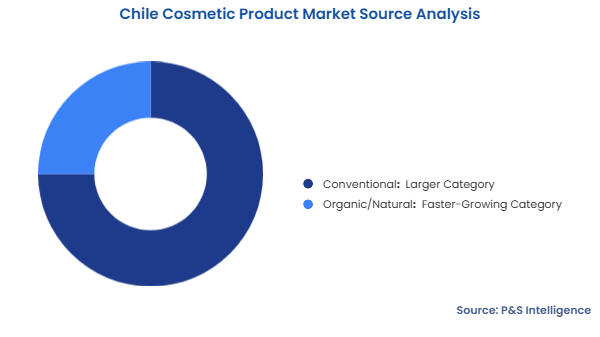
The conventional category retained the dominant share, of 75% in 2025.
Digital wallets are the fastest-growing category during 2026–2032, with approximately 11.0% CAGR.
Santiago is the largest region with 40% share, and Valparaiso the fastest-growing at approximately 11.2% CAGR.
Chile Cosmetic Product Market Analysis
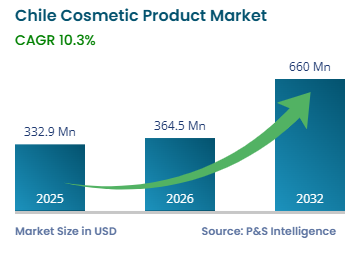
The Chile cosmetic product market was valued at USD 332.9 million in 2025, and it is set to expand at a CAGR of 10.3% during 2026–2032, reaching approximately USD 660.0 million by 2032. This growth is driven by rising household disposable incomes, an expanding urban middle class, and the deepening influence of social media and beauty influencers on purchasing behavior. Millennial and Gen Z consumers increasingly regard skincare, color cosmetics, and personal grooming as essential components of daily wellness routines.
The OECD reports that Chile achieved 2.4% real GDP growth in 2024. This is attributed to rising household income and rebounding private investment, restoring consumer confidence following inflationary pressures in 2022–2023. The market is further shaped by Chile’s high urbanization rate, which the World Bank reported as 88.1% for 2024. This concentrates the cosmetics purchasing power in Santiago, Valparaiso, and Concepción, where organized retail infrastructure, specialty beauty stores, and e-commerce platforms accelerate product discovery and purchase frequency. The market is further shaped by the expanding organic and natural cosmetics segment, growing demand for men’s grooming products, and digitization of retail through online platforms and social commerce channels.
Chile Cosmetic Product Market Trends and Drivers
Growing Focus on Male Grooming and Organic Products Is Key Trend
The biggest trends in the market are the growing focus of men on grooming and the surging demand for organic cosmetics. Men’s focus on grooming is driven by shifting cultural attitudes toward male self-care, increased social media exposure, and targeted product launches by L’Oreal, Beiersdorf, and Natura & Co. The World Bank reported that males represent 49.7% of Chile’s total population in 2024, representing a significant consumer segment. In parallel, organic and natural cosmetics are gaining popularity, supported by rising consumer awareness of ingredient transparency, sustainability certifications, and ethical sourcing. Thus, brands are responding with clean-label formulations across skincare, haircare, and bath and shower categories.
Rising Disposable Incomes and Urban Consumer Culture Drive Market
Chile’s sustained economic development is a primary driver of the cosmetic product market growth, operating through a clear causal chain from macroeconomic improvement to increased consumer spending on discretionary personal care products. Chilean consumers are increasingly allocating spending to beauty and personal care beyond essential needs, supported by a projected 2.4% GDP growth in 2024 from the OECD. The effect is particularly evident in premium and dermocosmetics categories, where skincare, specialty fragrances, and professional hair care products have sustained demand even through constrained economic periods. Looking ahead, as inflation stabilizes toward the Central Bank of Chile’s 3% target by 2026, this discretionary spending trajectory is expected to strengthen, particularly in metropolitan Santiago and Valparaiso.
Digital Commerce Penetration and Social Media Influence Offer Opportunities
The digitization of retail channels is fundamentally transforming how Chilean consumers discover, evaluate, and purchase cosmetics. The Subsecretaria de Telecomunicaciones (SUBTEL) reported that 94.3% of households in Chile had internet access in 2023, representing an increase of approximately 24 percentage points from 2015. This has created a vast and digitally engaged consumer population that increasingly researches and purchases beauty products through online platforms, beauty apps, and social commerce channels. TikTok and Instagram have become de facto discovery engines, driving viral demand for specific product formulations.
The U.S. Commercial Service noted that 66% of the Chilean consumers made online purchases in 2024, led by the 26–40 years age group. As brands leverage influencer partnerships and livestream commerce to convert digital engagement into direct sales, the online channel’s share of cosmetics retail is expected to accelerate further, supported by strong e-commerce adoption and rising digital consumer engagement in Chile.
Import Dependence and Regulatory Compliance Constrain Market Development
A notable restraint for the Chilean cosmetic product market is the country’s high reliance on imported beauty products and the associated regulatory compliance burden. Chile was the 39th largest importer of beauty products globally in 2024, with imports totaling USD 323 million, sourced primarily from France, the United States, China, Spain, and Germany. This import dependence creates price sensitivity risks tied to currency fluctuation, which periodically elevates the retail cost of imported cosmetics. Additionally, the Instituto de Salud Pública de Chile enforces rigorous cosmetics safety, labeling, and ingredient registration requirements under Chile’s sanitary regulatory framework, including Decreto Supremo No. 239 and related health regulations. This compels companies to invest in compliance processes that increase time-to-market and operational costs, moderating the overall pace of market diversification.
Skincare commanded the largest share of the Chilean cosmetic product market in 2025, of 25%, anchored by the strong consumer demand for facial moisturizers, serums, sunscreens, and dermocosmetics formulations. Social media platforms have accelerated category engagement, particularly for brands such as L’Oreal’s La Roche-Posay and CeraVe.
Men’s Grooming is projected to register the fastest growth during 2026–2032, driven by rising acceptance of male self-care routines, social media influence, and expanding availability of products formulated specifically for male skin needs. Growth is further supported by increasing urbanization, higher disposable incomes among younger male consumers, and the growing presence of global grooming brands across Chile’s modern retail and e-commerce channels.
The market segments into the following product types:
Skincare (Largest Category)
Color Cosmetics
Haircare
Baby Care
Bath and Shower
Oral Care
Men’s Grooming (Fastest-Growing Category)
Deodorant
Sun Care
Fragrance
Depilatory
Others
Distribution Channel Analysis
Specialty beauty stores held the largest share of the Chilean cosmetic product market in 2025, of 30%. Retailers have built strong loyalty among beauty-engaged consumers by offering curated brand assortments spanning skin care, color cosmetics, and fragrance. For instance, DBS Beauty Store operates more than 70 locations in Chile
Online/e-commerce platforms are anticipated to register the fastest growth through 2026–2032, at approximately 10.7% CAGR. Online platforms are emerging as a key growth channel in Chile’s cosmetic product market, supported by increasing internet penetration, widespread smartphone usage, and improved digital payment adoption. E-commerce marketplaces and brand-owned websites are expanding product accessibility beyond major urban centers, enabling consumers to compare prices, access a wider assortment of international and niche brands, and benefit from promotional discounts, subscription models, and influencer-led digital marketing campaigns that encourage online purchases.
The market segments into the following distribution channels:
Women represented the largest consumer category in 2025, accounting for 60% market value, underpinned by longer-established beauty consumption habits and broader product category engagement spanning skincare, color cosmetics, haircare, and fragrance. Strong brand loyalty, frequent product usage cycles, and increasing demand for premium, dermatologically tested, and natural formulations further reinforce women’s dominant share within Chile’s cosmetics consumption landscape.
Men are projected to demonstrate the fastest growth during 2026–2032, of approximately 10.5%, driven by the rising cultural acceptance of male grooming and influencer-led social media content normalizing skincare routines. Expanding product portfolios targeting male consumers—particularly in facial care, beard grooming, and hair styling—along with greater product visibility across e-commerce platforms and specialty retail stores, are further accelerating adoption among younger urban demographics.
The market segments into the following customer genders:
Women (Largest Category)
Men (Fastest-Growing Category)
Unisex
Age Group Analysis
The 26–40 years category accounted for the largest share of the Chilean cosmetic product market in 2025, reflecting their combination of disposable income, established beauty consumption habits, and high responsiveness to product innovation. Millennials and older Gen Z consumers in this bracket are the primary purchasers of premium skin care, anti-aging cosmetics, professional hair care, and prestige fragrance products.
Below 25 years’ old consumers are expected to register the fastest growth through 2026–2032, at approximately 10.8% CAGR. Gen Z’s highly accelerated engagement with cosmetics is driven by TikTok beauty trends, influencer culture, and expanding access to affordable color cosmetics and skin care starter products. The U.S. Commercial Service noted that most first-time buyers belong in this age group, and they are adopting trending beauty regimens and aesthetics quickly.
The market segments into the following age groups:
Below 25 Years (Fastest-Growing Category)
26–40 Years (Largest Category)
41–55 Years
Above 55 Years
Source Analysis
The conventional source dominated in 2025, commanding 75% share. This dominance reflects deep entrenchment of mass-market brands across supermarkets, pharmacies, and specialty stores, consumer familiarity with established formulations, and the significantly broader product availability of conventional cosmetics relative to organic alternatives.
Organic/natural cosmetics are anticipated to register the faster growth during 2026–2032, supported by rising consumer awareness of ingredient transparency and sustainability certifications. Chilean consumers in higher-income urban segments are increasingly selecting products marketed with clean-label claims and natural ingredient sourcing, including botanicals, such as rosa mosqueta and native plant extracts.
The market segments into the following sources:
Conventional (Larger Category)
Organic/Natural (Faster-Growing Category)
Mode of Payment Analysis
Credit card/debit card captured the largest share of the market in 2025. Debit cards alone account for 37% of financial volume at the point of sale, with the Redcompra scheme holding 44% of total card market share. Chile’s exceptionally high banking penetration, with around 90% of people over 18 holding a debit card, has driven widespread adoption of card-based payments in physical retail, while online transactions are primarily led by credit cards alongside debit usage.
Digital wallets are projected to register the fastest growth through 2026–2032, propelled by Chile’s rapidly expanding fintech ecosystem. The rising adoption of platforms such as Mercado Pago, MACH, and Fpay is supporting increased usage in online cosmetics purchases, particularly among younger consumers seeking seamless checkout experiences.
The market segments into the following modes of payment:
Credit Card/Debit Card (Largest Category)
Cash on Delivery
Digital Wallet (Fastest-Growing Category)
Net Banking
Buy Now Pay Later (BNPL)
Others
Drive strategic growth with comprehensive market analysis
Santiago Metropolitan Region Cosmetic Product Market Share
The Metropolitan Region of Santiago is the dominant cosmetic product market in Chile, accounting for 40% share. As the country’s political, financial, and commercial capital, Greater Santiago houses a metro area population of approximately 7.0 million people, as per the UN World Urbanization Prospects, 2025. It also has the highest concentration of organized retail in Chile and a well-developed distribution network, which supports both international and domestic cosmetics brands. The region’s high disposable incomes, dense network of specialty beauty stores, pharmacies, supermarkets, and department stores, and strong digital connectivity reinforce its market dominance. The ongoing mall expansion by operators such as Mallplaza and Parque Arauco will strengthen the organized retail footprint.
Valparaiso Cosmetic Product Market Analysis
The Valparaiso region is the fastest-growing cosmetic product market in Chile, at approximately 11.2% CAGR, supported by an expanding middle class, rising disposable incomes, and the growing presence of organized retail chains. The high demand for organic and natural beauty products in Valparaiso reflects a broader consumer shift toward sustainable and eco-friendly formulations. Growth is further supported by rising tourism activity, increasing exposure to international beauty brands, expanding e-commerce penetration, and the proliferation of specialty beauty retailers and pharmacies offering a wider range of skincare, haircare, and personal care products.
The Chile cosmetic product market exhibits a moderately concentrated competitive structure dominated by multinational corporations with broad product portfolios and decades-long brand equity in the Chilean market, while also accommodating a growing tier of regional and local players who compete through price differentiation, naturalistic formulations, and direct-selling models. Market concentration is reinforced by several structural dynamics: the high cost of brand building and advertising in a sophisticated urban consumer market, well-established retail relationships with Cencosud, Falabella, and other major Chilean retail chains, and regulatory compliance requirements that favor companies with dedicated Latin American regulatory teams.
Leading Companies in the Chile Cosmetic Product Market:
L'Oreal S.A.
The Estee Lauder Companies Inc.
Beiersdorf AG
Johnson & Johnson
The Procter & Gamble Company
Kimberly-Clark Corporation
Coty Inc.
Unilever Group
Shiseido Company Limited
Revlon Inc.
Avon Products Inc.
Oriflame Holding AG
Laboratorio Petrizzio S.A.
Natura &Co Holding S.A.
Belcorp Ltd.
Chanel Limited
LVMH Moet Hennessy Louis Vuitton SE
Henkel AG & Co. KGaA
Kao Corporation
Amorepacific Corporation
Mary Kay Inc.
Colgate-Palmolive Company
Kose Corporation
Clarins Group
Lush Retail Ltd.
Chile Cosmetic Product Market News
In October 2025, L’Oreal S.A. announced an agreement to acquire Kering Beaute for approximately EUR 4.0 billion, including the House of Creed fragrance brand and securing long-term licenses to develop beauty and fragrance products for Gucci, Balenciaga, and Bottega Veneta.
In April 2025, LVMH’s Sephora S.A. registered its trademark with Chile’s Instituto Nacional de Propiedad Industrial (INAPI), filing across categories covering perfumery products, beauty product demonstration, and beauty salons. This move indicates strategic positioning and potential future entry into Chile’s premium specialty beauty retail segment.
In April 2025, DBS Beauty Store, a specialty beauty retail chain operating over 50 stores across Chile, announced its international expansion into Peru.
In March 2024, Avon Products, Inc. (a Natura & Co Holding S.A. brand) launched the Power Stay 16-Hour Liquid Lipstick with pomegranate and olive oil extracts across its Latin American markets, including Chile.
Frequently Asked Questions About This Report
What was Chile cosmetic product market size in 2025?+
In 2025, the cosmetic product market in Chile size was USD 332.9 million.
Which product type has the largest Chile cosmetic product industry share?+
Skincare has the largest share Chile cosmetic product industry share, of 25%.
Which region has the highest the Chile cosmetic product market CAGR?+
Valparaiso has the highest CAGR in cosmetic product market of Chile, of approximately 11.2%.
What are the key Chile cosmetic product industry drivers?+
The major drivers for the Chile cosmetic product market are rising disposable incomes, accelerating urbanization, and deepening social media penetration, which collectively amplify consumer aspirations across beauty, grooming, personal hygiene, and wellness categories.
What is Chile cosmetic product market nature?+
The cosmetic product market in Chile is moderately consolidated.
Want a report tailored exactly to your business need?
Leading companies across industries trust us to deliver data-driven insights and innovative solutions for their most critical decisions. From data-driven strategies to actionable insights, we empower the decision-makers who shape industries and define the future. From Fortune 500 companies to innovative startups, we are proud to partner with organisations that drive progress in their industries.
Client Testimonials
Working with P&S Intelligence and their team was an absolute pleasure – their awareness of timelines and commitment to value greatly contributed to our project's success. Eagerly anticipating future collaborations.
McKinsey & Company
India
Unmatched Standards
Our insights into the minutest levels of the markets, including the latest trends and competitive landscape, give you all the answers you need to take your business to new heights
Complete Data Security
We take a cautious approach to protecting your personal and confidential information. Trust is the strongest bond that connects us and our clients, and trust we build by complying with all international and domestic data protection and privacy laws